Trevor Manuel: The Architect of South Africa’s Economic Credibility
- CEOCEO - Leadership Legends
- June 22, 2026
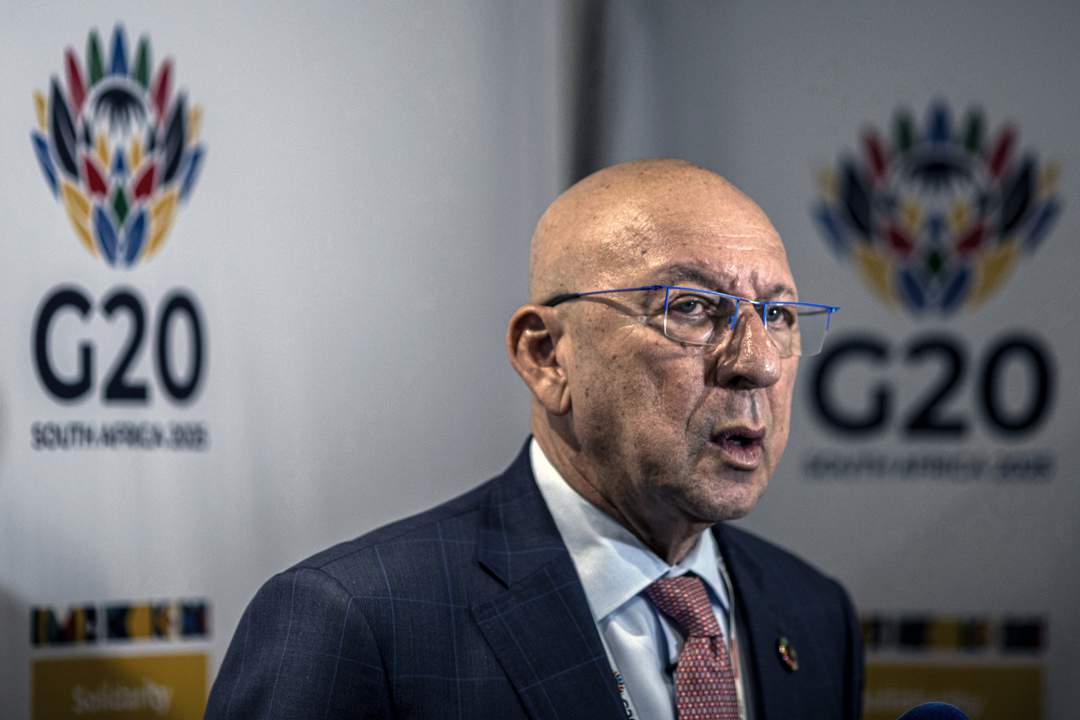

By any measure, Trevor Manuel ranks among the most consequential economic policymakers of post-apartheid Africa.
For more than a decade as South Africa’s finance minister, Manuel played a pivotal role in guiding the country through one of the most complex economic transitions in modern history: transforming a deeply unequal society emerging from apartheid into a stable, globally integrated economy while preserving investor confidence and expanding social development. His career mirrors the evolution of democratic South Africa itself.
When Nelson Mandela assumed office in 1994, the country faced an extraordinary challenge. Political liberation had been achieved, but economic transformation remained unfinished. Decades of racial exclusion had left South Africa with profound structural inequalities, high unemployment, widespread poverty and significant social expectations placed upon the newly elected government.
The task before the African National Congress was unprecedented: to redress historical injustices without undermining economic stability, few individuals would become more central to that balancing act than Trevor Andrew Manuel.
Born in Cape Town on January 31, 1956, Manuel grew up under apartheid’s restrictive racial hierarchy. Classified as “Coloured” under the regime’s racial categorisation system, he experienced first-hand the limitations imposed by institutional discrimination.
Like many leaders of his generation, his political consciousness was shaped not in boardrooms or financial institutions, but within the struggle against apartheid.
During the 1980s, Manuel became actively involved in the United Democratic Front (UDF), one of the most influential anti-apartheid movements operating inside South Africa. The experience exposed him to both grassroots mobilisation and the realities of political organisation under a highly restrictive state.
Those years would profoundly influence his approach to economic policy.
Unlike many technocrats who later entered government through academic or financial institutions, Manuel’s worldview was rooted in the belief that economic development and social justice were inseparable objectives. Sustainable growth, in his view, was not an end in itself but a prerequisite for meaningful social transformation.
Following South Africa’s first democratic elections in 1994, President Nelson Mandela appointed Manuel as Minister of Trade and Industry.
The country was re-entering the global economy after decades of international isolation. South African businesses faced the challenge of competing in global markets, while policymakers sought to attract foreign investment and restore international confidence.
Manuel quickly established a reputation for combining political pragmatism with economic discipline.
Just two years later, in 1996, Mandela entrusted him with one of the most important portfolios in government: Minister of Finance, the appointment came at a critical moment.
Financial markets remained uncertain about the economic direction of the new democracy. Investors questioned whether political transformation might be accompanied by fiscal instability, aggressive state intervention or policy unpredictability, Manuel pursued a markedly different course.
Rather than prioritising short-term political gains, he focused on building institutional credibility. His strategy centred on fiscal discipline, prudent debt management, inflation control and modernisation of public financial administration.
The objective was straightforward yet ambitious, create the macroeconomic foundations necessary to sustain long-term growth while expanding opportunities for historically disadvantaged communities.
Over the next thirteen years, Manuel became one of the longest-serving finance ministers in the world.
Under his stewardship, South Africa experienced a period of relative macroeconomic stability. Fiscal deficits were reduced, public debt remained manageable and government finances became increasingly transparent. The National Treasury emerged as one of the most respected economic institutions in the developing world.
At the same time, the state expanded social spending, increased access to public services and invested in infrastructure programmes designed to support economic inclusion.
The combination earned Manuel a reputation as one of Africa’s most credible economic managers, His influence soon extended well beyond South Africa’s borders.
Throughout the 2000s, he became a prominent voice in global economic forums, representing both South Africa and broader African interests in discussions involving the International Monetary Fund, the World Bank, the G20 and various United Nations initiatives.
For many international observers, Manuel embodied a new generation of African leadership, one that sought to reconcile sound economic management with developmental ambitions, yet his legacy has never been free from controversy.
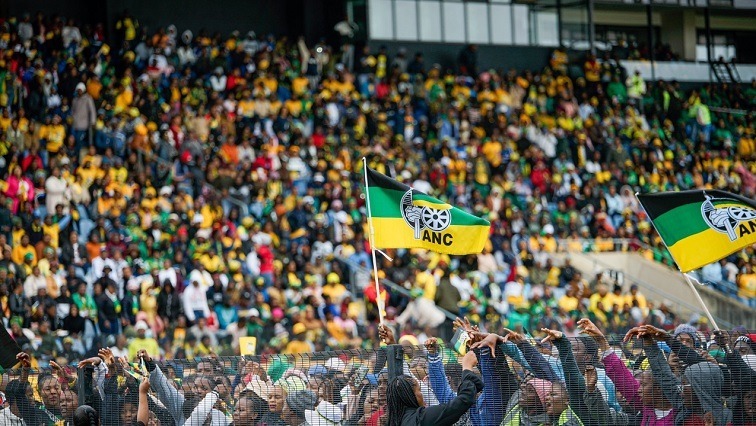
Within the ANC alliance, particularly among trade unions and left-wing factions, critics argued that the government’s macroeconomic framework placed excessive emphasis on market confidence and fiscal restraint at the expense of faster redistribution.
Supporters countered that sustainable social progress depended on economic stability and institutional strength, that debate remains at the heart of South African economic discourse today.
Indeed, many of the country’s contemporary policy discussions, ranging from industrial policy and state intervention to public debt and economic inclusion, can trace their origins to debates that emerged during Manuel’s tenure.
The global financial crisis of 2008 provided perhaps the most significant test of the economic framework he had helped construct.
Although South Africa was not immune to the downturn, the country entered the crisis with stronger fiscal and institutional foundations than many comparable emerging markets. Those foundations helped cushion the impact of one of the most severe global economic shocks in decades.
For many observers, the crisis reinforced Manuel’s reputation as a steward of economic stability.
After leaving the Treasury in 2009, he was appointed Minister in the Presidency responsible for the National Planning Commission. In that role, he oversaw the development of the National Development Plan 2030, an ambitious long-term blueprint designed to address South Africa’s structural challenges through investments in education, infrastructure, innovation, governance and job creation.
The plan reflected a defining characteristic of Manuel’s public career: a belief that development requires institutions capable of thinking beyond electoral cycles.
Today, South Africa continues to grapple with slow growth, persistent unemployment and widening social pressures. Yet many policymakers still regard the institutional framework established during Manuel’s years in government as one of the country’s enduring strengths, His broader significance extends beyond South Africa.
Across Africa, governments seeking to diversify economies, strengthen public finances and attract long-term investment face challenges similar to those confronted by South Africa during its democratic transition, for that reason, Trevor Manuel’s career continues to offer important lessons.
Natural resources can generate wealth. Political transitions can create opportunity. Foreign investment can accelerate development.
But lasting prosperity, Manuel consistently argued, depends on something less visible yet ultimately more important: strong institutions, credible governance and the discipline to pursue long-term national objectives.
In an era increasingly defined by economic uncertainty and geopolitical fragmentation, that message remains as relevant for Africa today as it was when South Africa first emerged from apartheid more than three decades ago.