Congo’s top court clears the way for a possible third term for President Tshisekedi
- Opinions
- July 31, 2026
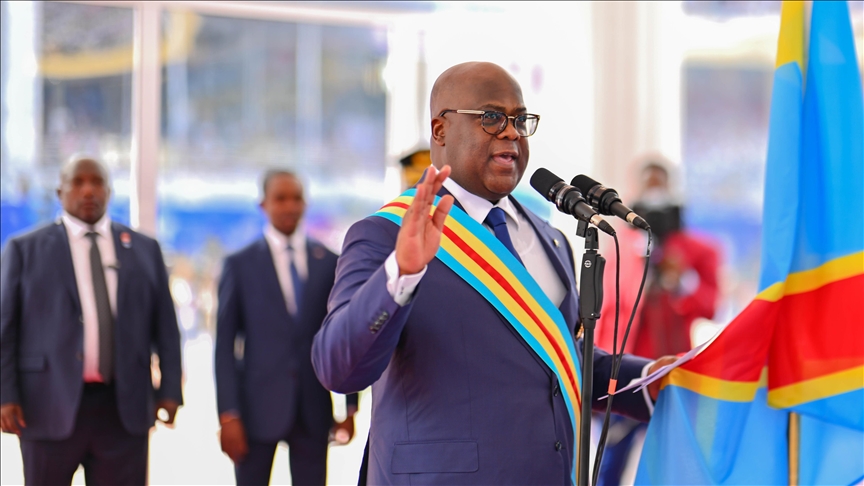

Kinshasa – The Constitutional Court of the Democratic Republic of Congo ruled Tuesday that a proposed referendum law complies with the constitution, opening a formal path toward a constitutional revision that could allow President Felix Tshisekedi to seek a third term in office.
Court President Dieudonne Kamuleta Badibanga announced the ruling in a statement broadcast on state television. He said “the law setting out the conditions for the referendum” was in line with the constitution, though judges attached reservations to some of its provisions.
The court approved clauses that would let the president amend the constitution through a constituent assembly followed by a public referendum, in the event of what the law calls a “major dysfunction” of state institutions. It raised concerns, however, about a separate article that would allow the president to call a referendum on any issue deemed to be of “fundamental” importance.
DR Congo’s constitution, adopted in 2006, currently states that the number and length of presidential terms cannot be revised at all. It is that safeguard the new law is designed to work around. Under the process it lays out, the president would convene a panel of experts, submit their findings to a constituent assembly, and if approved by a three fifths majority, put the proposal to a national vote. A new constitution could effectively reset Tshisekedi’s term count to zero.
A BILL ALREADY PASSED BY PARLIAMENT
Parliament passed the referendum bill in mid June, where Tshisekedi’s coalition holds a commanding majority. With the Constitutional Court’s approval secured, one step remains: the president must still sign the bill into law, and he has not said when, or whether, he will do so.
Tshisekedi, 63, has led DR Congo since 2019 and won reelection by a wide margin in December 2023, a vote that left the opposition fractured and weakened. His second term is due to end in late 2028, and under the rules currently in force he would be barred from running again.
For months, the president and his allies have worked to prepare public opinion for a constitutional overhaul, without ever explicitly stating that Tshisekedi intends to seek a third term. At a rare news conference in Kinshasa in early May, he insisted he had not asked for one, while leaving the door open.
“I have not sought a third term. But if people want me to have a third term, I will accept.”
Felix Tshisekedi, President of the Democratic Republic of Congo, Kinshasa, early May 2026
OPPOSITION CRIES TREASON
The C64 opposition coalition, which brings together leading Tshisekedi critics including Martin Fayulu, Jean Marc Kabund, Moise Katumbi, Augustin Matata Ponyo and Delly Sesanga, met in Kinshasa on Wednesday and rejected the ruling outright. The coalition said the court had forfeited its credibility and legitimacy by clearing the way for a constitutional rewrite.
Speaking at a news conference in Kinshasa, Dieudonne Bolengetenge, secretary general of Katumbi’s party, Ensemble pour la Republique, did not hold back.
“The court’s ruling confirms the plot against the constitutional order and paves the way for the Balkanisation of the Republic. The Congolese people will accept neither the circumvention of the constitution, nor the personalisation of institutions, nor a change to the constitution, nor a third term.”
Dieudonne Bolengetenge, secretary general, Ensemble pour la Republique, Kinshasa, July 29, 2026
The coalition went further, accusing those behind the ruling of high treason and describing the judgment as an act of judicial rebellion against what it called the sovereign will of the Congolese people. Analysts note that both the judiciary and the legislature are widely seen in DR Congo as lacking independence from the executive, feeding opposition skepticism that either institution can meaningfully check the president.
Tensions over the bill are not new. On June 12, an opposition rally in Kinshasa against the draft law spiraled into clashes between demonstrators, pro government activists and police. Several opposition members were injured, and the United Nations condemned the death of at least one protester.
WAR IN THE EAST, A PRESIDENT’S POPULARITY
The constitutional fight is playing out against the backdrop of an armed conflict in North and South Kivu, in eastern DR Congo, where the M23 rebel group, backed by Rwanda according to Kinshasa and several Western governments, controls large swaths of territory. A peace deal signed in Washington in December 2025 between DR Congo and Rwanda has not stopped the fighting, and it remains unclear whether voters in the east will be able to cast ballots in a referendum or in the 2028 presidential election.
Paradoxically, the conflict appears to be helping Tshisekedi politically. According to the Congolese research institute Ebuteli, the war has “generated a powerful wave of nationalism which, at least temporarily, strengthens the political position of Tshisekedi against a backdrop of populist discourse.” A separate Ebuteli survey published in June found that 60% of Congolese believe the country is heading in the wrong direction, yet more than 80% still hold a favorable opinion of the president.
Ebuteli also found that civil society in DR Congo is “clearly more fragmented than 10 years ago” and has succumbed to “a certain weariness after years of political struggle,” suggesting a clear signal of opposition from the international community could still shape how the standoff plays out.
WHAT HAPPENS NEXT
On July 17, the government announced it would hold a long demanded national dialogue, prompting the opposition to postpone a day of mass mobilization that had been planned for July 22. Kinshasa had for months resisted talks that would include certain opposition figures it accuses of colluding with M23, among them former President Joseph Kabila. It remains unclear who will ultimately take part.
The C64 coalition has set its own deadline. If the national dialogue does not begin by August 15, it says it will return to the streets. With the Constitutional Court’s approval secured and the president’s signature still pending, the coming weeks are likely to determine whether DR Congo moves toward a negotiated constitutional overhaul or another confrontation between the government and the streets of Kinshasa, with the 2028 election now just over two years away.
TIMELINE
From Tshisekedi’s inauguration to the validation of the referendum law
| 2019 | Felix Tshisekedi is sworn in as president of the Democratic Republic of Congo following a disputed election. |
| December 2023 | Tshisekedi wins reelection by a wide margin. The opposition emerges fragmented and weakened. |
| Early May 2026 | At a rare news conference in Kinshasa, Tshisekedi says he has not sought a third term, but adds: “If people want me to have a third term, I will accept.” |
| June 12, 2026 | An opposition rally in Kinshasa against the draft referendum law spirals into clashes with pro government activists and police. The United Nations condemns the death of at least one protester. |
| Mid June 2026 | Parliament, dominated by the presidential majority, passes the bill setting out the conditions for a constitutional referendum. |
| June 2026 | A survey by the research institute Ebuteli finds 60% of Congolese believe the country is heading in the wrong direction, while more than 80% still hold a favorable view of the president. |
| July 17, 2026 | The government in Kinshasa announces it will hold a national dialogue, a longstanding demand of the opposition. |
| July 22, 2026 | Opposition parties postpone a planned day of mass mobilization after the dialogue announcement. |
| July 28, 2026 (Tuesday) | The Constitutional Court rules that the referendum law complies with the constitution, with reservations on some articles. Court President Dieudonne Kamuleta Badibanga announces the ruling on state television. |
| July 29, 2026 (Wednesday) | The C64 opposition coalition meets in Kinshasa and rejects the ruling, calling it judicial rebellion and high treason. |
| Before August 15, 2026 | Deadline set by the opposition for the national dialogue to begin, or it says it will resume street protests. |