Ethiopia’s Abiy Ahmed turns to military discipline as tensions threaten stability in the Horn of Africa
- EthiopiaPolitics
- November 3, 2026

The prime minister’s decision to send senior government officials for military training raises questions about leadership, state security and the increasingly fragile balance of power in the region.
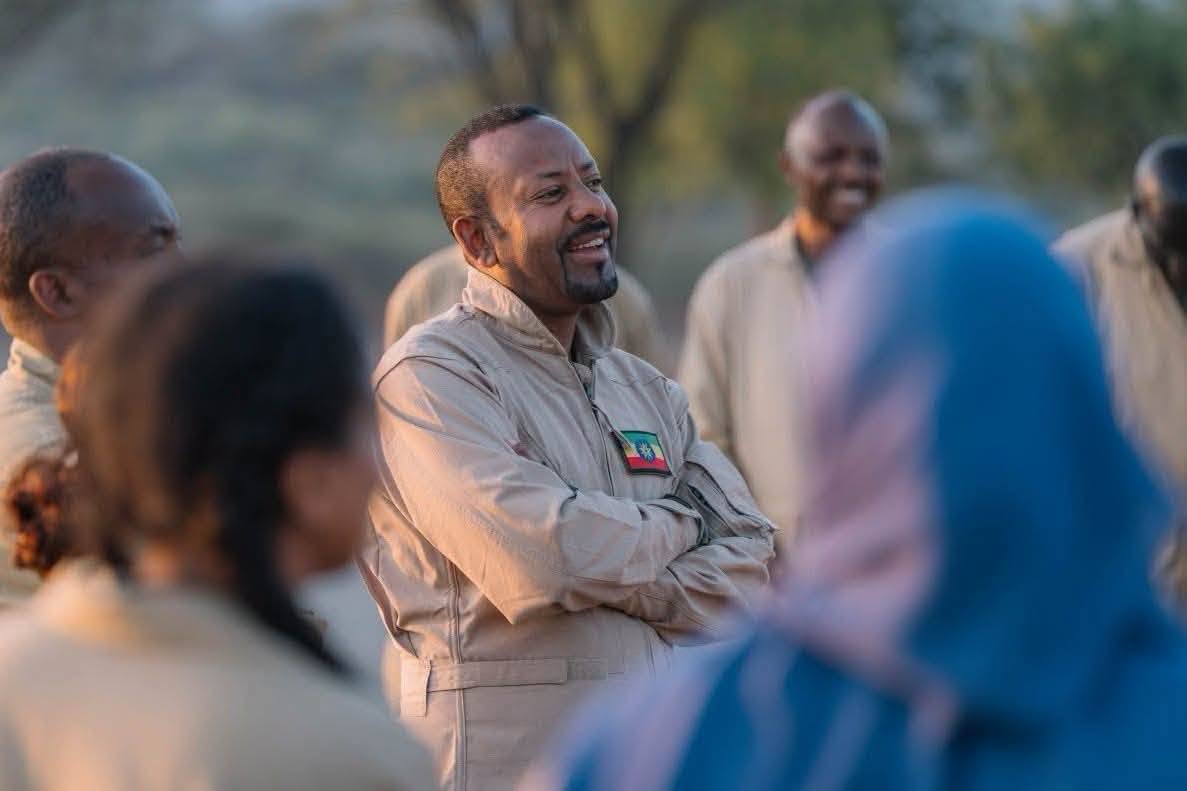
LAGOS – Ethiopia’s Prime Minister Abiy Ahmed has joined cabinet ministers and senior government officials at a military training centre, in a move that highlights the growing importance of discipline, national security and institutional cohesion in one of Africa’s most strategically sensitive regions.
The programme, held at the Hurso Military Training Centre, brought together senior civilian officials, including House of Federation Speaker Muferiat Kamil, Finance Minister Fitsum Assefa and Health Minister Mekdes Daba, according to the Ethiopian News Agency.
Abiy said military training could help cultivate stronger leadership, patriotism, accountability and teamwork, arguing that these principles could contribute to national development and improve the performance of government institutions.
The official explanation is straightforward: military discipline, the prime minister believes, can offer lessons for civilian administration.
But the timing is harder to ignore.
Ethiopia is navigating a complicated domestic and regional security environment, with renewed instability in Tigray, persistent unrest in Amhara and Oromia, and increasingly strained relations with neighbouring Eritrea. In such circumstances, an initiative that brings civilian leaders into a military training environment inevitably carries implications beyond leadership development.
A government under pressure
Ethiopia’s internal conflicts have exposed the limits of political reconciliation and the difficulties of maintaining central authority across a country marked by deep ethnic, regional and political divisions.
The Pretoria peace agreement, signed in November 2022, formally ended the devastating war between the federal government and Tigrayan forces. Yet renewed fighting and persistent tensions have threatened to undermine its achievements.
The government’s emphasis on discipline and institutional cohesion therefore comes at a moment when the challenge is not simply administrative efficiency, but the restoration of confidence in the state.
Military training may provide a framework for teamwork and organisational discipline. It cannot, however, substitute for political dialogue, reconciliation or the resolution of grievances that continue to fuel instability.
The distinction matters. A government can strengthen its internal coordination while still struggling to secure lasting legitimacy among the population.
The strategic significance of the Horn of Africa
The implications extend well beyond Ethiopia’s domestic politics.
Relations between Addis Ababa and Asmara have deteriorated amid disagreements over regional security and Ethiopia’s long-standing ambition to regain maritime access.
Landlocked since Eritrea’s independence in 1993, Ethiopia considers access to the sea a strategic priority for its economic development, trade and national security.
For Eritrea, however, Ethiopia’s maritime ambitions represent a sensitive security concern, particularly when discussions about access become entangled with territorial questions and military considerations.
The stakes are considerable. The Horn of Africa sits at the intersection of the Red Sea, the Gulf of Aden and major international shipping routes connecting Europe, Asia and the Middle East.
Any escalation between Ethiopia and Eritrea could therefore have consequences extending beyond the immediate region, affecting regional security, trade and the interests of international powers.
Ethiopia’s military modernisation, including the reported acquisition of Russian Su-35 fighter aircraft, further illustrates the importance Addis Ababa attaches to strengthening its strategic capabilities.
Discipline cannot replace political stability
Abiy’s initiative reflects a broader effort to consolidate state authority and reinforce the government’s capacity to deliver its development agenda.
Yet Ethiopia’s experience offers a familiar lesson: national security and economic development cannot be separated from political stability.
Military discipline may strengthen leadership, but it cannot resolve territorial disputes, rebuild trust between communities or replace the difficult work of political reconciliation.
For Ethiopia, the challenge is not merely to produce more disciplined officials. It is to build institutions capable of managing internal divisions while preventing regional rivalries from escalating into a wider confrontation.
The Hurso training programme may ultimately be remembered as an exercise in leadership development. Its deeper significance, however, lies in what it reveals about a government operating under mounting domestic and geopolitical pressure.
In the Horn of Africa, the ability to maintain stability may prove more important than the ability to demonstrate strength.