South Africa: Ramaphosa casts his vote as local elections test the unity government
- ElectionSouth Africa
- November 4, 2026
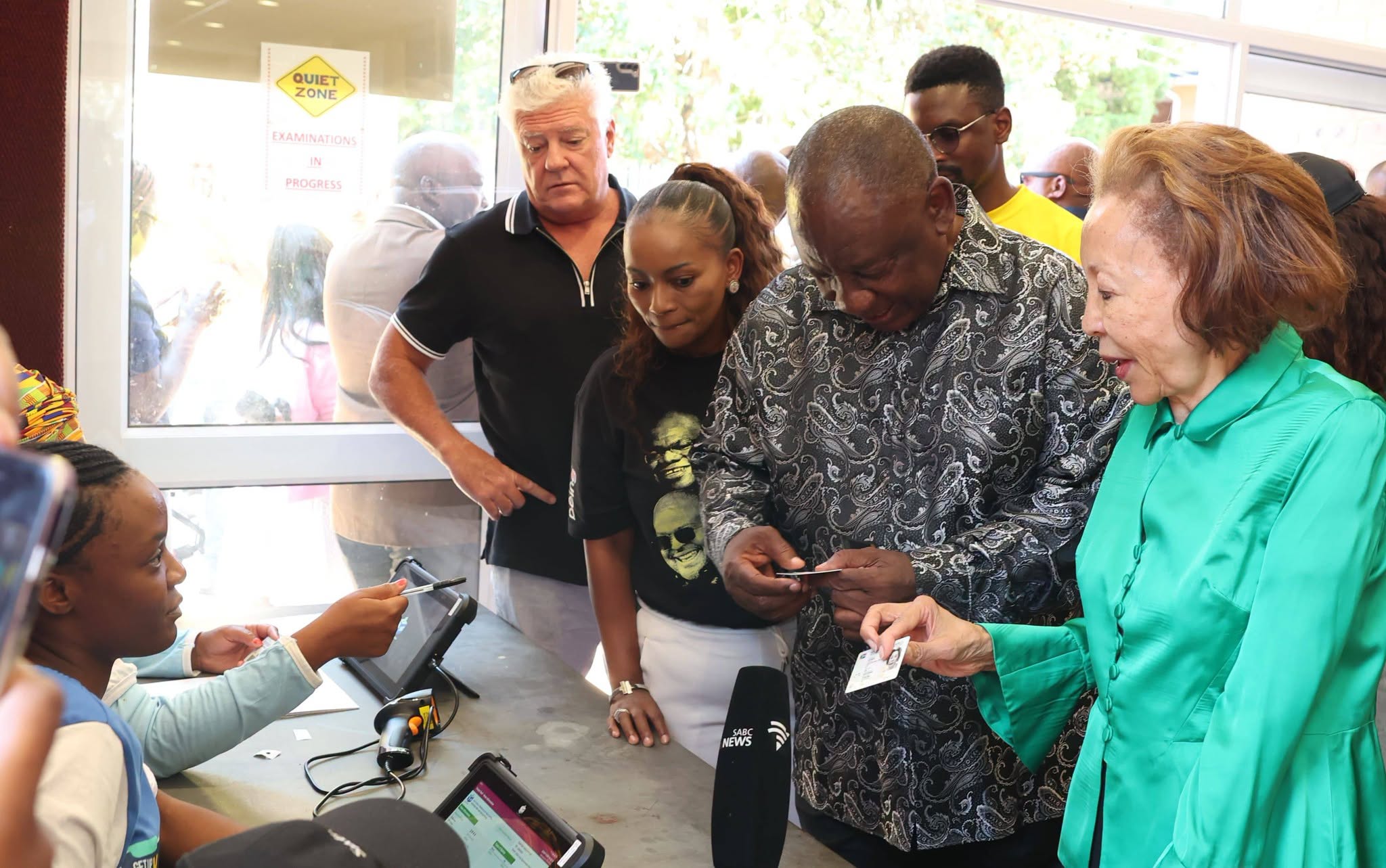

Johannesburg – President Cyril Ramaphosa voted on Wednesday in South Africa’s 2026 Local Government Elections at Hyde Park High School in Johannesburg. He was accompanied by the First Lady, Dr Tshepo Motsepe, who also cast her ballot there.
After voting, the President urged all registered voters to use the public holiday declared for the elections to exercise their democratic right and civic duty. He said the elections give citizens the power to choose their local representatives and to shape how services are delivered where they live.
Service delivery at the core
Ramaphosa’s focus on service delivery reflects what is at stake. Municipal councils are responsible for the services that most directly affect daily life: water supply, electricity distribution, sanitation, refuse collection and road maintenance. Failures in these areas have driven public frustration for years and caused frequent community protests.
Johannesburg, where the President voted, shows the problem clearly. The country’s economic hub has dealt with repeated water outages, ageing infrastructure and unstable coalition governments, with mayors changing several times. Many voters there are likely to judge parties on whether they can govern competently rather than on party loyalty.
A first test since 2024
These are the first local elections since the May 2024 general election. In that vote, the African National Congress (ANC) lost its outright parliamentary majority for the first time since 1994. It then formed a Government of National Unity (GNU) with the Democratic Alliance and other parties.
That makes this election an important early verdict on the coalition. Voters can reward or punish both the ANC and its partners at the level of government closest to them. The ANC already fell below 50% nationally in the 2021 local elections, and that decline led to coalition rule in several major metros.
Turnout as a key indicator
Ramaphosa’s call to use the public holiday also points to a broader concern: falling voter participation. Turnout has dropped in recent elections, especially among young people. How many people vote this time will be an important measure of public trust in democratic institutions and in local government.
The elections are run by the Independent Electoral Commission (IEC), which oversees all elections in South Africa.