Ghana’s commodity windfall offers a chance to break the raw-export cycle
- EconomicEconomic OutlookGhana
- August 12, 2026

Gold and cocoa have rebuilt reserves, strengthened the cedi and helped Ghana emerge from its debt crisis. The harder task is turning a commodity windfall into factories, jobs and durable export earnings before the cycle turns.
ACCRA — Ghana has engineered one of Africa’s more striking macroeconomic recoveries. The question confronting President John Dramani Mahama’s government is whether it can turn that stabilisation into something more difficult: an industrial economy capable of earning dollars from what it makes rather than principally from what it digs out of the ground or harvests.
The numbers are increasingly impressive, Ghana’s economy expanded 6.4% year-on-year in the first quarter of 2026, after growing 6% in 2025, according to the Ghana Statistical Service. Inflation, which stood at 23.8% at the end of 2024, had fallen to 5.3% in June 2026.
The IMF expects full-year real GDP growth of about 4.8% in 2026, with non-extractive output expanding close to 5% over the medium term. Its latest projections also point to public debt continuing to decline after the restructuring that followed Ghana’s 2022 default, while private-sector bank credit is expected to expand by roughly 17%.
That is a remarkable change from the crisis years. Yet underneath the recovery sits an old Ghanaian problem.
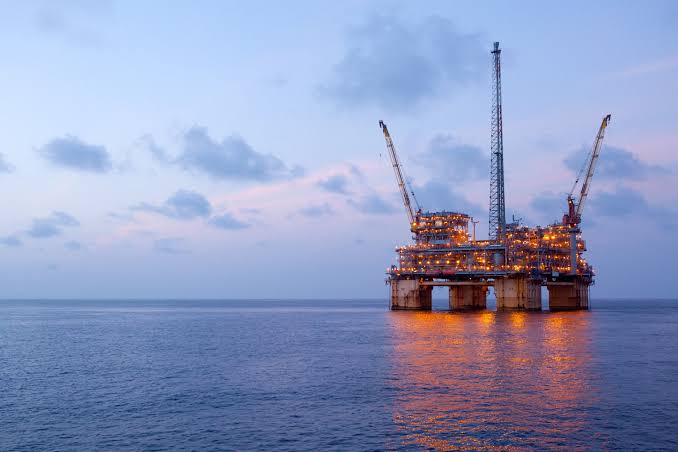
The country continues to export much of its natural wealth in relatively unprocessed form, principally gold, cocoa, crude oil and timber, limiting domestic value creation and employment. Ghana also exports crude while importing refined petroleum products, illustrating the structural weakness of an economy rich in commodities but short of processing capacity.
In other words, Ghana has largely solved the immediate problem of stabilisation. It has not yet solved the problem of transformation.
Gold has become Ghana’s macroeconomic insurance policy
No commodity illustrates both sides of that equation better than gold.
Gold export receipts surged 71.4% to $13.3bn in the nine months to September 2025, from $7.7bn a year earlier. Export volumes increased 12.1% to 4.3mn fine ounces, while the average realised price climbed about 53% to $3,108 an ounce. Cocoa export receipts, including processed products, jumped 158.6% to $2.56bn over the same period.
Together with oil receipts of about $1.96bn, Ghana’s three traditional commodity pillars were generating export earnings approaching $18bn by late 2025. The broader external account produced a $7.4bn trade surplus by September.
The effect on the currency, inflation and sovereign risk has been powerful.
The cedi strengthened from GH¢16.35 per dollar in November 2024 to GH¢10.92 by November 2025, according to government figures. Lower import costs reinforced disinflation, while improved foreign-exchange liquidity helped rebuild confidence in an economy that only a few years earlier was restructuring billions of dollars of domestic and external liabilities.
The IMF said in May that Ghana’s programme had produced “substantial stabilization gains”, citing rapidly declining inflation, rebuilt reserves, stronger confidence in the cedi and a sharp improvement in debt sustainability.
But gold is simultaneously Ghana’s strength and one of its largest vulnerabilities.
The IMF’s adverse scenario analysis estimates that a roughly 30% fall in the gold price by the end of 2026 could reduce Ghana’s current-account balance dramatically and weaken its reserve position. Under the scenario, programme-defined gross reserves could fall to about $6.7bn, compared with roughly $9.6bn under the baseline.
That is why Ghana’s next economic battle is not simply about exporting more. It is about retaining more of the value of those exports inside the country.
From $13bn of gold to a domestic industrial chain
The government is beginning to treat gold not merely as an export commodity but as part of the country’s financial architecture.
Its Ghana Accelerated National Reserve Accumulation Policy, or GANRAP, for 2026-28 aims to replace debt-funded reserve accumulation with a system based increasingly on domestic foreign-exchange generation, gold purchases and structural reforms.
The Ministry of Finance says the Ghana Gold Board generated about $10bn in foreign exchange in 2025 at a cost of $214mn. By comparison, reserve-building transactions undertaken between 2022 and 2024 accumulated $5.65bn but incurred about $1.16bn in interest costs, according to the ministry.
The strategy is economically significant. Ghana is effectively attempting to convert mineral production into a sovereign liquidity buffer.
Yet there is a complication. The IMF has warned that losses associated with the domestic gold purchase programme illustrate the danger of quasi-fiscal operations migrating on to the Bank of Ghana’s balance sheet. It has called for greater transparency and clearer recognition of programme costs in the government budget.
The distinction matters. Buying domestic gold can strengthen reserves; doing so at persistent losses can merely transfer fiscal risk from the Treasury to the central bank.
The larger prize would therefore be to develop refining, jewellery manufacturing, financial products and associated services around Ghana’s bullion industry, increasing the domestic share of every dollar generated by the country’s mines.
Cocoa presents the same industrial challenge
Cocoa provides an even clearer example. Ghana has spent decades among the world’s largest producers of cocoa beans while Europe and other consumer markets capture much of the higher-margin business of chocolate manufacturing, branding and retail.
The government wants to change the production side of that equation as well.
Its programme envisages acquiring 200,000 hectares for cocoa cultivation, with the longer-term ambition of lifting output towards 1mn tonnes. The 2025/26 season opened with a producer price of GH¢51,660 a tonne, calculated from a gross FOB value of $7,200 a tonne.
But doubling production without expanding processing would leave the underlying economic model largely unchanged.
A tonne of beans exported from Tema creates foreign exchange. Cocoa transformed domestically into butter, powder, confectionery and branded consumer products creates foreign exchange plus industrial employment, packaging demand, logistics, tax revenue, technology transfer and a larger domestic supplier network. That multiplier is the missing link in Ghana’s commodity success story.
Agriculture becomes the second front
The government is also putting money behind agricultural diversification.
By June it had released GH¢1.677bn, equivalent to 85% of the Ministry of Food and Agriculture’s approved 2026 goods, services and capital budget, as part of an effort to increase food production and agro-industrialisation.
Non-traditional exports such as pineapple, chilli and ginger offer a different growth model from gold and oil. The source material underlying this analysis identifies precisely that diversification opportunity, while arguing that logistics, payments, customs and trade-finance infrastructure will have to improve if Ghana is to expand more aggressively into Asian and other markets.
This is where Ghana’s economic recovery could begin to affect employment more directly.
The country still had an unemployment rate of about 13% in the third quarter of 2025, while multidimensional poverty stood at 21.9%, according to the Ghana Statistical Service. Stabilising the currency is essential; creating hundreds of thousands of productive jobs is harder.
Agro-processing could bridge those objectives because it connects rural productivity with industrial employment.
Oil exposes the contradiction
Petroleum presents perhaps the clearest illustration of Ghana’s structural problem. The country produces crude oil yet continues to depend on imported refined fuels. The original policy assessment identifies that imbalance as both economically inefficient and a threat to energy security.
For a country trying to conserve foreign exchange, that is a costly circular trade: export crude, earn dollars, then spend part of those dollars importing petrol, diesel and other refined products.
Expanding reliable domestic refining could therefore affect Ghana’s economy through several channels simultaneously, reducing fuel imports, conserving foreign exchange, creating industrial employment and supporting petrochemicals, transport and manufacturing.
The government’s reserve strategy also points to development of the Pecan oil field and a Gas-to-Power Transformation Policy as mechanisms for increasing foreign-exchange earnings and reducing external payments.
The challenge is capital. Refineries, mineral-processing plants, industrial agriculture, cold chains, ports and electricity networks require billions of dollars of patient financing. Ghana is only gradually recovering from a sovereign debt restructuring, meaning the state cannot simply finance industrialisation through another borrowing cycle. Private capital will have to carry much more of the burden.
The financial system must now finance production
That makes Ghana’s banks, pension funds and capital market increasingly important.
The country’s Social Security and National Insurance Trust reported assets of about GH¢36bn and a 10% investment return in 2025. SSNIT plans to allocate more capital towards stocks and bonds while retaining some real-estate investments for their social impact.
The Ghana Stock Exchange is meanwhile encouraging companies to consider sustainable bonds as an alternative financing instrument.
Those pools of domestic capital could become important if Ghana wants infrastructure and industrial projects financed in cedis rather than accumulating another generation of dollar liabilities.
The IMF projects commercial-bank credit to the private sector to grow around 17% in 2026, but the quality of that credit will matter as much as its quantity. Financing imports and consumption produces a very different economic outcome from financing factories, agricultural processing, logistics, telecommunications and export businesses.
Telecoms show what domestic investment can achieve
One glimpse of the alternative growth model can be seen in telecommunications.
MTN Ghana reported a 46.1% increase in profit in the first half of 2026, according to the material reviewed for this article, while pushing ahead with a network expansion involving about 500 additional sites and investment in digital services and artificial intelligence.
Unlike a raw gold bar, digital infrastructure creates a platform on which other businesses can operate.
Mobile money, fintech, e-commerce, cloud services, digital identification and artificial intelligence can reduce transaction costs across the broader economy. They can also help small exporters access payments and finance without the physical infrastructure historically required for international commerce.
The trade-off is regulatory. Rapid fintech and telecom growth increases the importance of cybersecurity, data protection, anti-money-laundering controls and consumer protection.
Mining’s next bargain must include communities
There is also a political economy dimension to industrialisation.
Ghana’s National Mining Dialogue 2026, scheduled for August 18, is expected to bring together large and small miners, regulators, traditional authorities, communities and government officials to address employment, local content and corporate responsibility. A proposed Catchment Charter is intended to formalise commitments on benefits to mining communities.
That matters because the success of Ghana’s mining sector cannot ultimately be measured solely in export receipts or central-bank reserves.
If gold exports reach tens of billions of dollars while mining communities remain poor, public pressure for higher taxes, tighter local-content requirements or resource nationalism will inevitably increase.
The economically sustainable model is therefore one in which mineral rents finance national stability while mining activity generates visible local employment, procurement and infrastructure.
The 2026-30 test
The macroeconomic arithmetic gives Ghana an unusually favourable window.
Under IMF projections, real GDP growth could settle around 5% annually over the medium term. Inflation is expected to remain near the Bank of Ghana’s target range, while gross public debt could continue falling as a share of GDP.
At 5% annual real growth, Ghana’s economy would be roughly 28% larger after five years on a compounded basis. If productivity and population dynamics remain favourable, the expansion could create the domestic demand needed to support a much larger manufacturing and services base.
But the composition of that additional output will determine whether Ghana has genuinely transformed.
There are essentially two possible paths.
On the first, high gold and cocoa prices continue to generate dollars, reserves increase, the cedi remains relatively stable and the government manages its debt more carefully. Ghana becomes a better-managed commodity economy.
On the second, the commodity windfall becomes the financing bridge towards gold refining, cocoa processing, agro-industry, petroleum refining, energy, logistics, digital infrastructure and export manufacturing. Ghana becomes an industrialising economy.
The difference between those outcomes may define the country’s economic trajectory into the 2030s.
Ghana’s present recovery should therefore be viewed less as the end of the crisis than as the beginning of a more difficult experiment. The debt restructuring bought fiscal space. Gold rebuilt the external buffer. Cocoa strengthened export earnings. Falling inflation restored purchasing power. The cedi’s recovery rebuilt confidence.
Now those gains have to be converted into productive assets.
For decades Ghana’s economic vulnerability has followed a familiar African pattern: export the commodity, import the finished product and borrow when commodity prices fall.
Breaking that cycle requires something more ambitious than another export boom.
It requires Ghana to keep a larger share of the value chain at home, and that, rather than the price of gold, the strength of the cedi or even this year’s GDP number, will ultimately determine whether the recovery of 2025-26 becomes another favourable commodity cycle or the beginning of a structural transformation.