Côte d’Ivoire Economic Outlook 2026: The $200 billion push to transform the economy
- Economic OutlookIvory Coast (Côte d'Ivoire)
- September 19, 2026
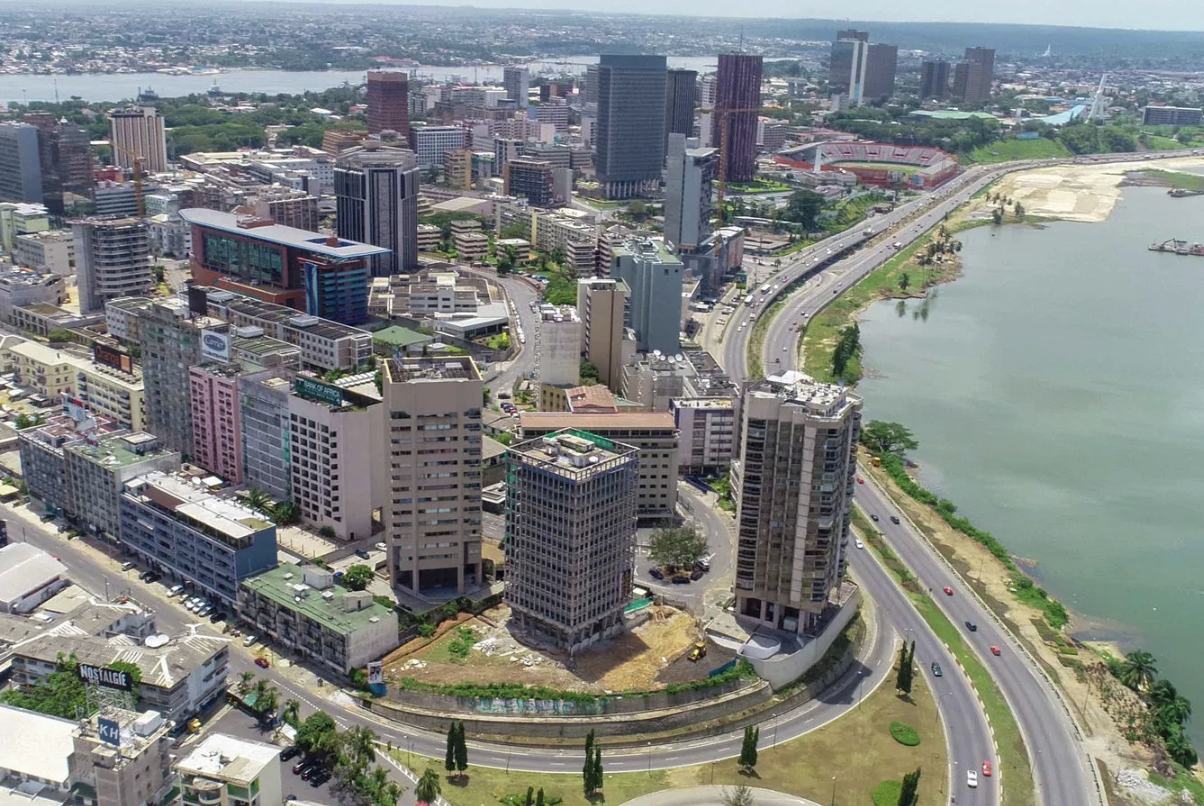

ABIDJAN — Côte d’Ivoire enters 2026 at a pivotal stage in its economic transformation, after more than a decade of rapid expansion supported by agricultural exports, public infrastructure investment, domestic consumption and a growing services sector, the country is attempting to move towards a more diversified economic model.
The next phase is expected to rely increasingly on agro-processing, manufacturing, hydrocarbons, mining, financial services and regional trade, with private investment playing a substantially larger role in financing growth.
The scale of that ambition is significant, Côte d’Ivoire’s 2026–2030 National Development Plan (NDP) envisages approximately CFAF 114.8 trillion in investment, with the private sector expected to provide about 70.2% of the required financing.
The plan targets annual economic growth of around 7.2%, alongside higher productivity, greater industrialisation, improved infrastructure and the creation of roughly four million jobs. The strategy represents a shift from a development model in which the state was the dominant investor towards one in which public resources are increasingly intended to mobilise private capital.
That financing structure is central to understanding the country’s economic outlook, the challenge is not simply to maintain a high rate of GDP growth, but to change the sources and quality of that growth.
Côte d’Ivoire needs to convert investment into productive capacity, agricultural output into higher-value exports and natural-resource revenues into infrastructure, skills and private-sector expansion.
The outcome will depend on whether the economy can generate sustained productivity gains rather than relying predominantly on capital accumulation and favourable commodity cycles.
From fast growth to structural transformation
Côte d’Ivoire’s macroeconomic performance remains strong, although the growth assumptions embedded in the government’s development plan are more ambitious than the forecasts of the main international financial institutions.
The IMF projects real GDP growth of 6% in 2026, followed by average growth of approximately 6.7% between 2026 and 2030. The World Bank has adopted a more cautious position, projecting 5.8% growth in 2026 amid a more challenging external environment.
The difference between the government’s 7.2% target and the multilateral forecasts is economically important. It does not necessarily represent a contradiction, since the NDP is a policy objective rather than a forecast. But it illustrates the scale of the investment and productivity gains required for the economy to consistently outperform the baseline assumptions of external institutions.
Closing that gap will depend on the speed at which new industrial capacity comes online, the expansion of oil and gas production, mining output, private investment and improvements in productivity.
The central question for 2026–2030 is therefore not simply whether Côte d’Ivoire can grow at 6% or 7%. It is whether the country can sustain that pace while changing the composition of output, increasing domestic value added and generating sufficient productive employment.
The changing structure of the economy
Côte d’Ivoire’s traditional economic model has been built around agriculture and commodity exports, particularly cocoa, alongside a rapidly expanding services sector and substantial investment in roads, energy, ports and urban infrastructure.
That model has generated strong growth and helped establish Abidjan as one of West Africa’s principal commercial and financial centres.
The emerging model is broader, agriculture and agro-processing remain the foundation, manufacturing is intended to capture more domestic value, hydrocarbons and mining are expanding the export base, while services provide the financial, commercial and logistical infrastructure connecting these activities to domestic and regional markets.
This transition should not be interpreted as a complete replacement of the old model, Côte d’Ivoire remains highly exposed to agricultural commodities, while its new extractive industries introduce another source of commodity-price risk.
The structural change lies instead in the increasing number of sectors contributing to investment, exports and economic activity.
The policy objective is consequently to create stronger links between sectors: agricultural production feeding processing plants; processing supporting manufacturing; energy and infrastructure lowering industrial costs; financial services providing capital; and regional logistics allowing domestic producers to reach markets beyond Côte d’Ivoire.
Agriculture: from commodity exports to value addition
Agriculture remains fundamental to employment, rural incomes and export earnings, but its economic role is increasingly being reframed around value addition rather than volume alone.
Cocoa illustrates both the opportunity and the vulnerability, Côte d’Ivoire has expanded domestic processing, with the primary processing rate for cocoa reaching an average of 42% in 2023–24, compared with 26% in 2020–21. Cashew processing increased from 12.2% in 2020 to 43.2% in 2025, generating more than 14,000 direct jobs.
The strategic implication is significant. Processing cocoa, cashew, cotton, rubber and other agricultural products domestically allows Côte d’Ivoire to capture a larger share of the value generated between the farm and the final consumer. It can also support the development of packaging, logistics, storage, finance, industrial equipment and other supporting industries.
The vulnerability remains, however, because producers continue to be exposed to international prices and weather conditions, the IMF estimates that farm-gate cocoa prices fell by about 57%, placing pressure on agricultural incomes and household purchasing power.
This makes agricultural industrialisation more than an export strategy, it is also a mechanism for reducing the economy’s exposure to fluctuations in raw commodity prices while creating stronger domestic production chains.
Manufacturing is becoming the bridge
Manufacturing and agro-processing are increasingly positioned as the bridge between Côte d’Ivoire’s agricultural base and a more diversified industrial economy. The objective is to use the country’s agricultural resources, expanding energy supply, transport infrastructure and domestic market to develop production capacity with higher levels of local value added.
Investment in industrial zones and processing facilities is intended to reduce logistical bottlenecks, attract private investors and create production clusters around agriculture, food processing and other industries.
Private investment authorised through CEPICI, Côte d’Ivoire’s investment promotion agency, grew by an average of approximately 7% annually between 2021 and 2025, driven by services, manufacturing and agro-industry.
The significance of this investment extends beyond the factories and processing facilities themselves, a deeper manufacturing base can create demand for transport, warehousing, electricity, telecommunications, financial services and business suppliers, if those linkages develop effectively, industrial investment can generate wider productivity gains across the economy.
That is one of the main reasons the NDP places such emphasis on private investment. The objective is not simply to attract capital, but to build domestic production networks capable of generating repeated rounds of investment and employment.
Oil and gas are changing the export equation
The expansion of hydrocarbons is creating another major pillar of Côte d’Ivoire’s economic structure. The development of the Baleine oil and gas field is expected to increase domestic production and export capacity, while additional exploration and discoveries could expand the sector’s contribution over time.
The IMF expects higher oil production to become an increasingly important driver of economic activity, with growth projected to approach 7% in 2029 as hydrocarbon output expands.
Mining, particularly gold production, is also becoming increasingly important. Together, hydrocarbons and mining are creating a new export base that complements the country’s established agricultural commodities.
But the emergence of these sectors creates a familiar policy dilemma. Oil, gas and mining can generate foreign exchange, fiscal revenues and investment, but they can also increase exposure to international commodity cycles. If their revenues are consumed rather than invested productively, the economy could replace one form of commodity dependence with another.
The strategic objective is therefore to use the resource expansion as a source of financing for diversification, rather than allowing it to become the centre of a new extractive economic model.
The sovereign-fund strategy
The government is beginning to build institutions intended to convert part of the country’s resource wealth into longer-term financial and productive assets.
In April 2026, Côte d’Ivoire established the Strategic Sovereign Fund for the Development of Côte d’Ivoire, designed to manage selected revenues from mining and energy resources and channel them towards sustainable financial and economic assets.
The mechanism could become important as hydrocarbon and mining revenues increase, rather than allowing resource income to flow directly into recurrent expenditure, a sovereign investment structure can potentially preserve part of that wealth and redirect it towards infrastructure, productive investment and future generations.
Its effectiveness, however, will depend on governance, transparency, investment discipline and clear rules governing withdrawals and the allocation of returns.
The existence of a sovereign fund does not by itself eliminate commodity dependence; its economic value depends on how effectively it converts temporary resource income into durable productive capacity.
The private sector is the centre of the 2026–2030 strategy
The most consequential feature of the new development plan is its financing architecture. Of the CFAF 114.8 trillioninvestment requirement for 2026–2030, approximately CFAF 80.6 trillion, equivalent to 70.2%, is expected to come from the private sector.
That proportion changes the role of government. Instead of financing the majority of development directly, the state is expected to concentrate increasingly on infrastructure, regulation, public services, investment facilitation and risk reduction, while private companies and financial institutions provide most of the capital required for productive expansion.
The intended economic mechanism is straightforward: public infrastructure reduces bottlenecks; lower costs improve the investment case; private capital expands productive capacity; higher production generates jobs and exports; and increased productivity strengthens the tax base and household incomes.
The difficulty lies in executing every link in that chain. Investors will require predictable regulation, reliable electricity, efficient logistics, access to finance, skilled labour and confidence that projects can generate adequate returns over long periods.
The success of the NDP will therefore depend not only on how much private capital is mobilised, but also on where that capital goes and how much productive capacity it creates.
Abidjan and the regional economy
Côte d’Ivoire’s transformation is closely linked to the economic role of Abidjan, which functions as the country’s principal financial, commercial, logistics and corporate centre. The city hosts a large concentration of banks, telecommunications companies, transport operators, construction firms and business-services providers.
The country’s ports also give it an important position in the regional economy, particularly as a logistics gateway for landlocked economies in West Africa. Its membership of WAEMU/UEMOA further integrates Côte d’Ivoire into a regional monetary and economic framework.
This regional dimension matters because industrialisation requires scale, manufacturers can achieve stronger economics when they can serve markets beyond the domestic economy. Greater regional integration can therefore increase the potential return on investments in manufacturing, logistics, warehousing and distribution.
For Côte d’Ivoire, the development of regional trade corridors is consequently not simply a transport issue. It is part of the country’s industrial strategy.
The productivity problem
The most important economic question for the next five years may ultimately be productivity.
Rapid GDP growth can be achieved for several years through higher public and private investment, expanding commodity production and infrastructure spending.
Sustaining growth over a longer period requires improvements in labour productivity, technology, skills, infrastructure, management quality and access to finance.
The World Bank identifies several structural constraints, including fragmented land markets, infrastructure gaps, human-capital weaknesses and limited access to finance.
These constraints determine how much economic output can be generated from each additional unit of capital. If investment increases without comparable improvements in productivity, the economy can expand while household incomes and employment grow more slowly.
The stronger scenario is one in which infrastructure, skills and private investment reinforce one another. In that case, new factories and services do not simply add capacity; they improve the efficiency of agriculture, transport, logistics, finance and trade across the wider economy.
Jobs remain the ultimate test
The NDP’s ambition to create approximately four million jobs makes employment one of the clearest tests of the country’s development strategy.
Côte d’Ivoire has demonstrated that it can generate strong GDP growth, but translating that expansion into sufficiently productive and formal employment remains a structural challenge. The World Bank continues to highlight informality and the quality of employment as important constraints on the transmission of economic growth into household welfare.
The distinction between sectors is important. Oil and mining can generate substantial export and fiscal revenues while employing relatively few workers directly. Manufacturing, agro-processing, agriculture and services generally have broader employment potential, but require stronger links to skills development, finance and domestic supply chains.
The policy challenge is therefore not simply to maximise investment. It is to maximise the employment and productivity spillovers generated by investment.
Fiscal policy is part of the investment equation
Côte d’Ivoire’s development ambitions are being pursued alongside a programme of fiscal consolidation. The IMF projects a fiscal deficit of 3.8% of GDP in 2026, before a return towards the 3% WAEMU fiscal ceiling by 2028. Public debt is projected at approximately 57.2% of GDP in 2026, with the IMF expecting the debt ratio to decline below 50% by 2031 under its baseline scenario.
The policy challenge is to preserve enough fiscal space for infrastructure and human-capital investment while maintaining debt sustainability. This becomes particularly important when the government is simultaneously seeking to mobilise private capital: excessive public borrowing can increase financing costs and potentially reduce the space available to private investors.
Fiscal credibility can therefore become part of the investment strategy itself. A more predictable macroeconomic environment can reduce risk premiums and improve the conditions for long-term private investment.
The external balance will remain sensitive
The current-account deficit is projected at approximately 2.3% of GDP in 2026, reflecting weaker commodity conditions and the import requirements associated with investment.
The deterioration needs to be viewed in the context of the country’s industrialisation strategy. Developing manufacturing capacity requires imported machinery, equipment, technology and intermediate goods before domestic production can generate additional exports.
The critical question is therefore whether these imports represent consumption or investment. If imported capital goods expand domestic productive capacity, the initial deterioration in the external balance can eventually be followed by higher exports and foreign-exchange earnings.
The expansion of hydrocarbons, mining and processed agricultural exports could provide additional support, but the underlying objective remains to broaden the export base beyond a relatively narrow group of commodities.
The diversification paradox
Côte d’Ivoire is clearly diversifying, but the composition of that diversification matters.
The emerging economic structure combines agriculture and agro-processing, manufacturing, oil and gas, mining, services and regional trade and logistics. This represents a broader base than the traditional reliance on agricultural commodities and services.
Yet two of the fastest-growing new export sectors, hydrocarbons and mining, remain resource-dependent. The country is therefore facing a diversification paradox: it can reduce its dependence on cocoa while simultaneously increasing its exposure to oil, gas and minerals.
The decisive factor will be whether these new industries generate domestic value chains. If oil and mining revenues finance infrastructure, education, industrial capacity and private investment, they can accelerate diversification. If they remain largely isolated from the rest of the economy, their contribution to structural transformation will be more limited.
The five-year test
Côte d’Ivoire’s economic strategy for 2026–2030 can ultimately be assessed through five interconnected questions.
Can the economy sustain growth close to 6–7% without creating excessive fiscal or external imbalances?
Can private capital deliver the majority of the investment envisaged by the NDP?
Can agriculture and natural resources generate substantially more domestic value through processing and manufacturing?
Can rapid GDP growth translate into productive, formal and better-paid employment?
Can oil, gas and mining revenues finance diversification rather than create another cycle of commodity dependence?
These questions define the real test of Côte d’Ivoire’s next development phase.
The country has already demonstrated its capacity to sustain rapid economic expansion. The more difficult task is now to change the quality and composition of that growth.
The emerging model is increasingly clear, agriculture provides the traditional production and export base; agro-processing and manufacturing are intended to capture more domestic value; oil, gas and mining are expanding the resource and export base; services connect the economy to regional markets; and private capital is expected to finance the majority of new investment.
The success of this model will ultimately depend on whether those sectors become more deeply integrated.
For Côte d’Ivoire, the decisive measure of the 2026–2030 strategy will therefore not be a single GDP growth figure. It will be whether the country can convert capital into productivity, commodities into value-added exports, resource revenues into productive assets and economic growth into millions of sustainable jobs.