UNGA 81: Africa no longer wants just a seat at the table, it wants the power to change the table
- PoliticsWorld
- September 26, 2026

The interventions of Africa’s ten largest economies reveal a continent increasingly focused not only on representation, but on who controls the resources, technology, capital and markets that will shape the next global order.
NEW YORK — GEOPOLITICAL OPINION & ANALYSIS | AFRICAHEADLINE
For decades, Africa’s message at the United Nations has been remarkably consistent: the international system does not adequately represent the continent. The demand for permanent African representation on the UN Security Council has therefore become the clearest expression of a wider argument about historical exclusion.
But the 81st session of the United Nations General Assembly is revealing a potentially more consequential question.
The issue is no longer simply whether Africa will have a seat at the table. It is whether African countries will possess enough economic, technological and strategic power to influence what is decided at that table.
That distinction matters.
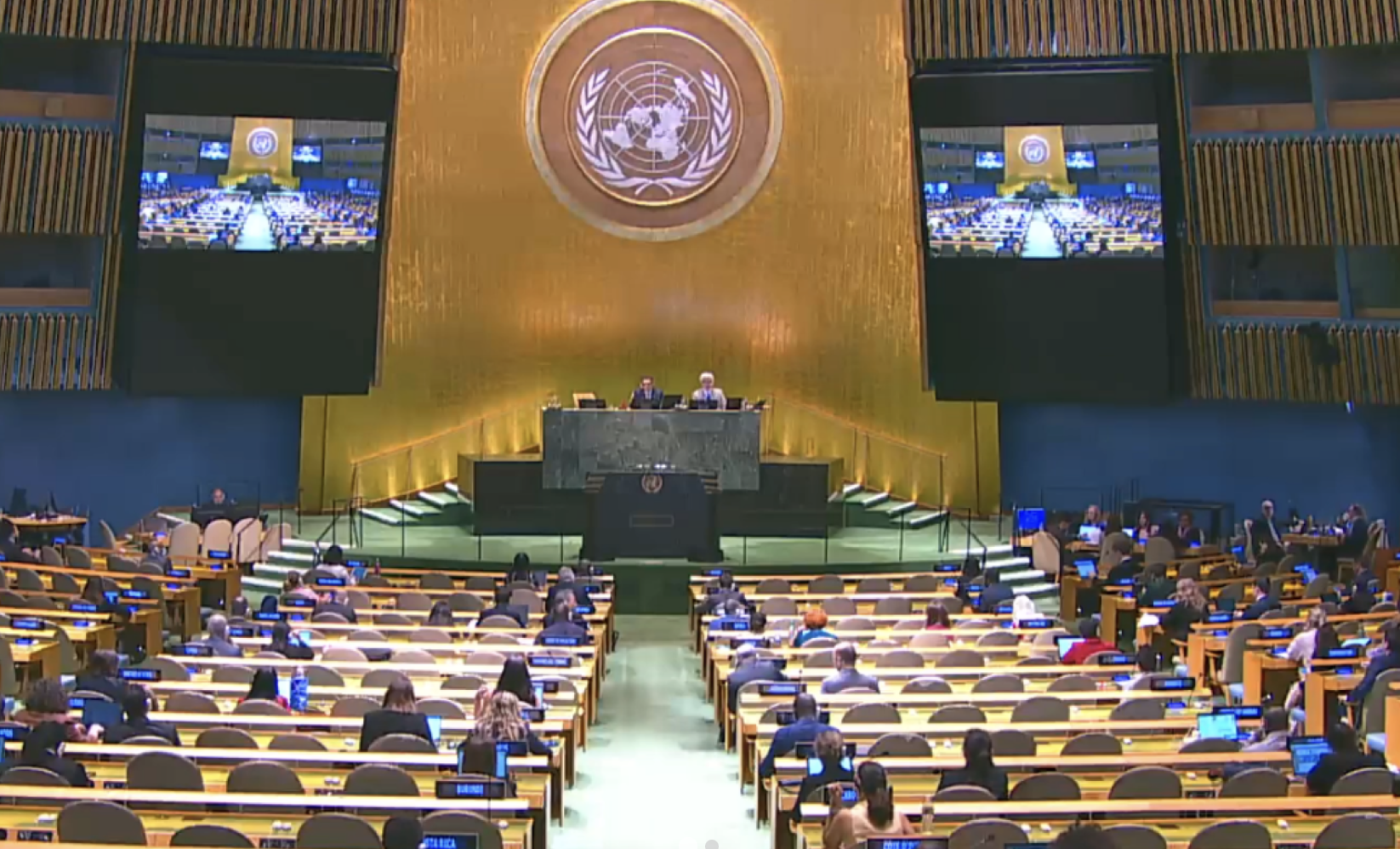
The 2026 General Debate is being held under the theme “Restoring Trust, Managing Transformation: A United Nations That Delivers for All”, at a moment when the global distribution of power is changing rapidly. The UN itself has placed artificial intelligence, geopolitical fragmentation, development financing, inequality and institutional reform among the defining challenges of the session.
Against this backdrop, the interventions of the ten largest African economies by nominal GDP, South Africa, Egypt, Nigeria, Algeria, Morocco, Angola, Kenya, Ghana, Ethiopia and Côte d’Ivoire, reveal a continent increasingly conscious that political representation without economic leverage has limits.
Their national positions are different, their regional interests sometimes collide. Their approaches to security, trade, technology and international alliances are not identical.
Yet a common strategic question runs through many of their interventions: how can Africa move from being a supplier of resources and a consumer of technology to becoming an owner of more of the value created from those resources and technologies?
That may ultimately prove more important than the number of African flags inside the Security Council chamber.
South Africa: representation, sovereignty and the architecture of global power
South Africa entered UNGA81 with a familiar but increasingly strategic demand: reform the institutions of global governance, including permanent African representation on the Security Council.
Foreign Minister Ronald Lamola, who led the South African delegation, also placed the country’s foreign policy within a broader debate over sovereignty, multilateralism, inequality and the application of international law. Pretoria has stated that its objective is not simply more multilateralism, but a more inclusive form of it.
South Africa’s argument is therefore broader than institutional reform. It connects representation with questions about who defines international rules, who determines the legitimacy of interventions and how economic inequalities influence political power.
Lamola has described the South African position in stark terms: “the answer to the current crisis of multilateralism is not less multilateralism, but better and more inclusive multilateralism.”
The geopolitical significance is considerable. South Africa is simultaneously a major African economy, a BRICS member, an important mineral producer and a country seeking a larger African role in global decision-making.
Its position illustrates a central dilemma for Africa: political sovereignty is meaningful, but its practical weight depends increasingly on economic and technological capacity.
Egypt: water, diplomacy and strategic security
Egypt approached UNGA81 from a different strategic position.
Prime Minister Mostafa Madbouly represented President Abdel Fattah El-Sisi and used the General Assembly to reinforce Cairo’s positions on Palestine, regional stability, multilateralism and, critically, water security. Egypt’s official account of the intervention described the Nile as a lifeline linked to the country’s existence and historical development.
That makes Egypt’s position particularly significant in an African context because the country’s strategic interests intersect directly with those of Ethiopia over the Nile.
Madbouly said Egypt does not oppose another country’s right to development, but argued that development should not come at the expense of others. Cairo also reiterated that it regards its water security as an existential matter.
Egypt’s message therefore demonstrates why there is no single African geopolitical position, Africa may speak collectively on Security Council reform, climate finance or development, while individual states pursue sharply different interests over water, territory, security corridors and regional influence.
The lesson is important, continental unity is strategically valuable, but it cannot eliminate national interests.
Nigeria: from demographic weight to institutional power
Nigeria’s intervention was particularly explicit about the relationship between demographic and economic weight and political representation.
President Bola Ahmed Tinubu’s statement was delivered by Vice-President Kashim Shettima, who led the Nigerian delegation. Abuja called for the reform of the Security Council and demanded at least two permanent African seats, with the rights and responsibilities associated with permanent membership.
The Nigerian argument was blunt: “Africa cannot continue to fill the Council’s agenda while remaining absent from its permanent membership.”
But Nigeria’s intervention also linked foreign policy to domestic economic transformation, including macroeconomic management, private-sector development and strategic public investment.
This is important because Nigeria possesses one of Africa’s largest populations, one of its largest economies and a vast domestic consumer market.
The strategic question is whether demographic scale can be converted into productive and geopolitical leverage.
Population alone does not create power, markets do, industrial capacity does. Technology does. Capital does. Institutions do.
Nigeria’s challenge, like that of many African economies, is therefore to convert scale into value.
Algeria: sovereignty in an increasingly contested neighbourhood
Algeria’s position remains strongly shaped by sovereignty, non-interference, security and the future of the Sahel.
Its diplomacy reflects a broader North African concern, the weakening of established security arrangements and the increasing competition for influence across the Sahel and Mediterranean.
Algeria’s strategic geography gives it relevance far beyond the size of its economy. It sits between the Mediterranean, the Sahel and the wider African continent, while possessing substantial energy resources and a long-established diplomatic tradition.
The geopolitical implication is that Algeria views African stability through a security lens in which sovereignty and regional autonomy remain central.
Its position also illustrates a larger African reality, economic power cannot be separated entirely from geography.
Ports, pipelines, borders, energy networks, transport corridors and military security increasingly overlap.
For Africa’s northern states, the contest over the continent’s future is therefore simultaneously an economic, security and geopolitical contest.
Morocco: Atlantic strategy and the economics of connectivity
Morocco approaches the changing global order through a different combination of diplomacy, trade, infrastructure and strategic geography.
Foreign Minister Nasser Bourita used the UNGA81 environment to reinforce Morocco’s diplomatic engagement on Palestine, multilateral affairs and regional cooperation. Morocco also continues to promote its Atlantic and African strategy, linking infrastructure, trade and economic connectivity to broader geopolitical influence.
Bourita has argued that “the world is changing at an unprecedented pace”, a formulation that captures the strategic environment in which Morocco is positioning itself.
The country’s importance increasingly extends beyond traditional diplomacy. Ports, logistics, automotive manufacturing, fertiliser production, renewable energy and commercial links with West Africa have become components of a wider economic strategy.
The Moroccan model demonstrates another dimension of African power: geography becomes more valuable when it is combined with infrastructure, a port by itself is an asset.
A port connected to industrial zones, railways, highways, energy infrastructure, financial services and continental markets becomes a strategic platform.
Angola: diplomacy, peace and the geography of the Atlantic
For Angola, UNGA81 has particular historical significance. In 2026, the country marks five decades of UN membership.
President João Lourenço placed diplomacy, multilateralism, international law, peace and Security Council reform at the centre of Angola’s intervention. He also highlighted the financing of African peace operations and the need for stronger international cooperation on development, debt, climate finance and digital transformation.
One sentence captured Angola’s diplomatic philosophy, “No weapon is more powerful than diplomacy.”
But Angola’s strategic relevance extends beyond diplomacy.
Its Atlantic position, energy resources and role in regional peace initiatives give it a platform from which economic and geopolitical interests intersect.
The Lobito Corridor, linking Angola’s Atlantic coast with mineral-producing regions of the Democratic Republic of Congo and Zambia, has further elevated the country’s importance in discussions about critical minerals and global supply chains.
This is where Angola’s strategic opportunity becomes particularly interesting.
The value of a corridor is not simply the movement of minerals from mine to port. Its deeper potential lies in whether logistics can stimulate manufacturing, agriculture, energy, services, technology and investment along the route.
A corridor that merely exports raw materials reproduces the old model, a corridor that creates industrial ecosystems changes it.
Kenya: the warning against an AI version of the extractive economy
If there was one African intervention at UNGA81 that most clearly connected technology with economic sovereignty, it came from Kenya.
President William Ruto argued that Africa must move beyond consuming artificial intelligence and participate in developing, owning and governing the technology.
His warning was unusually direct, “We must not reproduce the old extractive economy in digital form.”
He added that Africa should not supply the minerals, energy, data, content and talent required by the AI revolution only to import the resulting intelligence at a premium.
Ruto’s argument changes the traditional debate about the digital divide, the question is no longer simply whether Africans have access to the internet.
It is whether African countries will own data centres, computing infrastructure, data, digital platforms, intellectual property and AI-enabled businesses.
At another UNGA81 event, Ruto argued that “AI governance must be globally shaped, not globally imposed.”
That statement goes directly to the emerging geopolitical competition around artificial intelligence.
The United States, China, Europe and other technology powers are competing over computing capacity, chips, data, models and standards.
Africa risks becoming a consumer market in that competition unless it develops its own infrastructure, skills, capital and regulatory capacity.
The AI debate may therefore become the next version of the continent’s long-running natural-resource debate, the difference is that the new resource is not only cobalt or lithium, it is data.
Ghana: the politics of finance
Ghana’s President John Dramani Mahama approached the global order from another angle: the financial architecture underpinning development.
Mahama’s intervention connected Africa’s development challenge to the cost of capital, global inequality, historical injustice and the structure of international economic governance. Ghana has also used the Accra Reset initiative to promote discussions around development financing and a more balanced international economic system, the underlying argument is straightforward.
A country cannot transform its economy if the cost of financing infrastructure, education, health and industrialisation remains prohibitively high.
For Ghana, therefore, the debate about sovereignty is also a debate about finance, the country has framed the issue in historical terms, arguing that political independence did not automatically transfer control over the institutions that govern global trade and finance.
That perspective is important because Africa’s development challenge is not simply a question of attracting more investment, it is also about the terms on which capital arrives.
The distinction between foreign capital that finances productive capacity and capital that simply extracts returns may become increasingly important as African governments seek industrialisation.
Ethiopia: sea access as an economic question
Ethiopia brought geography to the centre of its UNGA81 intervention.
President Taye Atske-Selassie argued that reliable access to the sea is essential to sustaining Ethiopia’s economic transformation and deeper integration into global trade, his formulation was unequivocal:
“Our efforts to build a strong economy cannot generate a sustained development without reliable and dependable access to the sea.”
For Ethiopia, maritime access is not presented merely as a security issue.
It is an economic issue involving trade costs, industrial competitiveness, logistics and integration into international supply chains, that makes the issue relevant far beyond the Horn of Africa.
As African economies industrialise, access to ports and efficient transport corridors becomes a component of competitiveness.
Ethiopia’s position also demonstrates why infrastructure is becoming a geopolitical instrument.
The countries that control ports, railways, roads, pipelines, power grids and digital networks increasingly influence the economic choices available to their neighbours.
Côte d’Ivoire: integration, security and development finance
Côte d’Ivoire’s intervention reflected the priorities of a West African economy that has positioned itself as an important regional commercial and financial centre.
The country placed emphasis on multilateralism, security, economic integration and development financing.
Its position is significant because West Africa is confronting several pressures simultaneously: security instability in the Sahel, demographic growth, infrastructure needs, debt constraints and the unfinished project of continental economic integration.
For Abidjan, the future of African integration cannot be separated from the ability of states to finance development and create economic opportunities.
This is where the African Continental Free Trade Area becomes more than a trade agreement.
If African countries simply remove tariffs while continuing to import most manufactured goods from outside the continent, integration will increase the size of the market without fundamentally changing the structure of production.
The strategic objective is therefore deeper, to use the continental market to build continental production.
The four signals emerging from Africa
Taken together, these ten interventions reveal four major shifts, the first is the movement from representation to power.
African governments continue to demand permanent representation on the Security Council. But increasingly, they are also discussing the economic foundations of influence: finance, infrastructure, technology, energy, industrialisation and markets, the second is the growing importance of critical minerals.
Cobalt, copper, lithium, manganese, graphite, uranium and other strategic resources are increasingly linked to the global energy transition, defence industries, electric vehicles and advanced manufacturing.
But ownership of minerals does not automatically translate into ownership of value.
If Africa mines the resource, exports it, imports the processed material and then imports the finished technology, the continent remains positioned near the bottom of the value chain, the third shift is AI sovereignty.
Kenya’s intervention made this particularly clear, the future contest will not only concern who writes AI software. It will involve who owns the electricity, data centres, computing capacity, datasets, talent, intellectual property and standards that underpin the technology.
The fourth is the recognition that Africa is not a single geopolitical actor, Egypt and Ethiopia have different interests over the Nile, Morocco and Algeria have competing strategic positions in North Africa, Nigeria, South Africa, Kenya, Angola and Ghana have different economic structures and diplomatic priorities, yet these differences do not necessarily prevent cooperation, they make coordination more difficult, and potentially more valuable.
The external powers are watching the same map
The emerging African agenda is unfolding against intensifying competition among the United States, China, the European Union, India, Russia and Gulf states.
Their interests differ, but many intersect around the same strategic assets: critical minerals, energy, agriculture, ports, telecommunications, digital infrastructure, logistics corridors and consumer markets, this creates both opportunity and risk.
African countries can potentially use competition among external partners to diversify investment, technology and financing.
But bargaining power depends on institutional capacity, a country that needs capital urgently has less leverage than one capable of comparing several offers, a country that exports an unprocessed mineral has less leverage than one capable of processing it, a country that consumes digital infrastructure has less leverage than one capable of developing and governing it.
The fundamental question is therefore not whether Africa should choose between Washington, Beijing, Brussels, Moscow, New Delhi or the Gulf.
It is whether African countries can develop sufficient capacity to negotiate with all of them from positions of greater economic strength.
The AfCFTA test
This is where the African Continental Free Trade Area becomes strategically important, Africa has a continental market of enormous potential, but market size alone does not guarantee industrialisation.
The central test will be whether African economies can use continental integration to build regional value chains in food, pharmaceuticals, automobiles, minerals, energy, digital services, textiles, construction materials and advanced manufacturing, the distinction is critical.
Trade integration without productive transformation can increase the volume of dependency, trade integration combined with industrialisation can change the structure of dependency, that is the larger economic question behind many of the speeches heard in New York.
What happens after UNGA81?
The real test of Africa’s message will begin after the speeches, the first indicator will be whether Security Council reform moves from diplomatic declarations towards concrete negotiations.
The second will be whether critical-mineral agreements increasingly include local processing, technology transfer, skills development and industrial investment rather than focusing primarily on extraction.
The third will be whether African governments build the electricity, fibre, cloud, data-centre and skills infrastructure necessary to participate in the AI economy.
The fourth will be whether AfCFTA develops into a platform for continental production rather than simply a larger market for imported goods.
The fifth will be whether strategic corridors, from Lobito to the Red Sea, the Atlantic and Indian Ocean networks, generate industrial ecosystems rather than merely facilitate exports.
These indicators will tell us more about Africa’s changing position in the world economy than the rhetoric of one week in New York.
From the object of geopolitics to an actor in the geoeconomy
The most important African message at UNGA81 may therefore not be that Africa wants more.
It is that Africa increasingly wants to decide what its resources, markets, data, strategic geography and economic future are worth.
That is a more difficult ambition than securing additional representation, a permanent Security Council seat would increase political representation, it would not, by itself, build a factory, a critical-mineral deposit can attract investment, it does not, by itself, create an industrial ecosystem, a young population creates enormous potential, it does not automatically produce skilled workers, a digital market can attract global technology companies, it does not automatically produce African technology companies.
The transition from potential to power requires infrastructure, institutions, capital, skills, industrial policy, regional integration and political coordination, that is the real contest ahead.
Africa already possesses many of the strategic assets that the global economy will increasingly require: natural resources, renewable-energy potential, agricultural land, demographic scale, strategic maritime positions and rapidly expanding digital markets.
The question is whether the continent can build the economic and technological capacity to convert those assets into greater bargaining power.
The next battle will not simply be over who controls Africa, iIt will be over how much value Africa itself can control within the economic chains that are shaping the 21st century.