Can Teodoro Nguema Obiang Mangue’s strategic vision build an economy beyond oil?
- Economic
- June 30, 2026

Equatorial Guinea’s second transformation.
JOHANNESBURG – For more than two decades, Equatorial Guinea was one of Africa’s most remarkable economic success stories. The discovery of offshore oil in the mid-1990s transformed a small Central African nation into one of the continent’s highest-income economies on a per-capita basis. Oil revenues financed modern infrastructure, expanded public investment and dramatically increased government revenues.
Yet the very resource that created this prosperity also exposed the country’s greatest structural weakness. As mature oil fields decline and the global energy transition reshapes investment flows, Equatorial Guinea faces the defining challenge confronting many resource-rich economies: how to replace finite hydrocarbon wealth with a diversified, productive and sustainable economy.
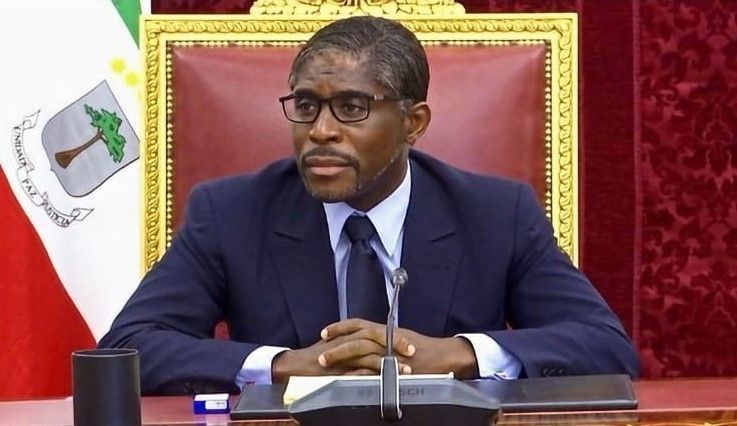
It is against this backdrop that Vice President Teodoro Nguema Obiang Mangue has emerged as the principal architect of a broad economic reform agenda aimed at redefining the country’s long-term growth model. Rather than focusing solely on administrative reform, the strategy seeks to strengthen macroeconomic stability, diversify productive sectors, modernise public institutions, accelerate digital transformation and position Equatorial Guinea as an increasingly attractive destination for international investment, the urgency of these reforms is difficult to overstate.
According to the International Monetary Fund (IMF), Equatorial Guinea’s economy is estimated to have contracted by 6.4% in 2025, driven largely by a 16.8% decline in hydrocarbon production as ageing oil fields continue to mature. Yet beneath the headline contraction lies a more encouraging trend, the country’s non-oil economy is projected to expand by 2.3%, suggesting that diversification efforts are beginning to generate measurable economic activity.
That divergence captures the country’s central economic challenge, the issue is no longer simply declining oil production; it is whether new sectors can grow quickly enough to replace the revenues, exports and employment historically generated by hydrocarbons.
The race against declining oil production
Oil remains the backbone of Equatorial Guinea’s economy, accounting for the overwhelming majority of export earnings and government revenues. But the country’s dependence on hydrocarbons has become increasingly difficult to sustain.
The World Bank estimates that GDP growth slowed to just 0.9% in 2024, following stronger performance the previous year, while warning that medium-term prospects remain constrained unless structural reforms accelerate non-oil growth. The institution identifies declining hydrocarbon production as the country’s principal macroeconomic risk and argues that economic diversification is no longer optional but essential.
Recognising this reality, the government has launched a series of initiatives designed to broaden the productive base of the economy.
These include the reform of the country’s Special Economic Zones, the development of major economic transport corridors in partnership with the World Bank, expanded economic diplomacy with investors in the United States, China, Belarus, Egypt and Spain, and new cooperation agreements covering agriculture, logistics, energy and advanced technologies.
Taken together, these initiatives seek to stimulate private investment, expand non-oil exports and create new sources of long-term economic growth.
Fiscal discipline as an economic asset
Perhaps less visible, but equally important, is the government’s commitment to macroeconomic stability. According to the IMF, Equatorial Guinea reduced its non-oil primary fiscal deficit from 22.3% to 17% of non-oil GDP between 2023 and 2024, while public debt declined from 39.1% to 36.4% of GDP. The authorities have committed to keeping debt below 50% of GDP, preserving fiscal sustainability while maintaining room for strategic public investment.
At a time when higher global interest rates have made international financing more expensive for emerging markets, this fiscal consolidation strengthens investor confidence and improves the country’s resilience to external shocks.
Reforming institutions to improve competitiveness
Among the most notable policy decisions has been the government’s demand for the immediate restructuring of GETESA, the national telecommunications operator, following persistent concerns over network coverage and service quality, on the surface, the decision concerns a single company.
In reality, it reflects a broader understanding that digital infrastructure has become a fundamental pillar of economic competitiveness.
Reliable telecommunications now underpin financial inclusion, digital commerce, e-government services, education, innovation and foreign investment. By prioritising improvements in connectivity, the government signals that digital infrastructure is no longer viewed simply as a public utility but as a strategic economic asset.
This approach aligns closely with the World Bank’s assessment that digital transformation, logistics infrastructure, human capital development and institutional quality will determine Equatorial Guinea’s long-term economic performance.
Economic diplomacy replaces traditional diplomacy
Another defining feature of Vice President Teodoro Nguema Obiang Mangue’s strategy has been the growing use of foreign policy as an instrument of economic development.
Throughout 2026, meetings with international investors, multinational energy companies, Chinese business delegations and senior officials from Europe, Africa and the United States have increasingly focused on attracting foreign direct investment, expanding industrial partnerships and facilitating technology transfer.
This reflects a broader trend across emerging economies, where diplomatic engagement is increasingly measured not by political symbolism but by its capacity to generate investment, create jobs and stimulate industrial development.
Human capital remains the missing link
Despite progress in macroeconomic management and institutional reform, Equatorial Guinea continues to face profound structural challenges.
The World Bank estimates that approximately 57% of the population lived below the international poverty line in 2024. Public expenditure on social sectors remained modest at around 1.9% of GDP, while the country’s Human Capital Index suggests that a child born today will achieve only about half of his or her potential lifetime productivity under current education and health outcomes.
These figures highlight an enduring reality, infrastructure and investment alone cannot sustain long-term growth. Productivity ultimately depends on education, healthcare, skills development and institutional capacity.
The decisive decade
Countries that have successfully escaped the so-called “resource curse”, from Norway to Botswana and, more recently, the United Arab Emirates, share one characteristic, they used natural resource wealth to build institutions rather than merely finance consumption, Equatorial Guinea now stands at a similar crossroads.
The reform agenda championed by Vice President Teodoro Nguema Obiang Mangue reflects a coherent long-term strategy centred on fiscal stability, institutional modernisation, digital transformation, logistics development, agricultural expansion, economic diversification and foreign investment.
Whether that vision succeeds will depend less on the ambition of the reforms than on their execution.
The IMF projects that sustained implementation could allow the non-oil economy to expand by more than 3% annuallyover the medium term, gradually offsetting the structural decline in hydrocarbon production. Achieving that objective would mark a fundamental shift in the country’s economic trajectory.
If successful, the current reforms could represent Equatorial Guinea’s second great economic transformation, not one driven by oil wealth, but by productivity, investment and diversification.
The country’s future will not be determined by how much oil remains beneath its waters. It will depend on how effectively today’s reforms create an economy capable of thriving long after those resources are exhausted.