How a dispute over state policing exposed Nigeria’s deeper democratic strains
- NigeriaPolitics
- August 9, 2026


A reform intended to bring security closer to local communities has opened a wider argument about constitutional procedure, parliamentary transparency and public trust ahead of the 2027 elections.
ABUJA — At first, the argument was about policing. It soon became a debate about something more fundamental: how Nigeria changes its Constitution and whether citizens can independently verify that Parliament has followed the rules.
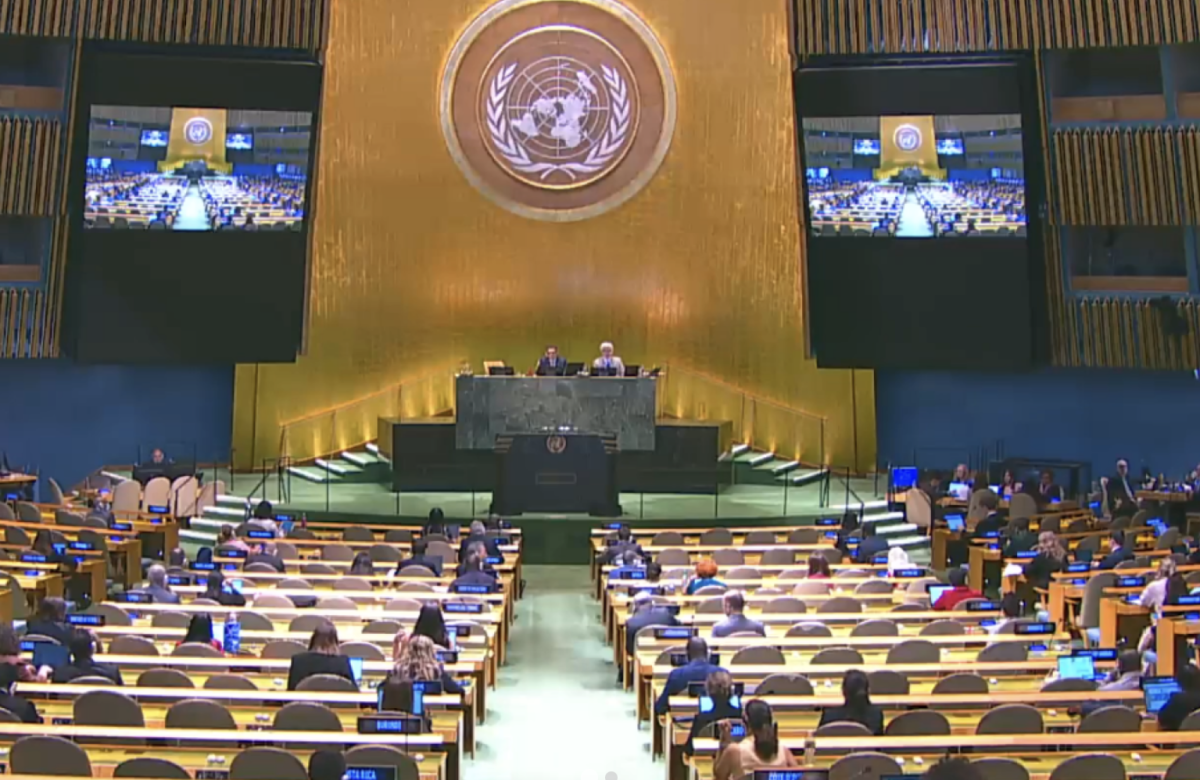
On 23 July 2026, Nigeria’s House of Representatives approved a constitutional amendment that would allow the country’s 36 states to establish their own police services alongside a federal force.
Speaker Tajudeen Abbas said 311 of the chamber’s 360 members supported the proposal. According to his account, 276 members had signed an attendance register in support of the bill, while another 35 participated online.
That total comfortably exceeded the two-thirds threshold of 240 members cited by the parliamentary leadership.
But opposition legislators walked out of the chamber, arguing that the method used to reach the final figure did not meet the standards expected for an amendment to the country’s supreme law.
Their objection was not primarily to state policing itself. The minority caucus said it supported measures capable of improving security, but argued that the bill’s 26 clauses should have been considered and voted on individually rather than approved through a voice vote followed by an aggregated count.
The disagreement has turned a widely supported security reform into a test of Nigeria’s democratic procedures.
Why was the House voting again?
The legislative history is unusually complicated, in June, the House approved its own version of the state-police amendment. The Senate later considered and passed a separate executive proposal submitted by President Bola Tinubu.
Because constitutional amendments must be approved in identical form by both chambers, the existence of two versions created a problem. The House subsequently stepped back from its earlier proposal and agreed to consider the President’s version, which it formally introduced in July.
It was this executive-sponsored text that the House approved on 23 July.
The vote was therefore intended to move the two chambers towards a common constitutional framework. Instead, the procedure used in the House generated another dispute.
For the parliamentary leadership, the decisive fact was that 311 lawmakers had been recorded as supporting the bill.
For its critics, the important question was how those votes were cast, authenticated and connected to the consideration of each constitutional provision.
The distinction matters because constitutional democracy is not based only on the final number announced by the presiding officer. It also depends on a transparent process through which representatives debate, amend and record their decisions.
Two-thirds or four-fifths?
There is a second and potentially more serious legal question.
Section 9 of Nigeria’s Constitution says most constitutional amendments require the support of at least two-thirds of all members of each chamber of the National Assembly, followed by approval from at least 24 of the country’s 36 state assemblies.
But the Constitution requires a higher threshold of four-fifths when an amendment affects Section 9 itself, Section 8 or Chapter IV, which contains provisions protecting fundamental rights.
The Policy and Legal Advocacy Centre, a Nigerian civil-society organisation that monitors Parliament, argues that the state-police proposal affects provisions contained in Chapter IV. On that interpretation, the amendment would require four-fifths support in both chambers, rather than the two-thirds majority cited by parliamentary leaders.
In the House of Representatives, four-fifths of 360 members would require at least 288 votes. The 311 votes announced by the Speaker would exceed that figure, provided that all of them are accepted as valid.
The Senate presents a more difficult calculation, Senate Leader Opeyemi Bamidele said 84 of the chamber’s 109 members voted for the proposal. That is more than the two-thirds threshold but fewer than the 88 votes that would be required to reach four-fifths.
The National Assembly has treated two-thirds as the applicable requirement. PLAC takes a different view.
That does not automatically invalidate the legislation. It does, however, create a constitutional question that may require further parliamentary clarification or, ultimately, judicial interpretation.
State police do not yet exist
Despite some political declarations suggesting that Nigeria has already adopted state policing, the reform is not yet in force.
The amendment must still pass through the remaining constitutional stages. At least 24 state assemblies must approve it before it can be returned for the final federal process and presidential assent.
Even a successful constitutional amendment would not be sufficient to make state police operational.
The Presidency has established a working group to prepare a National Policing Bill covering recruitment, training, funding, oversight, jurisdiction, complaints, discipline and the transition from the existing centralised structure.
The group’s seven-week programme runs from 27 July to 14 September. A draft is scheduled to be presented to President Tinubu on 3 September before further national consultations and transmission to the National Assembly.
This distinction is important, the constitutional amendment would create the legal possibility of state policing. The National Policing Bill would determine how the system actually works.
It would also have to answer some of the most difficult questions surrounding the reform: which states are financially capable of maintaining a professional police service, who investigates misconduct, how federal and state commands share intelligence, and what happens when their authority overlaps.
Why Nigeria wants state policing
The demand for decentralisation has been building for years, Nigeria’s police system is controlled from Abuja, despite the country facing markedly different security threats across its regions.
The north-east has experienced a prolonged jihadist insurgency. The north-west and north-central regions face mass kidnappings and armed criminal groups. The south-east has recorded separatist-related violence, while oil theft and organised crime remain significant concerns in the Niger Delta.
Supporters say a locally controlled service could respond more quickly, recruit officers familiar with local languages and communities, and improve intelligence gathering. State governors have also complained that they are held politically responsible for security without having operational control of the police deployed within their territories, but Nigeria’s history makes the proposal controversial.
Critics fear that governors could use state police against opponents, journalists, protesters or minority communities. Wealthier states may also be able to build better-trained forces, while poorer states struggle to pay salaries, provide equipment or maintain adequate oversight.
The proposed constitutional framework contains safeguards against political interference. It provides for state police service commissions and limits the circumstances in which governors may direct commissioners.
But legislation alone cannot guarantee independence. The effectiveness of those safeguards will depend on appointments, financing, enforcement and the ability of courts and oversight bodies to act without political pressure.
The central question is therefore not simply whether Nigeria should decentralise policing.
It is whether the country can bring law enforcement closer to its communities without also decentralising political abuse.
Sam Amadi’s warning
Sam Amadi, a law and governance scholar and director of the Abuja School of Social and Political Thought, has become one of the most prominent critics of the process.
Amadi supports deeper police reform but has argued that the urgency of Nigeria’s security crisis should not be used to weaken constitutional scrutiny. In an interview about the bill, he said the reform was not an emergency that justified the destruction of constitutional due process.
His wider argument is that Nigerian democracy is increasingly defined by institutions that continue to exist formally but are becoming less effective at limiting political power.
He has used the term “electoral autocracy” to describe a system in which elections take place but electoral competition, institutional accountability and the enforcement of rules are progressively weakened.
That description remains Amadi’s political assessment rather than an internationally agreed classification.
The V-Dem Institute’s 2026 Democracy Report places Nigeria in a “democratic grey zone”, close to the boundary separating electoral democracy from autocracy, but not formally classified as an electoral autocracy, the distinction is significant.
Nigeria still has competitive parties, critical media organisations, active civil-society groups, functioning courts and legislators willing to challenge parliamentary decisions.
The walkout over the state-police bill is itself evidence that institutional opposition has not disappeared.
But democratic erosion does not always begin with the abolition of elections or Parliament. It may take the form of exceptional procedures gradually becoming normal, oversight becoming weaker and institutions losing the public’s confidence.
A crisis of trust
Public-opinion data show that the state-police dispute is taking place against a background of deep dissatisfaction.
A NOIPolls survey conducted in June found that 72% of respondents were dissatisfied with the functioning of Nigerian democracy, compared with 21% who said they were satisfied.
The same poll found that 47% said the Independent National Electoral Commission could not be trusted at all, while 43% gave the same response when asked about legislators.
Yet 71% remained optimistic about democracy’s future. The results suggest that many Nigerians have not rejected democratic government, but believe that the institutions responsible for delivering it are failing to meet their expectations.
The survey involved telephone interviews with 1,000 adult mobile-phone users across Nigeria’s 36 states and the Federal Capital Territory. NOIPolls reported a margin of error of 4.65 percentage points and acknowledged that the method may not fully represent people without access to mobile phones.
A separate Afrobarometer survey conducted in 2024 found that almost three-quarters of Nigerians still preferred leaders to be chosen through regular, open and honest elections.
That creates an important contrast: support for democratic principles remains stronger than satisfaction with democratic performance.
The shadow of the 2023 election
The decline in trust cannot be separated from the disputed 2023 general election.
The European Union’s observation mission said legal, operational and transparency problems damaged confidence in the electoral process. Its final report included 23 recommendations intended to improve future elections.
The Nigerian government strongly rejected those conclusions.
The Presidency said the European mission had observed only a limited share of polling stations and maintained that the election was among the most transparent and best organised since the country returned to civilian rule in 1999.
The disagreement remains unresolved at the political level.
Opposition parties and some monitoring organisations continue to point to failures in result transmission, administration and transparency. The government and the governing All Progressives Congress argue that the election’s outcome was legally confirmed and that critics have exaggerated the shortcomings.
As the 2027 election approaches, the credibility of the next vote will depend not only on whether the electoral commission complies with the law, but whether citizens believe they can observe and verify that compliance.
The same principle lies at the heart of the state-police controversy.
The budget and the same transparency problem
Nigeria’s budget has become another source of institutional concern.
The National Assembly approved expenditure of ₦68.323tn for 2026, more than ₦9tn above the ₦58.47tn initially proposed by President Tinubu.
The approved framework included ₦32.287tn for capital projects and extended the implementation period for elements of the previous year’s capital budget.
In July, the International Monetary Fund’s resident representative in Nigeria, Christian Ebeke, said public expenditure equivalent to about 2% of gross domestic product had not been recorded in recent official budgets.
According to the IMF official, the omissions created a difference between Nigeria’s reported deficit and its actual financing needs, partly because some capital spending connected to major projects had not appeared in budget documents or implementation reports.
The federal government rejected claims that this amounted to more than ₦8tn in illegal or secret expenditure.
Finance Minister Taiwo Oyedele said the spending had been authorised through appropriation laws, supplementary budgets, statutory transfers and other legislation. He argued that the IMF’s concerns related principally to the timing, consolidation and presentation of fiscal information rather than the legality of the expenditure, the two positions are not entirely contradictory.
The government says the expenditure was legally authorised. The IMF says the complete fiscal picture was not adequately reflected in the principal budget documents and execution reports.
But the political effect is similar to the dispute over the state-police vote: citizens are presented with an official final figure while struggling to reconstruct the full process through which it was produced.
A democracy under pressure
Nigeria’s institutions have not collapsed, Parliament still debates legislation. Opposition lawmakers still protest. Civil-society organisations scrutinise constitutional amendments. Journalists investigate public spending, and state assemblies will still have an opportunity to examine the state-police proposal, these are important democratic protections, but their existence alone does not guarantee their effectiveness.
Democratic institutions depend on procedures that are consistent, records that are accessible and officials who accept that transparency is part of legitimacy rather than an inconvenience.
State policing may eventually become one of Nigeria’s most consequential security reforms since the return to civilian government in 1999.
It could improve local intelligence, shorten response times and give communities a greater role in determining how they are protected.
It could also create 36 new centres of coercive authority vulnerable to political control, uneven financing and weak accountability, that is why the process matters as much as the policy.
Before the 2027 election, Nigeria’s democratic test will not be limited to whether Parliament passes bills or the electoral commission organises another national vote.
It will be whether institutions can demonstrate, through public, documented and verifiable procedures, that their decisions were reached lawfully.
In a country where public trust is already scarce, reaching the required number is only part of the task, showing how that number was reached may prove just as important.