Nigeria’s economy grows 4.43%, but Moody’s warns recovery has yet to reach public finances
- Economic Outlook
- September 1, 2026

Second-quarter expansion and a stronger external position prompt a positive sovereign outlook, while weak revenue, inflation and industrial fragility continue to test Tinubu’s government
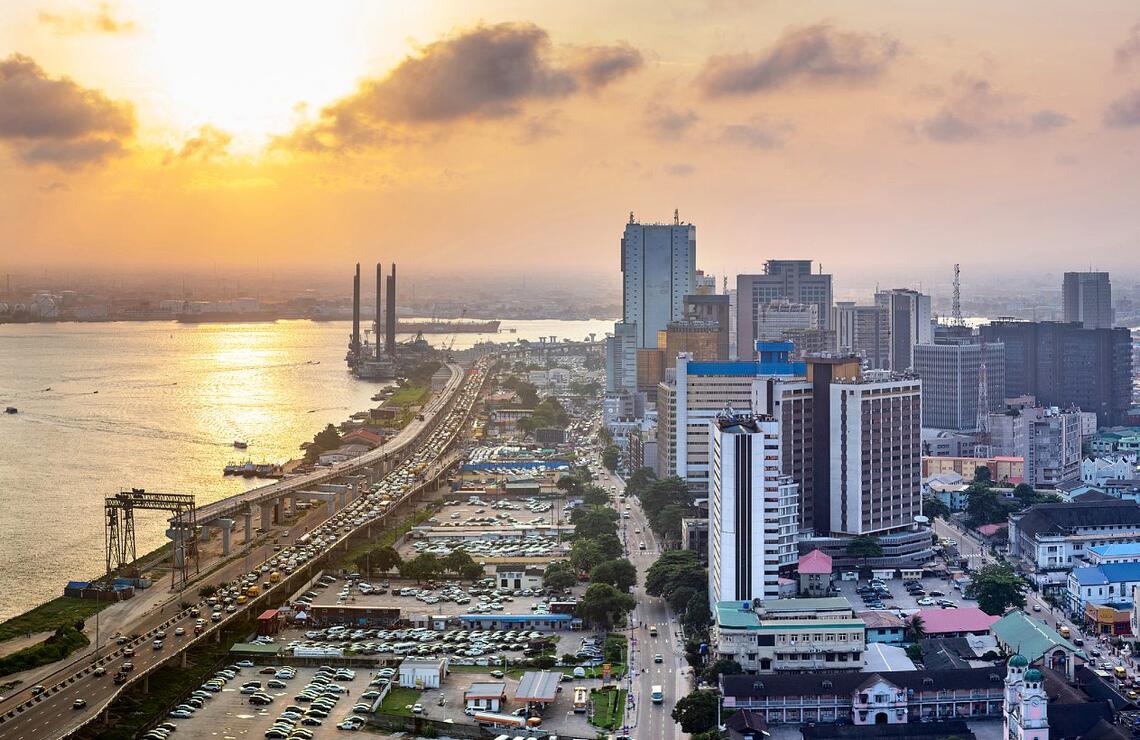
ABUJA — Nigeria’s economy gained momentum in the second quarter and Moody’s raised the outlook on the country’s sovereign debt, offering President Bola Tinubu’s government two signs that reforms launched three years ago are beginning to bear fruit. Yet in Africa’s most populous country, a wide gap remains between macroeconomic stabilisation and a tangible improvement in living standards.
Gross domestic product expanded 4.43 per cent from a year earlier between April and June, up from 4.23 per cent in the same period of 2025 and 3.89 per cent in the first three months of this year, according to the National Bureau of Statistics. Agriculture grew 4.39 per cent, while services expanded 4.60 per cent.
The composition of growth, however, is less reassuring than the headline figure suggests. Trade, telecommunications, banking, real estate and agriculture advanced, but industry lost momentum. Industrial growth slowed from 7.46 per cent to 3.9 per cent, exposing the obstacles that continue to impede Nigeria’s productive transformation: expensive and unreliable power, insecurity, high logistics costs and limited access to finance.
That divergence helps explain why the recovery remains barely visible to many households. An economy that imports a large share of the goods it consumes sends part of any demand stimulus to foreign producers. At the same time, a weak industrial base restricts the creation of formal, better-paid jobs. GDP can rise without disposable incomes increasing at the same pace.
Moody’s acknowledged the improving macroeconomic backdrop by revising Nigeria’s outlook to positive from stable. The agency cited the accumulation of foreign-exchange reserves, current-account surpluses, a better-functioning currency market and stronger-than-expected growth. Annual inflation slowed to 15.4 per cent in July from 25.3 per cent a year earlier, adding to evidence of stabilisation.
The agency nevertheless kept Nigeria’s sovereign rating at B3, still well below investment grade. Its decision carried a central warning for Abuja: the country’s external position has improved faster than its public finances. Government revenue remains exceptionally weak, limiting the state’s ability to fund services, invest in infrastructure and absorb shocks without taking on more debt.
For investors, the positive outlook reduces the risk of an immediate deterioration in Nigeria’s credit profile and raises the prospect of a future upgrade if reforms deliver stronger revenue and improved debt-servicing capacity. But it is not an upgrade in itself. Borrowing costs are likely to remain high as long as creditors believe that an excessive share of public revenue is being consumed by debt service.
Oil has provided some relief. Crude production reached 1.505mn barrels a day in July, or 1.67mn b/d when condensates are included, according to the upstream regulator. Higher exports, combined with refined-product sales and favourable international prices, have strengthened reserves and the current account.
That buffer also carries a familiar risk. Previous cycles have shown how temporary oil windfalls can be used to finance permanent expenditure, leaving the budget exposed when prices or production decline. Economists argue that exceptional receipts should be channelled into infrastructure and stabilisation funds rather than recurrent spending. The transparency of procurement and the quality of investment will matter as much as the amount collected.
Tax reform is the other side of the equation. With a narrow formal tax base relative to a population of about 230mn, raising rates on workers and businesses already in the system offers limited returns and risks suppressing investment. The challenge is to broaden the base, simplify compliance, gradually bring the informal economy into the system and tax new sources of income without placing a disproportionate burden on poorer households.
The political calendar complicates that effort. The approach of the 2027 elections is likely to stimulate public and private spending, supporting demand in the short term but increasing the risk of renewed inflation and fiscal slippage. That could make it harder for the central bank to ease monetary conditions without reigniting pressure on prices and the naira.
Nigeria is therefore entering a more favourable, but not yet decisive, phase. Growth of 4.43 per cent and Moody’s positive outlook suggest the economy has become more resilient. The next test will be whether stronger reserves, oil revenue and currency reforms can be converted into reliable electricity, better roads, industrial investment and jobs.
Without that shift from stabilisation to productive investment, the recovery will remain more visible in credit reports than in household budgets.