Cape Verde sustains robust growth, but reliance on tourism exposes limits of its economic model
- Economic Outlook
- September 1, 2026

Economy is forecast to expand by about 4.8% in 2026, supported by European visitors and investment, while high debt and poor inter-island links hinder diversification
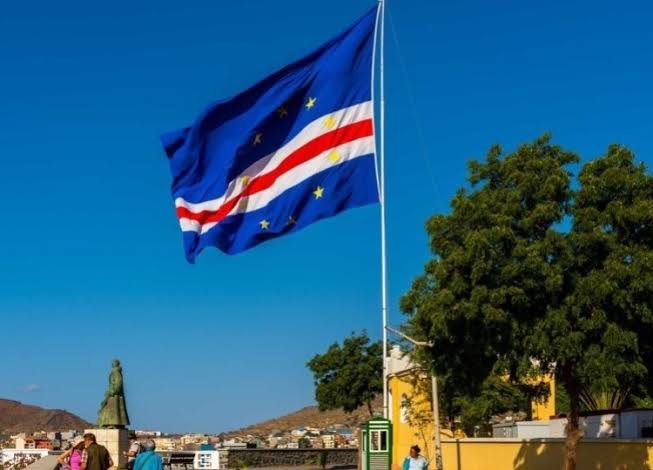
PRAIA — Cape Verde’s economy is expected to grow by about 4.8% this year, one of the strongest rates among Africa’s small island states, as tourism demand and investment support activity. But the expansion is also exposing a longstanding weakness, the archipelago remains heavily reliant on European visitors and an inadequate domestic transport system that limits the spread of economic gains beyond its main holiday destinations.
Gross domestic product grew 6.4% year on year in the first quarter of 2026, following a 6.3% expansion in 2025 as a whole. The World Bank expects growth to moderate to 4.8% this year, while other institutional forecasts are close to 4.7%. The slowdown does not mark a reversal of the cycle, but rather a return to a less exceptional pace after the post-pandemic tourism rebound.
The performance reinforces Cape Verde’s position as one of West Africa’s most politically stable economies. Relatively strong institutions, regulatory predictability and the Cape Verdean escudo’s peg to the euro have helped sustain investor confidence amid a more volatile international environment.
Tourism remains the main engine of growth. Record visitor arrivals, expanded air capacity and a recovery in private consumption allowed services to account for most of the expansion in 2025. Services exports reached 30.5% of GDP, while remittances from the diaspora were equivalent to 10.3%.
The dependence is highly concentrated, however. About 93% of tourists come from Europe, while activity is clustered on the islands of Sal and Boa Vista. A European downturn, reduced airline capacity or an escalation in geopolitical tensions could quickly hit foreign earnings, employment and tax revenue.
That exposure has become more visible as international energy prices have risen. The World Bank expects inflation to climb to 3.2% in 2026 from 2.3% a year earlier and forecasts the current account will return to a deficit of about 1.5% of GDP as imports become more expensive.
Foreign-exchange reserves are expected to remain comfortable after reaching a record €975mn in 2025, equivalent to 7.1 months of prospective imports. Foreign direct investment, projected at 2.7% of GDP, and remittances should continue to provide an important external buffer.
The public finances have also improved. Cape Verde recorded its first overall budget surplus since 2007 last year, equivalent to 1% of GDP, helped by a 16.8% increase in tax revenue and a one-off payment linked to an airport concession. Public debt fell to 100.7% of GDP, continuing its decline from the post-pandemic peak.
The headline figures nevertheless conceal limited fiscal room. Debt service absorbs 34.2% of government revenue. Once the obligations of state-owned enterprises are included, the proportion rises to 46.3%. The national airline remains a significant source of risk through guarantees contracted at rates above the government’s own borrowing costs.
The government must prevent investment in infrastructure and state-owned companies from creating fresh liabilities before delivering productivity gains. Fiscal discipline based on spending restraint alone may preserve headline indicators in the short term, but it will not address the constraints preventing private companies from operating across a fragmented domestic market.
The most immediate obstacle is connectivity between the islands. Limited, expensive and unpredictable domestic flights coexist with irregular maritime services, ageing fleets and opaque public-compensation arrangements. For agricultural producers and fishing companies, transport costs erode margins and restrict access to hotels and restaurants on the main tourist islands.
Better connections could spread tourism beyond Sal and Boa Vista, integrate domestic supply chains and create opportunities for young people and women on less-developed islands. The World Bank has recommended performance-based transport contracts, transparent subsidies, more independent regulation and greater participation by private operators.
Those reforms would require a redefinition of the state’s role. The government frequently acts simultaneously as shareholder, regulator, financier and policymaker. That overlap creates conflicts of interest, deters private capital and concentrates risk on the public balance sheet.
Cape Verde also faces high climate-adaptation costs. Drought, water scarcity, coastal erosion and extreme weather threaten infrastructure and economic activity in a country with few natural resources and a heavy reliance on imports. Investment in water systems, renewable energy and coastal protection will be essential, but will compete for room in a budget constrained by debt.
The outlook remains favourable. Unemployment fell to 6.2% in 2025 and growth continues to exceed that of many comparable economies. Even so, the success of the next phase will be measured less by the number of tourists arriving in the archipelago than by its ability to connect all ten islands to a more integrated economy.
Without reliable transport, greater private-sector participation and stronger domestic supply chains, Cape Verde risks maintaining respectable but concentrated growth, robust in the national statistics, yet uneven in the everyday experience of its islands.