Mozambique rewrites mining rules as Chapo seeks to turn mineral wealth into investment
- Politics
- September 13, 2026
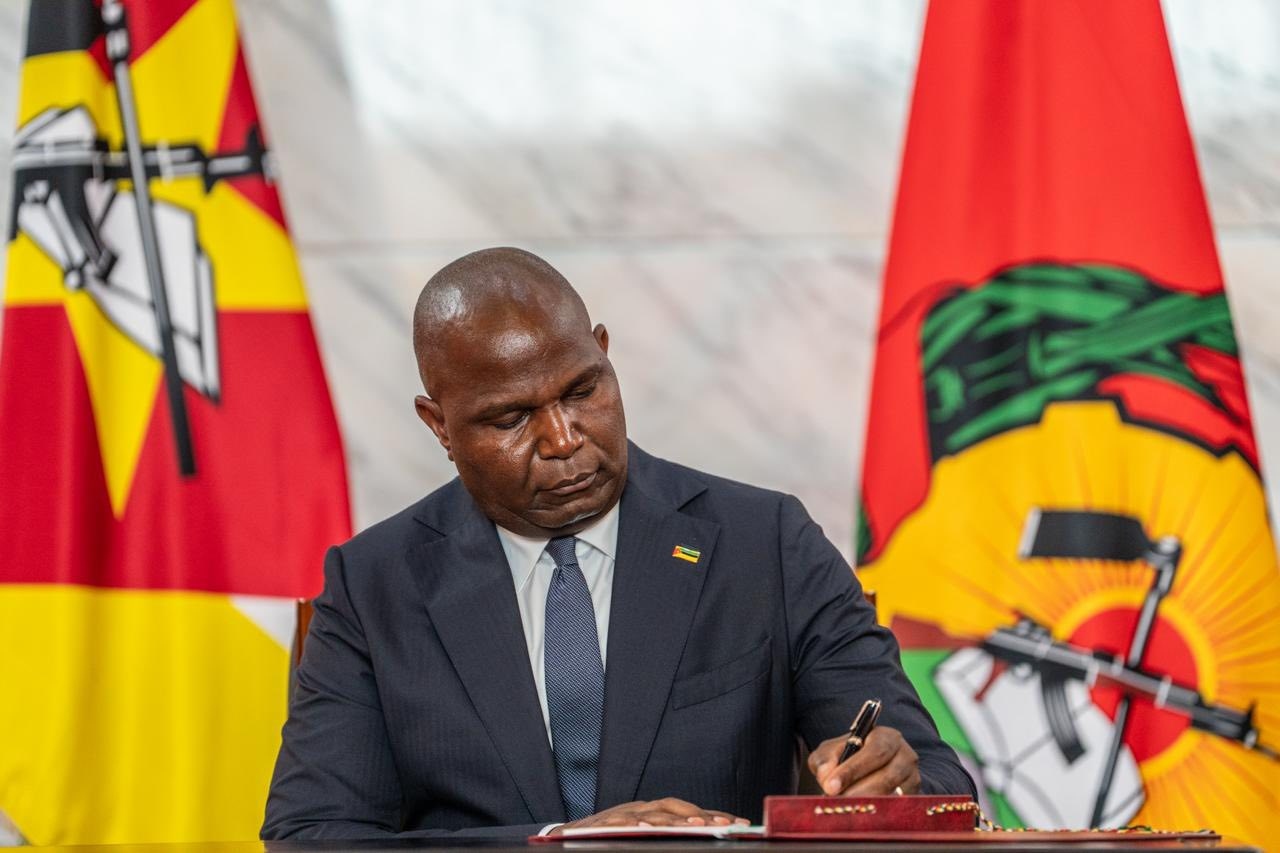

MAPUTO — Mozambique is moving to overhaul its mining sector in an effort to attract investment, strengthen state oversight of natural resources and shift the industry from the export of raw materials towards greater domestic processing and industrial development.
President Daniel Chapo said on Saturday, September 12, after a three-day working visit to Inhambane province, that the approval of regulations governing the country’s new Mining Law would allow the government to reorganise the sector, strengthen enforcement and curb illegal mining. The reform is expected to be accompanied by the operationalisation of the National Mining Company and the reopening of a more organised mining cadastre.
The overhaul comes as Mozambique seeks to capitalise on significant deposits of graphite, coal, heavy mineral sands, gold, rubies, titanium and other strategic minerals. In 2024, gold production reached 626kg, while coking coal and thermal coal output increased by 6.4 per cent and 11.2 per cent respectively, according to government data.
The new legal framework goes beyond enforcement. Law No. 7/2026 of June 3 replaced the previous 2014 mining legislation and introduced a significant change in the relationship between the state and mining companies: the government is entitled to a minimum 15 per cent free and non-dilutable stake in mining projects through the new state-owned mining company. The legislation also seeks to discourage the export of unprocessed minerals and encourage greater domestic beneficiation.
For international investors, the reform presents both an opportunity and a risk. A mandatory state stake could increase Mozambique’s ability to capture economic value from its mineral resources, but it also places greater importance on clarity over capital returns, taxation, governance and risk-sharing. Industry representatives have warned that the 15 per cent requirement could affect the country’s ability to attract foreign capital.
The underlying economic opportunity, however, remains substantial.
In January 2026, Chapo inaugurated a graphite processing facility in Niassa with an announced capacity of 200,000 tonnes a year. The project, developed with approximately $200mn in investment, initially employed 890 people, with plans to increase employment to about 2,000 during its second phase.
Another example is the Moma Titanium Minerals Mine, operated by UK-listed Kenmare Resources. The company invested approximately $156mn in 2025 to upgrade its main processing facilities. For 2026, it expects around $30mn in development capital expenditure and a further $30mn in sustaining capital expenditure. The operation generated $312.1mn in revenue in 2025.
The scale of the challenge is particularly visible in graphite. Mozambican graphite production fell 64 per cent in 2024 to 34,899 tonnes, reflecting operational suspensions as well as market and security pressures. Rebuilding this industry could prove strategically important as graphite remains a critical input for lithium-ion batteries used in electric vehicles and energy-storage systems.
The country’s graphite ambitions have also attracted strategic international financing. Syrah Resources, which operates the Balama graphite mine, received in March 2026 a strategic investment proposal from the US International Development Finance Corporation designed to provide liquidity to the operation and mobilise additional private-sector capital.
Against this backdrop, the planned reopening of Mozambique’s mining cadastre is more than an administrative exercise. For investors, a transparent and reliable cadastre is critical infrastructure. It can reduce disputes over licences, improve legal certainty and allow companies to assess geological and commercial risks before committing capital.
Chapo’s reference to mining areas in Manica and Tete, including the so-called “Six Cars” mine, should therefore be viewed as part of a broader policy agenda. The government’s objective is not simply to shut down illegal operations, but to formalise mining activities, improve worker and community safety and create conditions in which mineral resources can generate productive investment, employment and fiscal revenue.
The central test for Maputo will be finding the balance between resource sovereignty and investor predictability.
The new law gives the state a 15 per cent stake. The next challenge will be demonstrating that such participation can coexist with private capital, international technology and long-term financing.
If Mozambique succeeds, the 2026 mining reforms could become a competitive advantage rather than merely a regulatory change. The opportunity is to move beyond exporting what lies beneath the ground and build around it mines, processing plants, local supply chains and domestic industrial capacity.
The approval of the implementing regulations in the coming days will therefore be more than a bureaucratic milestone. It will be an early test of the credibility of Mozambique’s new mining policy, and of whether the country can convert geological wealth into a broader investment and industrialisation story.