Kenyan government launches school Cooking Gas Programme
- KenyaPolitics
- January 3, 2025
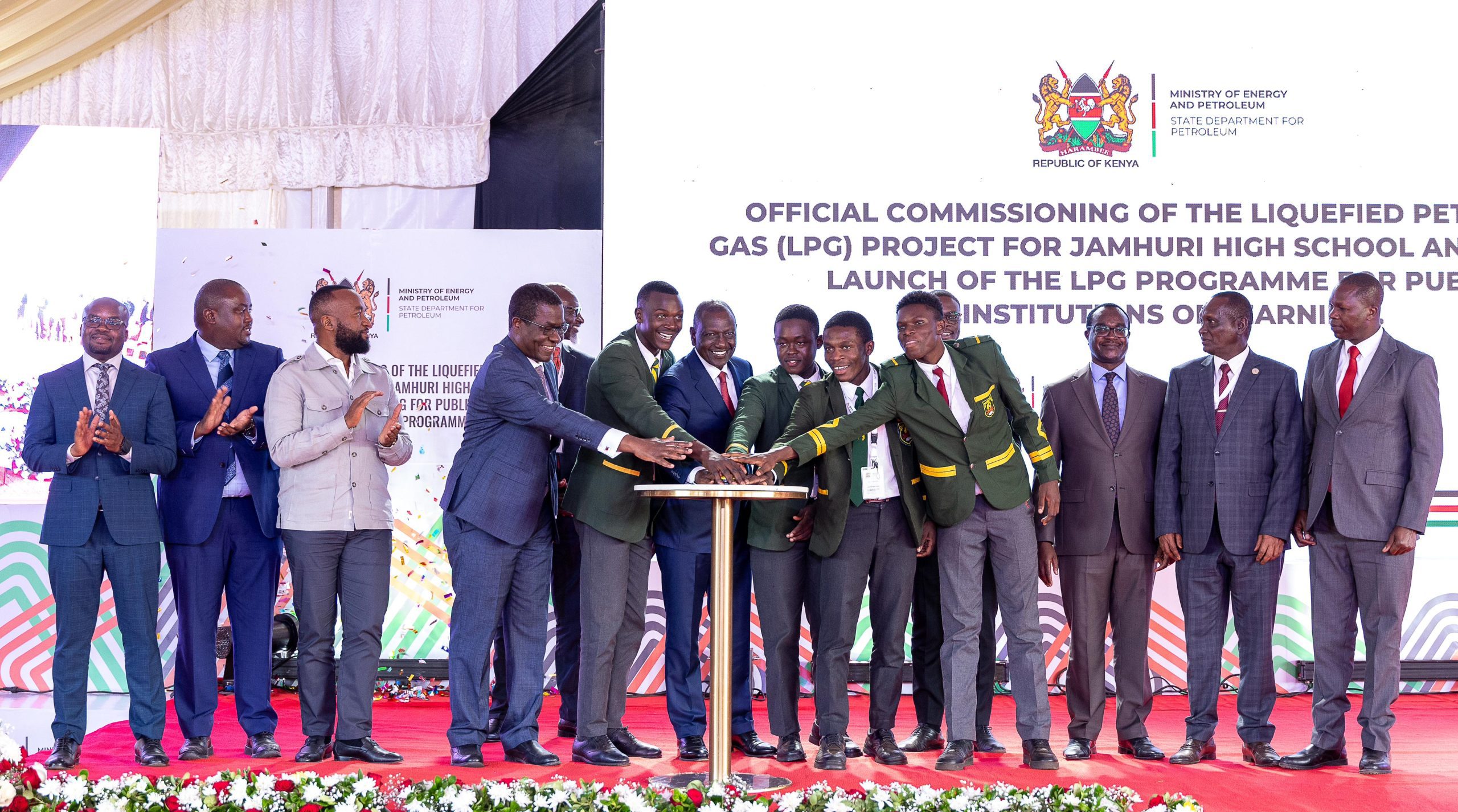

Johannesburg, South Africa – President William Ruto officially launched the School Cooking Gas Programme, an initiative aimed at connecting 11,000 public schools to clean energy by 2025. Speaking at Jamhuri High School in Nairobi, the President emphasised the pivotal role of the private sector in funding and implementing the project, which seeks to transition schools from using firewood and charcoal to liquefied petroleum gas (LPG).

AfricaHeadline Reports Team
editorial@dw-demosnewstaion.online
The programme is part of the government’s broader climate agenda, including a target to plant 15 billion trees by 2030 to combat deforestation and mitigate climate change.
The President announced plans to increase Kenya’s annual per capita LPG consumption from the current 6.5kg to 15kg and boost household gas penetration from 24% to 70% by 2030.
To support affordability and access, gas will be purchased through an Open Tender System, ensuring competitive pricing for consumers. Infrastructure enhancements, including a common-user import facility at the Kenya Petroleum Refineries Ltd, are underway, backed by zero-rated taxes on LPG to expand storage and distribution nationwide.
The programme is expected to deliver dual benefits: improving health outcomes by reducing smoke-related illnesses and conserving Kenya’s forest cover by curbing the use of biomass fuels.
In addition to energy reforms, President Ruto reaffirmed the government’s commitment to education by announcing that 11,000 new classrooms for Grade 9 learners will be ready for use in January 2025.
The launch event was attended by Nairobi Governor Johnson Sakaja, Energy Cabinet Secretary Opiyo Wandayi, Mining Cabinet Secretary Hassan Joho, and several Members of Parliament.
The President reiterated that the government is aligning its policies to ensure sustainable development, creating a fit-for-purpose education system, and driving investment in the LPG sector to generate economic growth and job creation.