What Xi brought to Cairo: Capital, Technology and Power
- PoliticsWorld
- September 6, 2026

Analysis
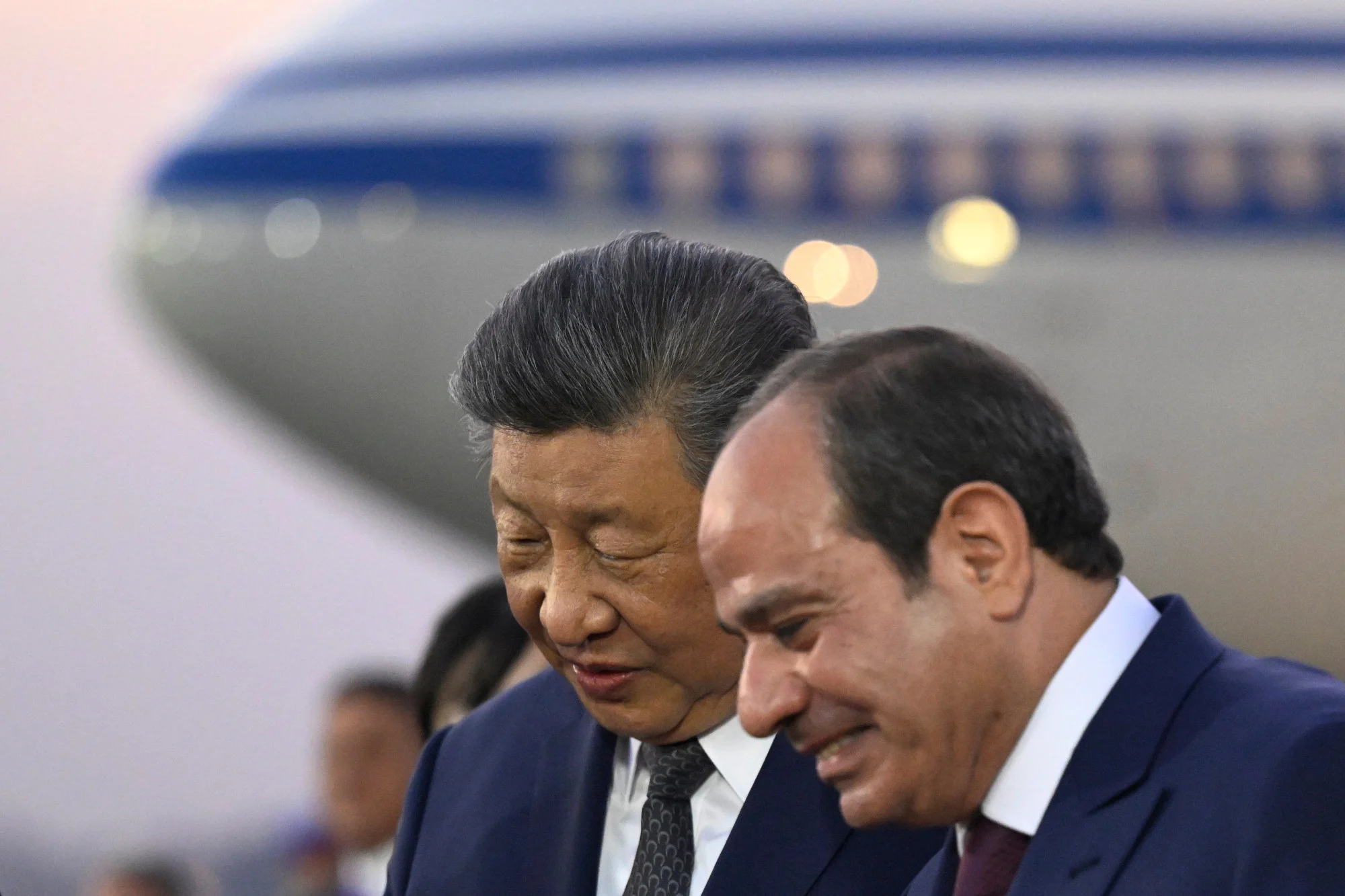
When Xi Jinping arrived in Cairo on the evening of September 1, he was met with a carefully choreographed reception marking the end of a long diplomatic absence. It was the Chinese president’s first state visit to Egypt in a decade and came as the two countries celebrated 70 years of diplomatic relations.
In 1956, Egypt became the first African and Arab country to recognise the People’s Republic of China. Seven decades later, the relationship is no longer measured merely in declarations of friendship. It is measured in trade, investment, infrastructure, technology and strategic influence. That is what made Xi’s visit particularly significant.
A trade imbalance of 24 to one
The first figure to consider is also the most uncomfortable for Cairo. Bilateral trade reached about $20.8bn in 2025, up from $17.4bn in 2024. The increase consolidated China’s position as Egypt’s largest trading partner, but concealed a profound imbalance.
Almost $20bn of that total consisted of Chinese exports to Egypt, while Egyptian sales to China remained below $1bn. The ratio was close to 24 to one.
There have been early signs of change. In the first half of 2026, Egyptian exports to China reportedly reached $840.8mn, almost three times the level recorded during the same period in 2025. The increase is significant, but remains insufficient to alter the fundamental structure of the relationship.
This trade imbalance is the lens through which the rest of the visit should be viewed. Beijing does not arrive in Cairo primarily as a buyer of Egyptian products. It comes above all as a supplier of equipment, technology and capital for projects that could further expand the presence of Chinese companies in the Egyptian economy.
A project pipeline worth about $18bn
During the visit, the two countries announced agreements, memoranda and investment commitments valued at approximately $18bn, focused on development around the Suez Canal, infrastructure, transport and electricity.
The figure should, however, be treated with caution. The signing of memoranda or announcement of projects does not amount to immediately disbursed financing. Some of the total may involve private investment, commercial contracts or projects whose implementation will depend on feasibility studies, regulatory approvals and further negotiations.
One of the principal destinations for Chinese capital remains the China-Egypt economic co-operation zone in Ain Sokhna, operated by TEDA. The industrial park hosts more than 200 Chinese companies, has reportedly attracted about $3.8bn in investment and created roughly 10,000 direct jobs. Its latest expansion phase is expected to increase industrial and logistics activity near one of the world’s most important maritime routes.
It is not the first time Xi has arrived in Cairo with an ambitious portfolio. During his previous state visit in January 2016, the two countries signed 21 agreements and announced credit facilities and initiatives valued at about $15bn.
A decade later, the difference lies not only in the amount, but also in the sectors being targeted. In 2016, the emphasis was largely on conventional infrastructure, construction and energy. In 2026, the agenda includes artificial intelligence, cloud computing, data centres, semiconductors, cybersecurity, space applications, electric vehicles and critical-mineral supply chains.
China is no longer seeking merely to finance bridges, power stations and industrial parks. It wants a position within the technological infrastructure on which Egypt could depend for the next two decades.
The technology contest behind the visit
Xi’s visit took place as the Egyptian government considered a Huawei proposal to supply more than 2,000 advanced processors for public-sector data centres.
According to reports published before the visit, the proposal includes 1,408 Ascend 950 processors for training artificial-intelligence models and another 600 Ascend 950 or 910B chips for running those models across two computing clusters.
The project was not presented as part of the summit’s official agreements, and there has been no public confirmation that the two presidents discussed it directly. Its scale nevertheless places Egypt at the centre of the competition between Chinese and American technology ecosystems.
Washington regards advanced semiconductors as strategic assets and is seeking to constrain the international expansion of Chinese technology in sensitive areas. For Cairo, the decision will not be purely commercial. Its choice of suppliers could shape the state’s technological architecture, the security of government data and future compatibility with Western systems.
Egypt is attempting to avoid a definitive choice between the two blocs. That calculated ambiguity allows it to pursue Chinese technology and investment without abandoning the military relationship it has built with the United States over several decades.
America’s presence has not disappeared
The US remains Egypt’s most important security partner, traditionally providing about $1.3bn a year in military financing. Bilateral goods trade reached approximately $12.3bn in 2025, while trade in goods and services totalled about $16.1bn.
That is below the $20.8bn traded with China, but still large enough to show that Beijing has not replaced Washington in Egypt’s external relationships. China carries greater commercial weight; the US continues to underpin a decisive part of the country’s military capability.
The joint “Eagles of Civilisation 2026” air exercise should be viewed in this context. During the drills, a Chinese YY-20 tanker refuelled a French-built Egyptian Rafale fighter in mid-air. It was a striking sign of expanding military interoperability, although still far from representing a strategic break with Washington.
Xi arrived in Cairo as the war involving the US and Iran altered regional calculations and increased the importance of the Strait of Hormuz, the Red Sea and the Suez Canal. Closer ties with China give Egypt greater negotiating room without requiring it to abandon the US-backed security architecture entirely.
Why Cairo needs Chinese capital now
One figure helps explain the economic urgency behind the visit: the collapse in Suez Canal revenue.
The canal generated a record of nearly $10.3bn in 2023. In 2024, attacks by Yemen’s Houthi movement in the Red Sea prompted shipping companies to divert vessels around the Cape of Good Hope, reducing annual revenue to about $4bn. Egypt lost more than 60 per cent of its canal income, or roughly $7bn, from one of its main sources of foreign currency.
Revenue began to recover, reaching approximately $4.67bn in the 2025-26 financial year, but remained far below its pre-crisis level.
Against this backdrop, Cairo is seeking productive investment while limiting the use of its foreign-exchange reserves. One option under consideration is converting some China-related financial obligations into equity stakes in industrial projects. Such an arrangement could ease immediate liquidity pressure, although it would also raise questions about foreign participation in strategic assets and future revenue streams.
The two countries also agreed to expand the use of their currencies in trade and investment. The measure could reduce exchange costs and reliance on the dollar in certain transactions, but it would not eliminate Egypt’s need for hard currency to finance imports, service external debt and meet international obligations.
A transaction built on mutual dependencies
Beyond the economic agreements, the two leaders reaffirmed their support for a Palestinian state based on the 1967 borders, with East Jerusalem as its capital. Xi also called on major powers to respect the sovereignty of Middle Eastern countries and reduce external interference.
Yet the economic substance of the visit reveals a transaction built on mutual dependencies. Egypt needs capital, technology and industrial capacity that its traditional Western partners are not providing with the same speed or on comparable terms. China needs an anchor in North Africa and the Middle East, close to the Suez Canal and embedded in the trade routes connecting Asia, Africa and Europe.
Cairo’s challenge will be to translate Chinese capital into domestic productive capacity, skilled employment, exports and technology transfer. If the new projects primarily increase imports of Chinese equipment, the trade deficit could widen further. If they create local suppliers and export-oriented production, they could gradually reduce the imbalance.
For Africa, and for observers in Luanda, the lesson extends beyond Egypt. It concerns the price and structure of partnerships formed when African countries need capital and China is prepared to provide it in exchange for market access, strategic reach and a long-term technological presence.
The roughly $18bn announced in Cairo is not charity, but neither does it yet represent money fully invested. It is a declaration of economic and geopolitical intent: in this new phase of relations between Beijing and the developing world, diplomacy is increasingly negotiated through data centres, logistics corridors, industrial parks and spreadsheets.