Ghana bets on digital cedi to reshape payments in one of Africa’s most digital economies
- Economic
- September 2, 2026
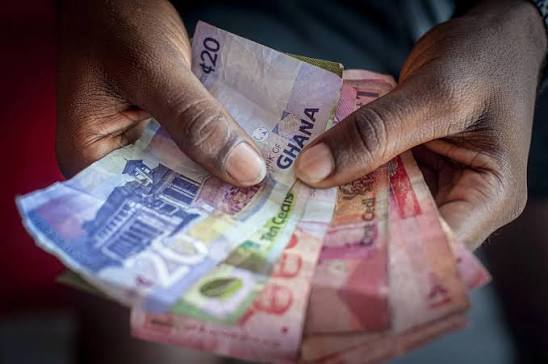

Bank of Ghana deepens partnership with Germany’s Giesecke+Devrient as Accra tests whether sovereign digital money can find a role alongside mobile money, cryptocurrencies and stablecoins
ACCRA — Ghana is pushing ahead with one of Africa’s most closely watched experiments in digital money, betting that a central bank-issued cedi can strengthen financial inclusion and preserve monetary sovereignty as smartphones increasingly replace cash.
The Bank of Ghana, led by Governor Johnson Pandit Asiama, said on August 31 that it had partnered with German security technology group Giesecke+Devrient (G+D) to pilot the eCedi, a general-purpose retail central bank digital currency. Banks, payment providers, merchants and consumers will participate in trials before policymakers determine the next stage of deployment.
The project has been years in the making. Ghana began exploring a CBDC in 2019 and has since tested how central-bank money could operate digitally, including in areas with unreliable internet connectivity. The latest phase comes as Ghana’s roughly $114bn economy emerges from a period of severe macroeconomic stress and its payments industry expands rapidly.
In a nutshell
The eCedi is neither Bitcoin nor another mobile-money wallet. It would be a digital form of Ghana’s sovereign currency and a liability of the central bank, effectively a digital counterpart to physical cash.
The distinction matters because private digital money is expanding across Africa. But Ghana faces an unusual challenge: it is introducing sovereign digital money into an economy where payments are already extensively digital.
Mobile money sets a high bar
About 81 per cent of Ghanaian adults had an account with a financial institution or mobile-money provider in 2024, almost twice the proportion a decade earlier.
By December 2025, registered mobile-money accounts had reached about 80.5mn, from 73mn a year earlier, while active accounts increased to 26.7mn.
The scale of transactions is more striking. Ghanaians made about 982mn mobile-money transactions worth GH¢518.4bn in December 2025 alone, compared with 745mn transactions valued at GH¢334.8bn a year earlier. Transaction volumes increased about 32 per cent while their value jumped roughly 55 per cent.
That creates the central dilemma for Asiama: Ghana does not need a CBDC simply to digitise payments. The eCedi must demonstrate why central-bank digital money provides something that established mobile-money networks do not.
Nigeria provides a warning
Nigeria offers the clearest regional comparison.
The Central Bank of Nigeria launched the eNaira in October 2021, becoming the first African central bank to issue a retail CBDC. The project promised greater financial inclusion, cheaper payments and more efficient government transfers.
Adoption, however, proved difficult, an IMF assessment recorded about 13mn eNaira wallets but only 854,512 transactions worth ₦29.3bn over the period it examined.
The contrast is striking: Ghana now processes close to 1bn mobile-money transactions in a single month.
Meanwhile, private digital assets have continued to expand. The IMF estimates that Nigeria received roughly $59bn of crypto-asset inflows between July 2023 and June 2024, highlighting the appeal of cryptocurrencies and dollar-backed stablecoins even as governments develop sovereign alternatives.
For central banks, that expansion poses a longer-term monetary question. If households increasingly transact and save using privately issued dollar tokens such as USDT or USDC, domestic currencies could lose relevance in parts of the digital economy.
South Africa chooses another route
South Africa has taken a more cautious approach.
After years of research, including Project Khokha, the South African Reserve Bank concluded in November 2025 that a retail CBDC was technically feasible but that there was no compelling immediate case for launching one. It instead prioritised modernising existing payment infrastructure while continuing to examine wholesale digital money.
Africa is therefore producing three distinct models: Nigeria launched early, South Africa chose to wait, and Ghana is attempting to integrate a CBDC into an already successful mobile-money economy.
That makes Ghana potentially the more consequential experiment.
The investment question
G+D, founded in Munich in 1852, has evolved from banknote printing into security technology and digital-currency infrastructure. It is providing technology for Ghana’s pilot and has worked on CBDC projects in other jurisdictions.
The Bank of Ghana has not disclosed the value of its latest agreement with G+D or the investment required for a nationwide eCedi rollout.
That figure will eventually matter. A national CBDC requires more than software: cybersecurity, digital identity, merchant infrastructure, consumer education, offline functionality and integration with commercial banks and payment companies all carry costs.
There are financial-stability risks too. If households can rapidly transfer deposits from commercial banks into risk-free central-bank wallets during periods of stress, banks could lose an important source of funding. Wallet limits or an intermediated distribution model could reduce that risk.
Why it matters
The eCedi ultimately sits at the intersection of financial inclusion, banking competition, cybersecurity and monetary sovereignty.
It could eventually reduce some payment costs, improve government transfers and create a public settlement instrument connecting banks, fintech companies and mobile-money providers. Future interoperability could also make it relevant to cross-border African payments, but Ghana’s biggest challenge is not technological.
Nigeria demonstrated that being first does not guarantee adoption. South Africa showed that waiting can be a rational policy choice. Ghana must prove that public digital money can offer something compelling in an economy where private digital payments already work at enormous scale.
The question is no longer whether Ghana can build a digital cedi, it is whether Ghanaians will have a reason to use it.