Angola is not a political laboratory, experiments belong in academia
- AngolaPolitics
- July 1, 2026
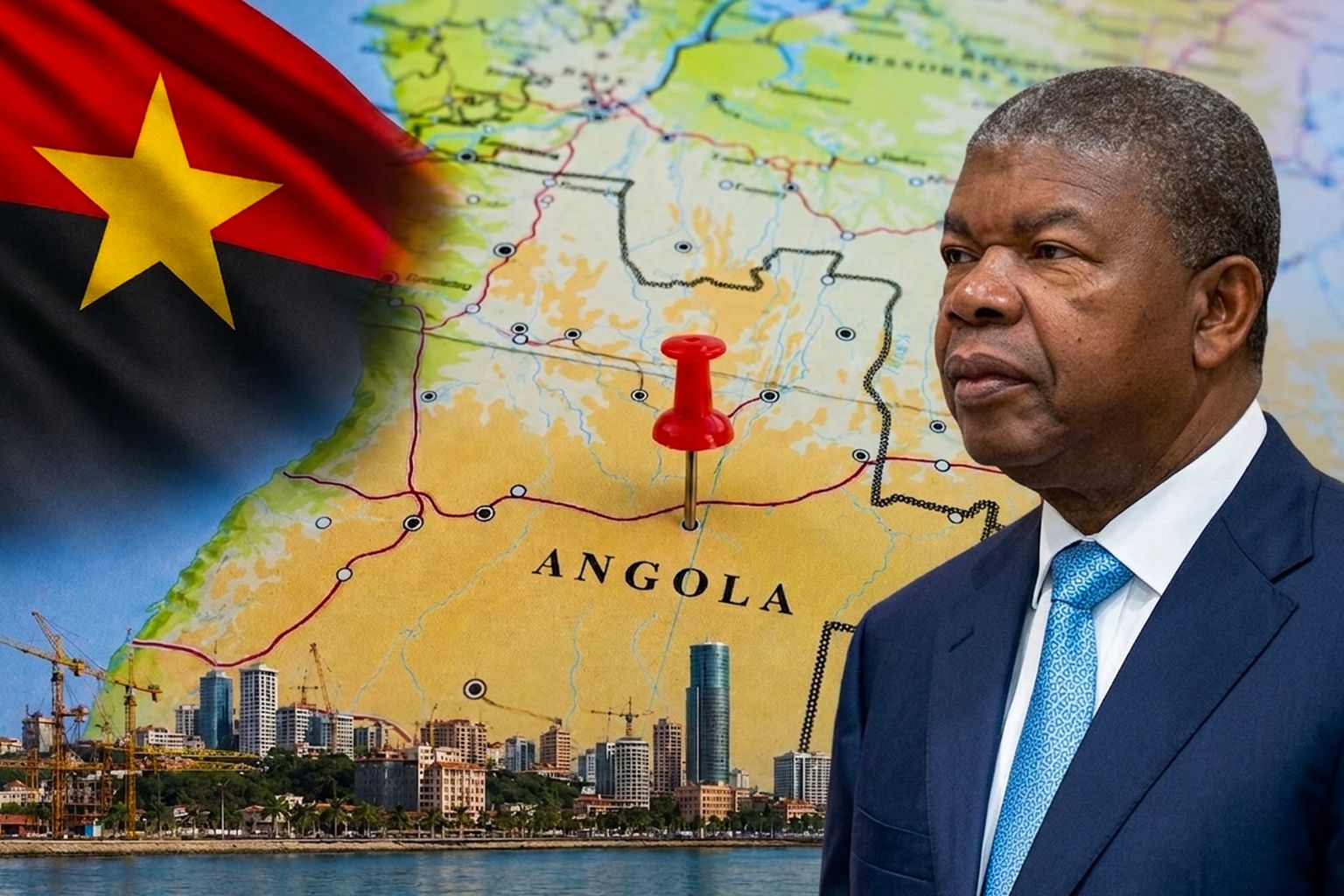

MAPUTO – On a continent where institutions often remain more fragile than electoral calendars, presidential succession is rarely just a democratic exercise. More often, it is a test of the state’s resilience.
There is a fundamental principle of political science that established democracies have learned over centuries: some experiments can be reversed; others leave consequences that endure for generations. In engineering, a miscalculation can be corrected. In economics, a fiscal policy can be revised. In politics, however, certain mistakes reshape institutions in ways that are difficult, sometimes impossible, to undo, Angola is approaching precisely such a moment.
Much of the debate surrounding the country’s 2027 presidential succession has been reduced to discussions about personalities, generations or internal dynamics within the MPLA. While understandable, this perspective overlooks a deeper reality, African democracies continue to operate under institutional, economic and geopolitical constraints fundamentally different from those of Western liberal democracies, treating the two environments as directly comparable is a recurring analytical mistake.
In Western Europe, political alternation rests upon professional civil services, relatively independent judicial systems, diversified economies and institutions whose legitimacy extends beyond the individuals temporarily occupying public office, Governments change; the state endures.
Across much of Africa, by contrast, political stability still depends upon a more delicate balance between institutional legitimacy, economic performance, cohesion within the security apparatus, administrative capacity and the management of elite interests. When one of these pillars weakens, pressure on the entire political system tends to increase, Angola understands this reality better than most.
The liberation struggle, nearly three decades of civil war and the lengthy process of post-2002 reconstruction produced a political culture in which preserving state stability became a higher priority than the full consolidation of liberal democratic institutions. That historical legacy continues to shape how political power is exercised and transferred, for that reason, Angola cannot be analysed through the same lens applied to Lisbon, Paris or Berlin.
A more challenging environment than 2017
The succession to President João Lourenço will unfold under circumstances considerably more complex than those surrounding the transition from José Eduardo dos Santos in 2017.
At that time, the central challenge was to launch a programme of political and economic reforms aimed at dismantling decades of concentrated power, strengthening anti-corruption efforts and restoring institutional credibility, nearly a decade later, the political landscape has changed substantially.
The reform agenda has reshaped political and economic balances, traditional centres of influence have lost ground, new actors have emerged, interests affected by the reforms have reorganised, international investors are closely monitoring institutional continuity, and the digital sphere has become an increasingly important arena of political competition.
Meanwhile, hybrid warfare has evolved from an academic concept into a defining feature of modern geopolitics.
The combination of disinformation campaigns, influence operations, cyberattacks, economic pressure and information manipulation has become a common instrument of international competition. Rather than relying solely on conventional military force, state and non-state actors increasingly exploit institutional vulnerabilities through digital and informational means, Angola is not immune to these dynamics.
Recent cyber incidents targeting financial institutions, together with increasingly coordinated political campaigns across digital platforms, illustrate a more contested information environment, assigning responsibility in such cases requires robust evidence. Nevertheless, these developments demonstrate that national security is no longer defined solely by military and intelligence capabilities. It increasingly depends on digital resilience, institutional strength and strategic communication, the central question, therefore, is no longer simply who will succeed President João Lourenço.
The more important question is whether the next leadership will possess the political authority, institutional capacity and strategic judgement required to govern a country facing a far more demanding environment than the one inherited in 2017.
Succession cannot be merely symbolic
In recent years, part of the political debate has focused heavily on the symbolic dimensions of renewal, including generational change, regional representation and greater female participation in senior leadership, these are legitimate and important objectives in any modern democracy.
Yet in states where institutional consolidation remains incomplete, symbolism alone cannot become the principal criterion for selecting national leadership.
International experience consistently suggests that long-term political stability depends above all on strategic competence, the ability to build consensus among competing centres of power, effective management of security institutions, economic credibility and the confidence of both domestic and international investors.
Leading a state under such conditions demands considerably more than political popularity or effective public communication. It requires institutional authority, governing experience and demonstrated executive capacity.
The MPLA’s greatest test since 2017
Since independence, the MPLA has derived much of its legitimacy from institutional continuity, organisational capacity and its stewardship of the state.
The reforms launched after 2017 fundamentally altered that equilibrium.
By dismantling entrenched networks of influence and redistributing political and economic power, the reform process inevitably created both winners and losers. Many of these reforms addressed legitimate demands for greater transparency, stronger institutions and improved governance.
Yet every political transformation generates resistance.
Actors who lose institutional influence, economic privileges or political access rarely disappear from public life. More often, they reorganise, adapt and seek new avenues through which to advance their interests, this reality makes the succession process particularly sensitive.
Over the coming months, the MPLA will need to reassure not only its own membership but also investors, international partners, financial markets, the security establishment and, above all, the Angolan public that a credible project of institutional continuity exists beyond 2027.
The challenge extends well beyond winning another election.
It is about preserving confidence in the state while ensuring that political transition strengthens rather than weakens institutional stability.
An opposition still seeking a governing alternative
The political environment is also shaped by the opposition’s continuing struggle to present a fully consolidated governing alternative.
Despite its electoral gains in recent years, UNITA continues to face challenges in developing a comprehensive policy programme, articulating a coherent economic vision, building durable political alliances and demonstrating national governing capacity, for now, these limitations reduce competitive pressure on the ruling party.
History nevertheless suggests that dominant political parties seldom lose power solely because of a stronger opposition. More often, they weaken as a consequence of internal divisions, strategic miscalculations or poorly managed succession processes.
The political clock is accelerating
The period leading to the 2027 elections may prove to be one of the most consequential in Angola’s recent political history.
Presidential succession is unfolding against a backdrop of intensifying geopolitical rivalry, growing competition over critical minerals, rapid technological transformation and the increasing use of hybrid instruments of statecraft, in such an environment, improvisation carries significant strategic risks.
More than selecting a presidential candidate, Angola must build a succession capable of preserving institutional continuity, sustaining economic confidence, maintaining international credibility and safeguarding political stability.
The country will require leadership that combines economic vision, political authority, diplomatic skill, strategic judgement and a deep understanding of defence and national security, because in politics, some mistakes can be corrected at the next election, others shape the destiny of nations for decades.
Angola is approaching a decision that could shape the resilience of its institutions and the country’s political future for years to come.