Burkina Faso’s break with France is about much more than diplomacy
- Burkina FasoPolitics
- July 2, 2026
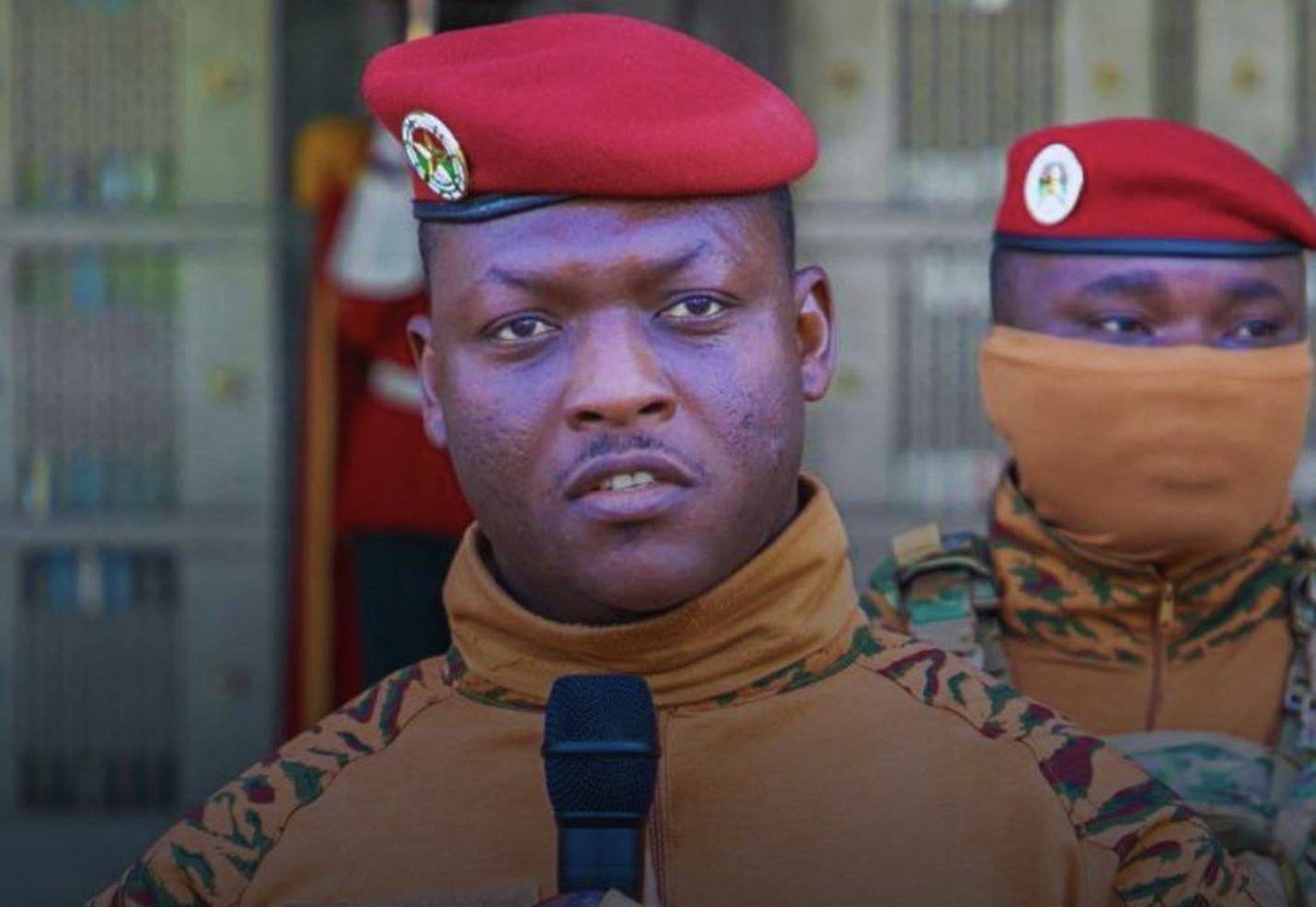

Captain Ibrahim Traoré is not merely severing ties with Paris. He is trying to recast sovereignty as a weapon of war and military rule as an instrument of national rebirth.
LAGOS – When Burkina Faso cut diplomatic ties with France on June 26th, the announcement sounded momentous. In truth, it was mostly belated. Relations between Ouagadougou and Paris had been unravelling for years. French troops, once deployed to help fight jihadists, were shown the door in 2023. Anti-French sentiment had become a staple of political life. The diplomatic break merely gave legal form to a political reality.
Yet it would be a mistake to treat the move as mere theatre. For Captain Ibrahim Traoré, the 37-year-old officer who seized power in 2022, the rupture with France is not simply a foreign-policy decision. It is part of a wider effort to reorder the state, redefine legitimacy and turn sovereignty from a slogan into a governing doctrine. In Mr Traoré’s Burkina Faso, diplomacy is not separate from war. It is one more front in it.
That matters because Burkina Faso’s crisis is not only military, the country is fighting a brutal insurgency, but it is also grappling with a collapse of state authority, public trust and strategic coherence. Vast stretches of territory lie beyond effective government control. Civilians have been displaced in huge numbers. Armed groups move across porous borders with Mali and Niger. Governments in Ouagadougou have come and gone, each promising to restore order, each proving less capable than advertised. Mr Traoré inherited that failure. He has tried to make France own it.
That is the heart of his political method, rather than present the jihadist war as a straightforward contest between the Burkinabè state and armed Islamists, he has folded it into a broader story about dependency, humiliation and recovery. France, once sold as a security partner, is cast instead as the emblem of an exhausted order: present for years, influential at every level, and yet unable to prevent the state from losing ground. In this telling, the problem was not merely that France failed to bring stability. It was that Burkina Faso remained tied to a system in which others claimed to secure the country while preserving their own influence over it.
This is what gives the diplomatic rupture its strategic value, it helps Mr Traoré shift the terms of the debate. The question is no longer simply whether his junta can defeat the insurgency. It is whether Burkina Faso can reclaim control of its security policy, its alliances and, ultimately, its national story. Breaking with France turns a failing counter-insurgency into a drama of emancipation. It allows a military government under pressure to present itself not merely as a wartime authority, but as the agent of historical correction.
The immediate consequences are less dramatic than the politics. Diplomatic ties may be cut, but communication between states rarely disappears altogether. Third countries can carry messages; consular affairs can be managed indirectly; intelligence channels can survive in quieter form. The Vienna Convention exists for precisely such untidy situations. Nor is the rupture necessarily permanent. Governments change. Interests change faster. Today’s act of principle can become tomorrow’s awkward compromise. Still, the symbolism is the point. And symbolism is where Mr Traoré has shown a certain instinct.
Domestically, the break with France serves him well, Burkina Faso remains deeply insecure. In such circumstances, anti-French nationalism is politically useful. It offers a language of mobilisation when military progress is patchy and state capacity thin. It gives the junta a way to convert public anger into patriotic discipline, and to recast the shortcomings of the regime as the legacy of foreign interference rather than the limits of military rule. If security cannot yet be guaranteed, dignity can at least be proclaimed.
The move also fits a wider regional pattern, Burkina Faso, Mali and Niger are trying to build a new Sahelian order, one less deferential to former colonial powers and less interested in Western approval. Their rulers speak the language of sovereignty with revolutionary zeal. They have loosened ties with France, clashed with regional organisations and courted new partners, especially Russia. The result is not so much a coherent strategic bloc as a shared political script: one in which military rule is framed as patriotic necessity and external criticism as neo-colonial meddling.
Whether this script produces better security is another matter, here the romance of sovereignty collides with the drudgery of war. France was unpopular and, in the eyes of many, ineffective. But it still brought intelligence, logistical support, surveillance and military expertise, assets that are easier to resent than to replace. Burkina Faso may find new partners willing to supply arms, training or political cover. Yet changing patrons is not the same as becoming autonomous. Dependency, in the Sahel, has a habit of surviving its rebranding.
This is the central risk in Mr Traoré’s strategy, he has made anti-French nationalism do a great deal of political work. It binds supporters, discredits opponents and turns diplomatic confrontation into a test of patriotic loyalty. But it also raises the price of failure. A regime that bases its legitimacy on sovereign defiance must eventually show that defiance changes realities on the ground. It must reopen roads, protect towns, secure supply lines and recover territory, it must do more than denounce the old order; it must outperform it.
That will not be easy. Counter-insurgency in the Sahel is a miserable business even for governments with stronger institutions and better-equipped armies than Burkina Faso’s. Militants exploit local grievances, communal fractures and the state’s absence in rural areas. Military offensives may clear territory briefly only for violence to return once soldiers leave. Volunteer militias can supplement state power, but also deepen abuses and sharpen ethnic tensions. In such a setting, a politics of rupture may strengthen the regime while doing little to strengthen the state.
For France, meanwhile, Burkina Faso’s decision is another sign that its old model of influence in Africa is collapsing faster than it can be repackaged. Security partnerships that once rested on elite ties, military presence and post-colonial habit have lost legitimacy across much of the Sahel. Paris is discovering that a long presence is no guarantee of durable influence, especially when that presence becomes associated with failure. Yet France’s retreat, however deserved, does not guarantee success for those pushing it out.
That is the uncertainty at the centre of Burkina Faso’s gamble, Mr Traoré may well succeed in turning the break with France into a durable source of political legitimacy. He may even help define a new Sahelian style of rule: more militarised, more nationalist and less constrained by the diplomatic conventions of the old order. But legitimacy won through rupture is still hostage to performance. If his government cannot improve security, the expulsion of France will look less like a strategic turning-point than a useful diversion.
In the end, Burkina Faso’s break with France is not really about France at all, it is about who gets to define the Burkinabè state, who gets to claim ownership of its war and whether sovereignty, so loudly invoked, can be made to do the hard work of governance. Mr Traoré has made his choice. He has wagered that cutting ties with Paris will strengthen his hand at home and bolster his authority abroad. The test of that wager will not be diplomatic. It will be counted in roads reopened, towns secured and lives no longer lived at gunpoint.