How cashews are keeping Guinea-Bissau’s economy afloat, and exposing its weaknesses
- Business and Networking
- September 2, 2026

The crop helped drive growth to 5.8 per cent in 2025, but dependence on raw exports, weak infrastructure and expensive logistics leave one of west Africa’s smallest economies vulnerable
BISSAU – Guinea-Bissau’s economic fortunes can still turn on the success of a single harvest.
A strong cashew season helped the economy expand 5.8 per cent in 2025, from 4.8 per cent a year earlier, while inflation fell to 0.9 per cent from 3.8 per cent. GDP reached about $2.53bn, equivalent to $1,124 per person, according to World Bank data.
The performance underlines both the strength and vulnerability of an economy where agriculture accounts for between 30 and 50 per cent of output and provides income to about 85 per cent of the population.
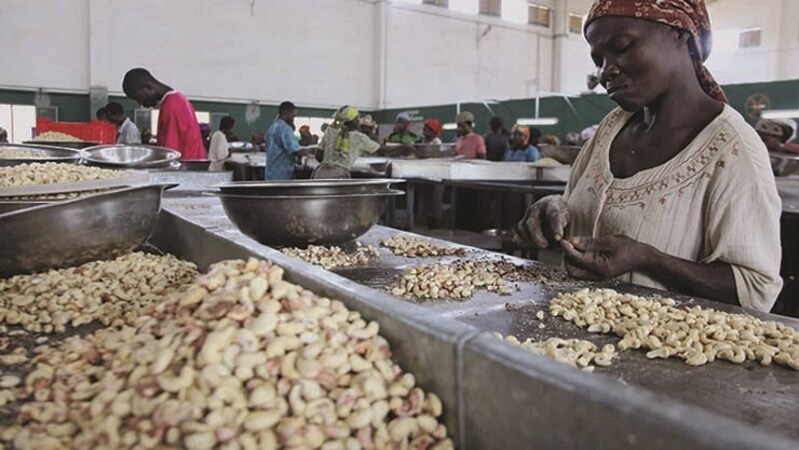
Cashews sit at the centre of that system. Exports rose from 167,000 tonnes in 2024 to about 211,000 tonnes in 2025, while stronger international prices boosted rural incomes and foreign currency receipts. The crop accounts for more than four-fifths of merchandise exports, making Guinea-Bissau one of Africa’s most concentrated commodity exporters.
When cashew income rises, the effect spreads quickly. Farmers spend more on food, transport, education and construction. Traders sell more goods, transport activity increases and government revenues benefit from taxes and customs receipts. Services and construction consequently strengthened alongside agriculture in 2025.
But the dependence works in reverse when harvests or prices weaken.
The World Bank expects growth to slow to 4.8 per cent in 2026, compared with 5.8 per cent last year, as weaker investment, political uncertainty and higher international fuel and food costs weigh on activity. The IMF has also warned that logistical constraints could disrupt the cashew marketing season.
The risks extend well beyond agriculture. Guinea-Bissau’s public debt stood at 75.6 per cent of GDP in 2025, above the West African Economic and Monetary Union ceiling, while the fiscal deficit was 6.5 per cent. Tax revenues were equivalent to just 8.5 per cent of GDP, the lowest ratio in WAEMU.
Banks provide another warning sign. Non-performing loans exceeded 22 per cent by mid-2025, restricting financing for small businesses and limiting the ability of agriculture to generate investment beyond the harvest cycle.
The underlying productivity numbers are more troubling. The share of companies investing in fixed assets has risen to 61.2 per cent, according to the World Bank, yet labour productivity growth deteriorated from 6.2 per cent in 2006 to minus 6.8 per cent in 2025.
The $30mn opportunity
The problem is not simply that Guinea-Bissau grows too much cashew. It is that too little value is retained before the crop leaves the country.
Most nuts are exported raw to processors in India and Vietnam. Guinea-Bissau therefore captures the agricultural income but loses much of the industrial value generated by shelling, grading, processing, packaging and distribution.
Logistics make the problem worse. World Bank research published on September 1 estimates that post-harvest cashew losses can reach 25 per cent, while logistics absorb about 34 per cent of the export price, equivalent to roughly $0.55 for every kilogramme exported.
Rice faces similar constraints. Post-harvest losses can reach 30 per cent and farmers receive only about one-third of the final retail price. Logistics account for roughly 42 per cent of that price.
Better roads, storage, processing, port efficiency and digital logistics could generate almost $30mn in additional annual value across the rice and cashew chains, according to the World Bank. That is equivalent to roughly 3 per cent of agricultural GDP.
Infrastructure investment is therefore becoming as important as agricultural policy. Improvements to electricity supply, road connectivity and projects including the Safim-Mpak road could reduce costs and make domestic processing more competitive.
There is also a fiscal dimension. The IMF estimates about CFAFr22.2bn in cashew-related budget revenues for 2026, although only CFAFr18bn was initially programmed because of uncertainty surrounding the campaign. Part of those revenues is being reserved for debt repayment rather than additional spending.
That illustrates the extraordinary reach of a single crop, from household consumption to the national budget.
Guinea-Bissau does not need to abandon cashews to diversify. It needs to build more economic activity around them.
Processing nuts domestically, raising rice productivity, expanding storage, improving electricity and roads and unlocking credit could turn a seasonal commodity boom into a broader agro-industrial economy.
Until that happens, every strong harvest will provide Guinea-Bissau with an economic lift. Every weak one will remain a national macroeconomic risk.