Africa wants Artificial Intelligence, it still needs Agriculture
- Politics
- June 18, 2026
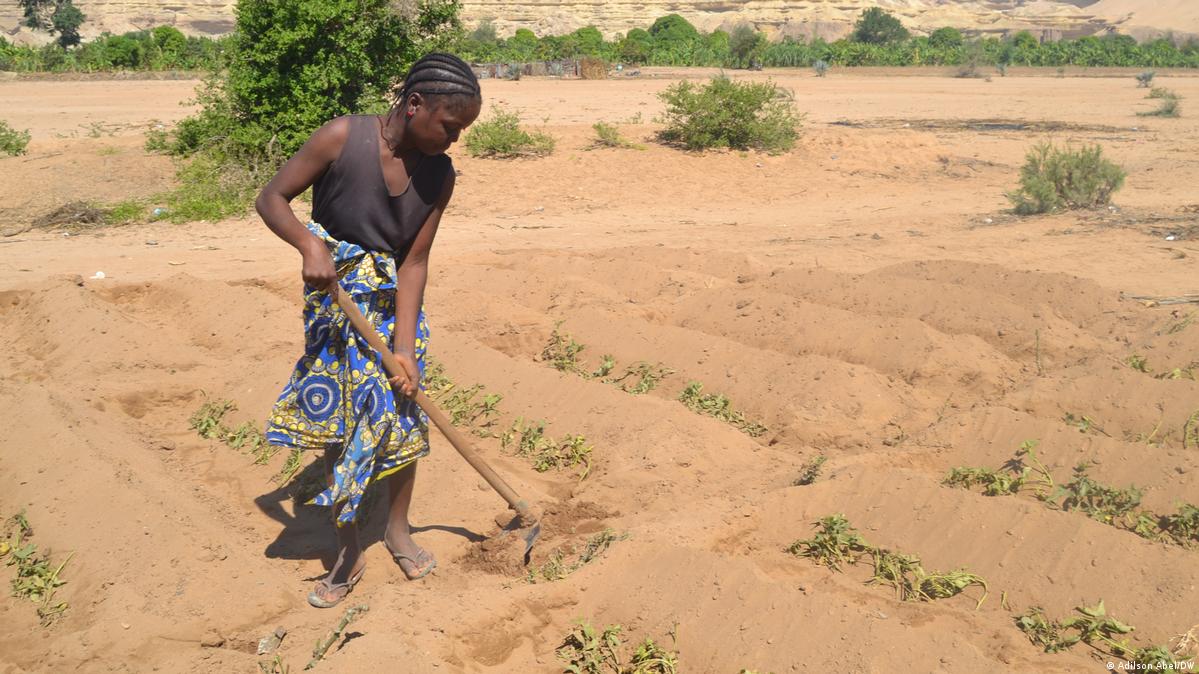

The continent is racing towards algorithms while the sector employing most Africans is still waiting for its own revolution
Africa is falling in love with artificial intelligence.
The enthusiasm is understandable. Across the world, governments, businesses and investors are positioning themselves for what many believe will be the most transformative technological shift since the internet. According to estimates by McKinsey, artificial intelligence could add as much as $25 trillion to the global economy over the coming decades. Between Washington, Beijing and Brussels, the race for AI leadership has become a matter of economic competitiveness and geopolitical influence.
Africa does not want to be left behind.
In recent years, countries including Rwanda, Kenya, Nigeria, South Africa and Egypt have launched national AI strategies, established innovation hubs and expanded digital-skills programmes. Universities are introducing specialised courses. Multilateral institutions are funding technology initiatives. Conferences devoted to artificial intelligence are proliferating across the continent.
All of this seems sensible, the problem is that Africa’s economy remains governed by a far less futuristic reality.
According to the African Development Bank, the continent holds roughly 60% of the world’s uncultivated arable land. Yet Africa continues to import more than $80 billion worth of food annually. The same continent discussing algorithms remains heavily dependent on imports of wheat, rice, edible oils and fertilisers.
The contrast is difficult to ignore.
Agriculture still employs more than half of Africa’s workforce. In countries such as Angola, Ethiopia, Tanzania and Malawi, millions of households depend directly or indirectly on farming for their livelihoods. Yet less than 6% of Africa’s agricultural land benefits from modern irrigation systems, compared with roughly 37% in Asia. In many regions, post-harvest losses still exceed 30% of total production.
While ministers discuss generative AI, farmers continue to depend on rainfall.
Economic history suggests caution towards such technological enthusiasm.
The United States became an industrial power only after a profound agricultural transformation during the nineteenth and early twentieth centuries. India’s Green Revolution helped turn a chronically food-insecure nation into one of the world’s leading agricultural producers. China’s economic rise began not in its technology parks but in the countryside, following Deng Xiaoping’s rural reforms in 1978. Vietnam followed a similar path in the decades that followed.
None of these countries began with artificial intelligence, all of them began with productivity.
This is where Africa’s paradox emerges. The continent is devoting considerable political and financial capital to a technology of the future while many of the constraints limiting productivity in the present remain unresolved.
That does not mean the investment in AI is misplaced. Quite the opposite. Agriculture could become one of artificial intelligence’s most valuable applications in Africa. Satellite monitoring, climate forecasting, precision farming, intelligent irrigation systems and predictive analytics all have the potential to raise agricultural productivity dramatically. But that would require a shift in focus.
Too often, discussions about artificial intelligence in Africa revolve around innovation hubs, digital start-ups, coding academies and technology conferences. Far less attention is devoted to how these technologies might solve practical problems in agricultural production, storage, logistics and market access.
Institutions such as the World Bank, the International Monetary Fund and the African Development Bank have spent decades arguing that Africa’s long-term prosperity depends on structural transformation and productivity growth. Yet political incentives often favour highly visible technology projects over the less glamorous investments required to modernise agriculture.
Political economy helps explain why.
An artificial-intelligence summit attracts international headlines. A national irrigation programme rarely does. A technology hub signals modernity and ambition. A grain-storage facility does not. Yet history suggests that successful economic transformations are usually built on precisely these less fashionable foundations.
There is a deeper concern.
For decades, Africa exported raw materials while importing higher-value manufactured goods. The digital economy risks reproducing a similar pattern. Data may be generated in Africa. Users may be African. Markets may be African. Yet the algorithms, patents, semiconductor technologies, cloud infrastructure and decision-making centres remain overwhelmingly concentrated in the United States, China and Europe.
The result could be a new form of dependency, digital rather than industrial.
Africa’s greatest opportunity does not lie in choosing between agriculture and artificial intelligence. It lies in combining the two. Few regions possess both some of the world’s largest reserves of fertile land and one of its youngest populations. The continent has an opportunity not merely to consume the technologies of the future, but to apply them to the sectors that matter most.
That, however, requires treating technology as a tool rather than an objective.
The question facing African policymakers is not whether the continent should participate in the AI revolution. It should.
The more important question is whether artificial intelligence is being deployed to solve Africa’s most pressing economic challenges, or whether those challenges are being overlooked in the excitement surrounding artificial intelligence itself.
The answer may determine whether Africa becomes a producer of wealth in the digital age, or merely a consumer of technologies developed elsewhere.