DR Congo court clears referendum law that could pave the way for a third term for President Félix Tshisekedi
- Politics
- July 30, 2026
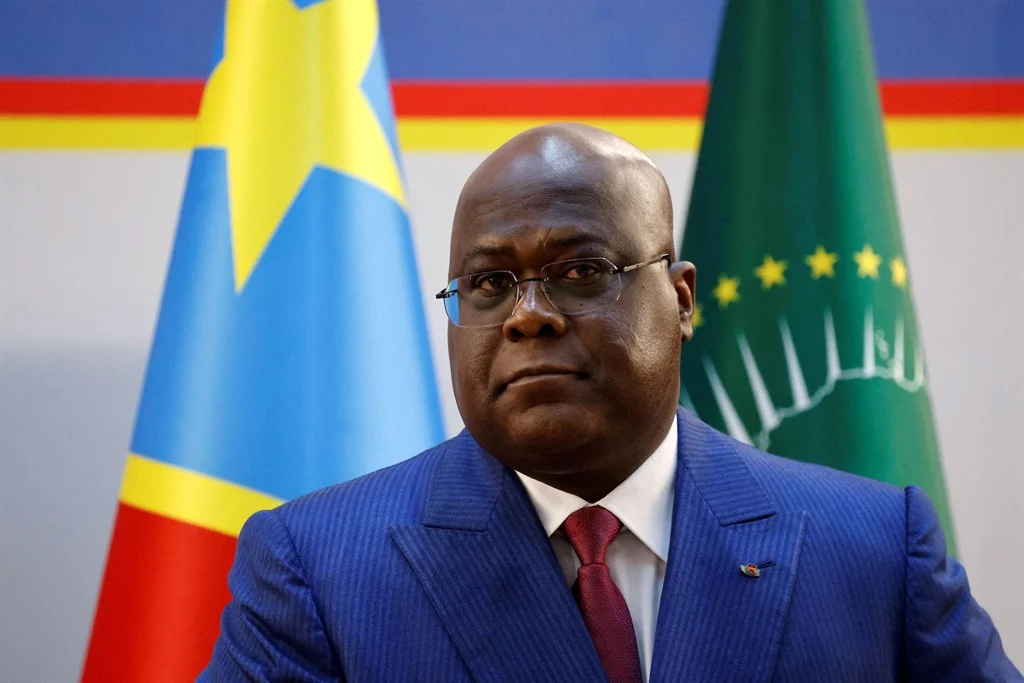

The ruling does not immediately remove the constitutional two-term limit. But by recognizing the Congolese people’s “original constituent power” to adopt a new constitution, the country’s highest court has opened a controversial legal path that could ultimately allow President Félix Tshisekedi to seek another term.
KINSHASA – A ruling that lasted only minutes could reshape the Democratic Republic of Congo’s political future for years to come.
In a public hearing broadcast on state television, the Constitutional Court upheld the constitutionality of a new referendum law, validating legislation that sets the legal framework for organizing national referendums while attaching reservations to 13 of its 45 articles.
The decision, registered as R.Const. 2695, requires that the law be published alongside the court’s full opinion so that its reservations become legally binding in any future implementation.
The ruling does not authorize President Félix Tshisekedi to run for a third term. Nor does it amend Article 70 of the Constitution, which limits the presidency to two five-year terms, or call for a referendum.
But constitutional experts say it removes one of the most significant legal obstacles to drafting an entirely new constitution, an outcome that could fundamentally reshape presidential term limits.
A constitutional distinction with major political consequences
At the center of the controversy is Article 220 of the Congolese Constitution, which explicitly prohibits any constitutional revision that would alter the number or duration of presidential terms.
Until now, that provision had been widely interpreted as an absolute barrier to extending presidential tenure. The Constitutional Court introduced a different interpretation.
Rather than focusing on constitutional amendment, the judges argued that the Congolese people retain what legal scholars describe as an “original constituent power”, the sovereign authority to replace the existing constitution altogether through a constituent assembly followed by a national referendum.
According to the court, that power exists independently of the current constitutional framework and cannot itself be limited by the constitution it originally created. Supporters of the ruling describe it as a recognition of popular sovereignty.
Critics argue it creates a legal workaround that achieves through an entirely new constitution what Article 220 explicitly prohibits through constitutional amendment.
Because Constitutional Court decisions are final and binding on all state institutions, the interpretation immediately becomes part of Congolese constitutional jurisprudence.
A long political and legal process still lies ahead
Even after the ruling, Tshisekedi is far from automatically securing another presidential bid. The court outlined several procedural safeguards before any new constitution could emerge. The process would begin with a petition supported by at least 250,000 registered citizens.
Only then could the president establish a multidisciplinary national commission to prepare constitutional proposals.
Those proposals would subsequently be debated by a Constituent Assembly representing both national and provincial institutions before being submitted to a nationwide referendum administered by the Independent National Electoral Commission (CENI).
Should voters reject the proposal, the current 2006 Constitution would remain in force.
Even if approved, a future constitution would still have to explicitly remove presidential term limits, reset the counting of mandates, or state that previous mandates served under the current constitutional order would no longer apply. The referendum law itself does none of those things.
Instead, it creates the legal pathway through which such changes could eventually be pursued.
Parliament overwhelmingly backed the proposal
The referendum bill, introduced by ruling coalition lawmaker Paul-Gaspard Ngondankoy, sailed through Parliament earlier this year.
It was approved by 348 of 351 voting members in the National Assembly on June 9 before receiving unanimous backing from all 89 senators present six days later.
Government supporters argue the legislation simply fills a legal gap that has existed since the 2006 Constitution entered into force by establishing clear rules governing the organization of referendums. Opposition leaders, however, see the timing very differently.
Tshisekedi, 63, has served as president since January 2019 and secured re-election in 2023 with 73.47% of the voteaccording to official results.
Under the current Constitution, his second mandate is scheduled to end in 2028 and he would not be eligible to run again.
Tshisekedi has repeatedly denied seeking a third term
The constitutional debate has intensified over the past two years. In October 2024, speaking in Kisangani, Tshisekedi announced the creation of a commission to study a constitution “adapted to Congolese realities.”
One month later, in Lubumbashi, he insisted the initiative “had nothing to do with a third term.” Yet in May this year, the president left the door open.
“I have not asked for a third term,” Tshisekedi told reporters in Kinshasa.
“But if the people want me to have a third term, I will accept.”
Those remarks transformed what had largely been an opposition accusation into a political possibility acknowledged by the president himself.
Opposition vows to resist
The ruling has united opposition figures who have often been divided politically. Leaders including Martin Fayulu, Moïse Katumbi, Delly Sesanga, Jean-Marc Kabund, and Augustin Matata Ponyohave joined forces under the Coalition Article 64 (C64).
Following the Constitutional Court’s decision, the coalition accused the judges of carrying out what it called a “judicial rebellion” against the Constitution.
The group announced nationwide political actions beginning August 15, insisting it would reject any attempt to bypass constitutional presidential term limits.
Earlier demonstrations outside Parliament in Kinshasa were dispersed by police after clashes left at least one person dead and dozens injured, according to the United Nations.
Political uncertainty extends beyond Kinshasa
The constitutional dispute unfolds as eastern Congo continues to face armed conflict involving the AFC/M23 movement.
On the same day the court issued its ruling, thousands of demonstrators marched in Goma and Bukavu opposing any constitutional change that could allow another presidential term.
Government officials accused rebel authorities of compelling residents to participate in the protests, an allegation the AFC/M23 did not immediately address. The political uncertainty also carries economic implications.
The Democratic Republic of Congo remains one of the world’s most important suppliers of copper and cobalt, minerals essential for electric vehicles, renewable energy technologies and global manufacturing.
While the World Bank estimates the Congolese economy expanded by 5.5% in 2025, driven largely by mining, analysts warn that prolonged constitutional uncertainty could add another layer of political risk for foreign investors already navigating conflict in the country’s east.
The Constitutional Court has not granted Félix Tshisekedi a third presidential term.
What it has done is arguably more consequential: it has defined a constitutional pathway through which such a candidacy could one day become legally possible.