What If healthcare, education and skills development were Africa’s next billion-dollar industries?
- Opinions
- October 2, 2026

Opinion | Human capital, productivity and Africa’s economic transformation
Africa has oil, gas, copper, cobalt, agricultural land, expanding markets and a young population, yet one of its most important assets is less visible: human capital.
The problem is that healthcare, education and skills development are still largely treated as social expenditure, rather than as economic infrastructure capable of raising productivity, creating skilled jobs and enabling African economies to retain more of the value generated by investment.
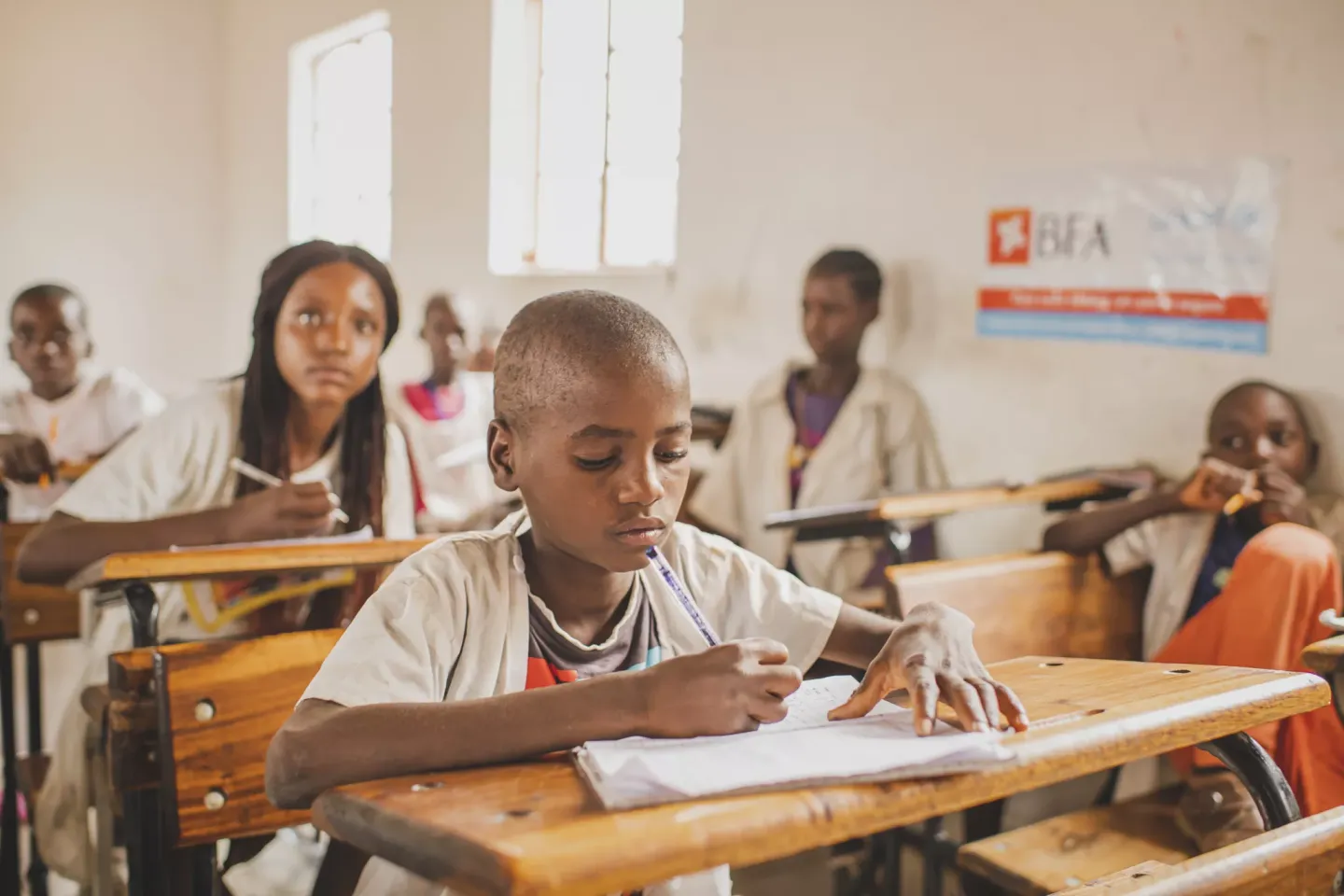
The scale of the challenge is substantial, about one million young Africans enter the labour market every month, while almost 23% of young people are neither in education, employment nor training. The World Bank estimates that 86% of children in Africa cannot read and understand a simple text by the age of 10, a deficit that weakens the entire pipeline through which future workers acquire skills.
In education, the debate should not be limited to the number of schools or the size of public budgets. UNESCO’s international benchmark calls for governments to devote roughly 4% to 6% of GDP to education, or 15% to 20% of public expenditure. Yet the global median stood at about 4.2% of GDP in 2024, with substantial differences across African countries.
But spending more is not enough, the more important economic question is: what return does that investment generate in productivity?
An engineer who designs a more efficient production line, a technician who keeps a power plant running or a software developer who creates an exportable product contributes directly to economic output. A doctor who reduces illness among working-age people or a nurse who prevents costly complications also creates economic value, even if that contribution rarely appears in government accounts as an explicit return on investment.
Healthcare provides perhaps the clearest illustration. Africa’s health workforce reached 5.72 million professionals in 2024, yet the region had only about 46% of the health workers it needs.
At the same time, around 943,000 trained health workers were unemployed. The World Health Organization describes this as a structural paradox: shortages in one part of the system alongside unemployment in another.
This is no longer simply a healthcare problem, it is an economic one. The WHO estimates that absorbing the unemployed health workers identified in its study would require about $7.76 billion a year, based on median salaries.
Such spending could simultaneously expand access to healthcare, create skilled employment and increase the productive capacity of health systems.
The same problem exists elsewhere, a modern factory can be built with millions of dollars of investment, but if it must import engineers, maintenance specialists and automation experts, part of the value created by that investment will continue to flow abroad.
A mine can export ore while importing much of the engineering and technical expertise required to operate it. A power plant can increase electricity supply, yet remain dependent on foreign specialists if domestic technicians cannot maintain its equipment.
The economics change when education and industry are designed together. Technical institutes linked to factories, universities connected to research centres, apprenticeships designed with employers and vocational programmes aligned with sectors such as energy, agriculture, manufacturing, construction and technology can turn physical investment into domestic productive capacity.
South Korea offers a useful comparison, the World Bank has linked the country’s transformation to decades of investment in education, infrastructure and technology. Vocational training also helped build the skills required by successive waves of industrial development. Between 1980 and 2024, South Korea’s real GDP grew by an average of 5.6% a year.
The lesson is not that African countries should copy South Korea. It is that education, skills, industrial policy, technology and productivity are interconnected. Education generates greater economic returns when an economy has the capacity to absorb the skills it produces.
This is also a critical question for foreign investment in Africa. Its impact should not be measured only by the dollars entering a country. Policymakers should also ask how much knowledge remains, how many local suppliers are created, how much expertise is transferred, how many skilled jobs are generated and how much value added stays in the domestic economy.
Africa can build more ports, roads, power plants and industrial zones. But infrastructure without the people capable of operating, maintaining and innovating around it risks running below its potential.
The central question, therefore, is not simply how much Africa spends on education and healthcare, but how effectively that spending is converted into productivity, innovation and economic growth.
Turning healthcare, education and skills development into “billion-dollar industries” does not mean turning fundamental rights into luxury products. It means recognising that these sectors can also generate jobs, technology, companies, research and entire value chains.
Africa faces a strategic economic choice: remain primarily an exporter of raw materials and an importer of skills, or build systems capable of converting natural resources, financial capital and knowledge into value added that is produced, and retained, on the continent.
Africa’s greatest economic asset may not, after all, lie beneath the ground. It may lie in the people capable of turning what is beneath it into wealth, technology, companies and prosperity that remain in Africa.