Nigeria seeks $1.5 billion World Bank funding as public debt reaches $120.9 billion
- Economic
- October 1, 2026
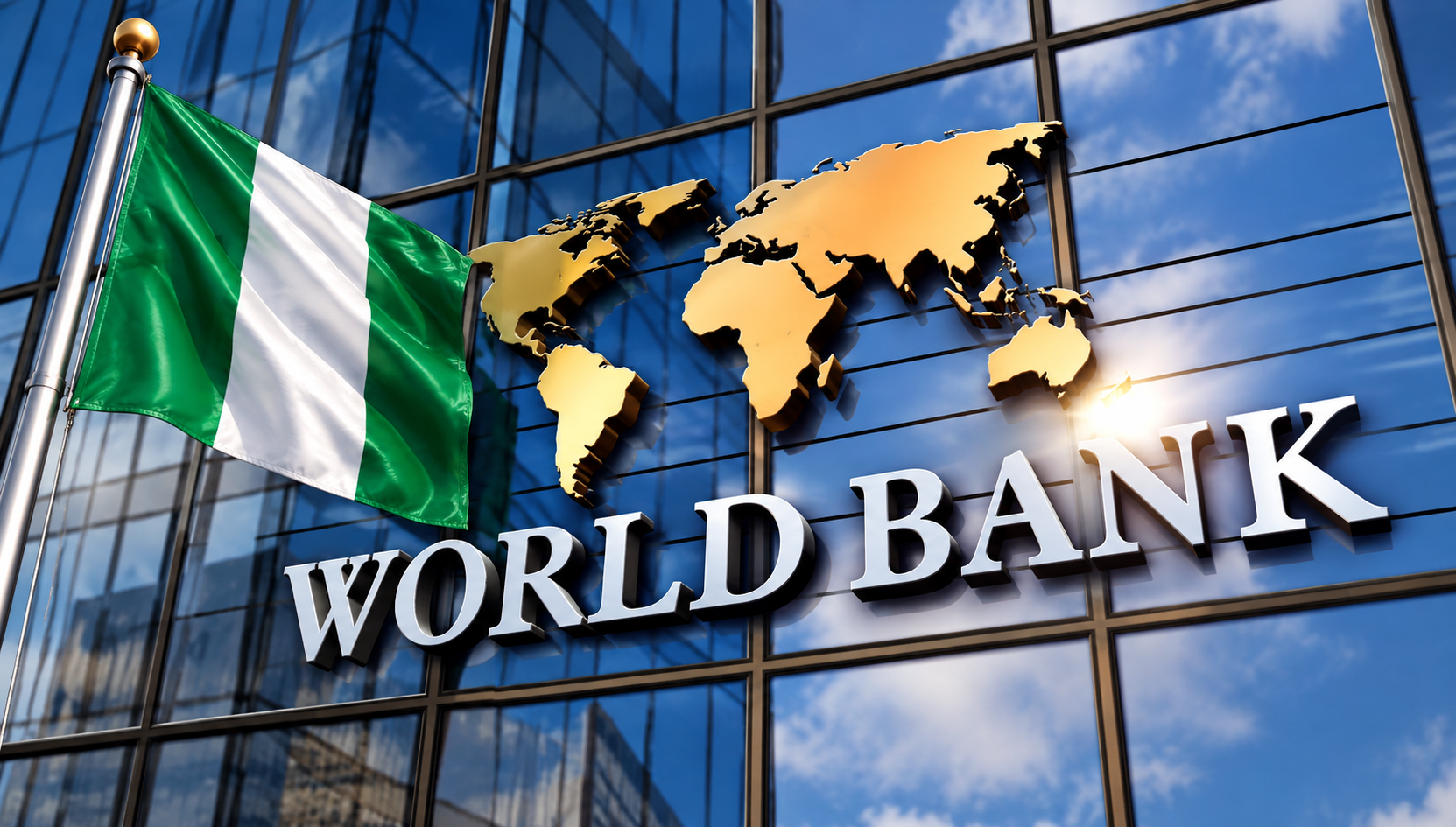

ABUJA — Nigeria is seeking $1.5 billion in new World Bank financing as its public debt reaches about $120.9 billion, highlighting the government’s continued reliance on multilateral funding to finance development programmes while it works to strengthen revenues and restore fiscal buffers.
The proposed financing consists of three separate $500 million facilities focused on climate resilience, early childhood development and social protection.
…
The facilities are at different stages of preparation and have not yet been approved or disbursed, meaning the $1.5 billion is not yet part of Nigeria’s outstanding debt.
The most advanced proposal is an additional $500 million for the Agro-Climatic Resilience in Semi-Arid Landscapes, or ACReSAL, programme, with the World Bank scheduled to consider the financing on October 29. If approved, it would increase the programme’s total financing to $1.2 billion. The other two proposed operations, for early childhood development and social protection, are scheduled for consideration in March 2027.
The new financing comes as Nigeria’s total public debt reached ₦166.79 trillion at the end of June 2026, according to the Debt Management Office, up from ₦159.35 trillion at the end of March. The latest figure is equivalent to roughly $120.9 billion.
The headline debt figure, however, needs to be read alongside Nigeria’s fiscal structure. The IMF estimates public gross debt at about 36.7% of GDP in 2026, a level that is relatively moderate by international standards. The more immediate pressure comes from the government’s limited revenue base and the cost of servicing debt: interest payments by the Federal Government are projected to absorb about 52.4% of federal government revenue in 2026, according to the IMF.
That distinction is important. Nigeria’s challenge is not simply the size of its debt stock, but the amount of government revenue available to service that debt while still funding infrastructure, social programmes and public services. A relatively modest debt-to-GDP ratio can coexist with substantial fiscal pressure when government revenues remain low.
The proposed World Bank financing could help ease that pressure because development financing from multilateral institutions generally provides longer maturities and more favourable terms than commercial borrowing. But concessional financing only improves the fiscal position if the projects it funds generate measurable economic and social returns.
Nigeria’s economic reforms have already produced some signs of macroeconomic improvement. The World Bank said in its April 2026 Nigeria Development Update that inflation had eased, external and fiscal positions had strengthened and economic growth remained robust, although household incomes had yet to recover fully and poverty remained high.
This creates a difficult balancing act for President Bola Tinubu’s administration. Nigeria needs to invest in human capital, climate resilience and social protection precisely because weak infrastructure, poverty and low productivity constrain future growth. Yet those investments must be financed without allowing debt-service costs to crowd out the spending needed to generate that growth.
The proposed $1.5 billion package therefore matters less for its absolute size than for what Nigeria does with it.
Climate-resilience spending could protect agricultural productivity and reduce losses from environmental shocks. Investment in early childhood development could improve human capital over decades. Stronger social-protection systems could help vulnerable households weather economic shocks while reforms take effect.
The World Bank has itself stressed that Nigeria’s stabilisation gains need to be converted into stronger productivity, broader economic opportunity and more inclusive growth.
For investors, creditors and Nigerian taxpayers, the central question is consequently shifting from how much Nigeria can borrow to how effectively it can convert borrowing into productive capacity.
The country has access to international development finance and is rebuilding macroeconomic stability. But with federal interest payments consuming more than half of projected federal revenue, the margin for inefficient borrowing remains narrow.
The proposed World Bank facilities will add to Nigeria’s financing pipeline if approved. Their longer-term significance will depend on whether they help expand the country’s productive capacity, strengthen human capital and reduce the economic vulnerabilities that create pressure for yet more borrowing.
For Nigeria, the arithmetic of debt is becoming inseparable from the economics of growth: every new dollar borrowed will need to produce more than another dollar’s worth of future fiscal and economic capacity.