Senegal inflation falls sharply under Faye, but economic test is far from over
- Economic OutlookFeaturedSenegal
- October 2, 2026
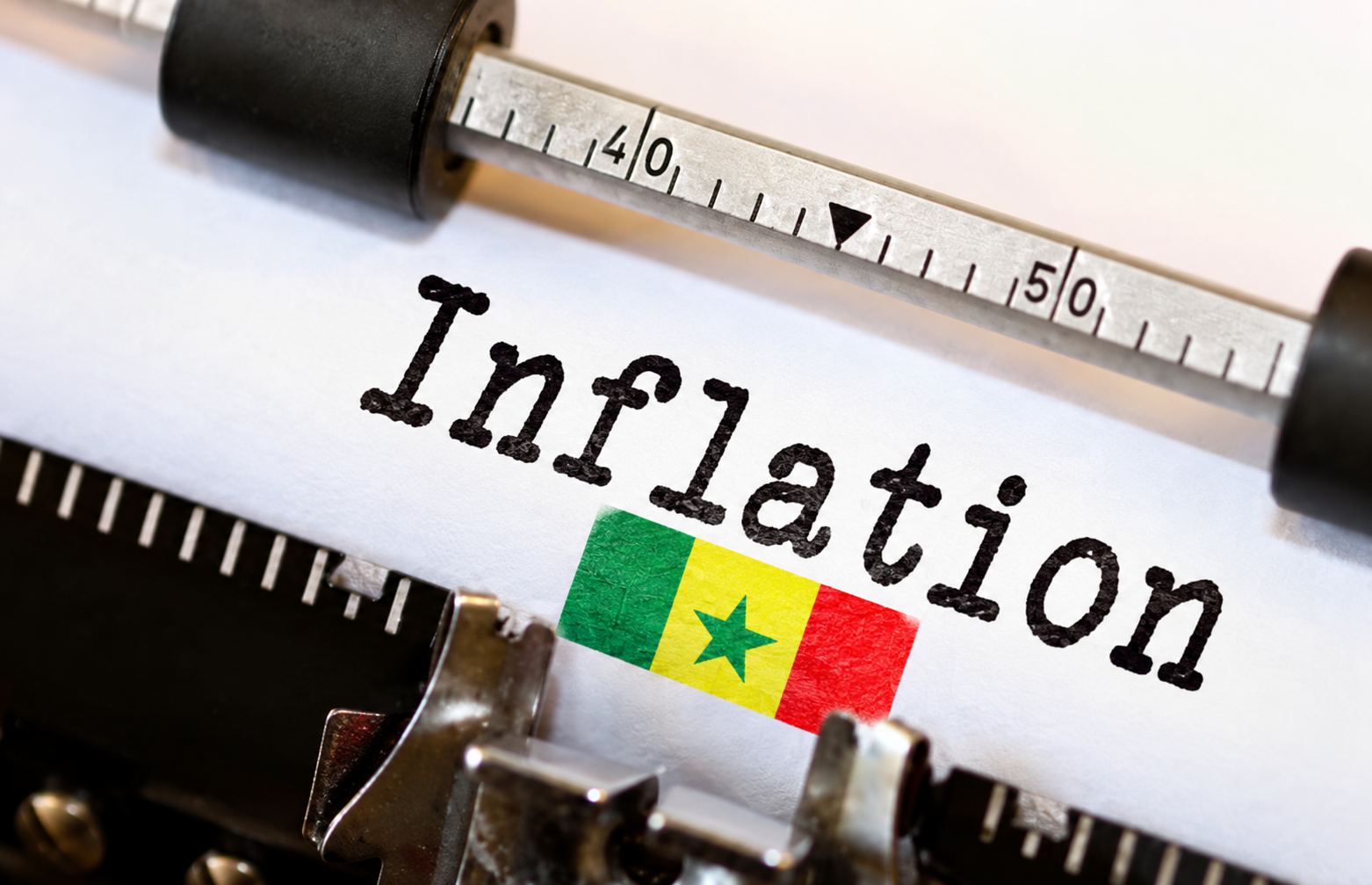

DAKAR — Senegal has moved from an inflation rate of almost 10 per cent in 2022 to near price stability since President Bassirou Diomaye Faye took office, with consumer prices rising just 1.2 per cent year-on-year in August 2026, according to the National Agency for Statistics and Demography (ANSD).
The shift marks a dramatic change in the country’s inflation environment. Annual inflation fell from 9.7 per cent in 2022 to 5.9 per cent in 2023, before dropping to 0.8 per cent in 2024. It edged up to 1.4 per cent in 2025, but remained at a comparatively low level. By the second quarter of 2026, inflation stood at around 1 per cent year-on-year.
The figures provide the government of Faye with a favourable backdrop as it seeks to reshape Senegal’s economic model. But the timing of the improvement makes it difficult to attribute the entire disinflation process to the new administration.
Faye was inaugurated in April 2024, meaning that much of the annual 2024 inflation figure reflects economic conditions that preceded his presidency. The sharp decline therefore needs to be viewed as the result of both domestic and external factors rather than as the immediate consequence of a single government’s policies.
From inflation shock to price stability
Senegal’s inflation surge in 2022 and 2023 was closely associated with higher food and energy prices, global supply disruptions and the broader commodity shock that followed the pandemic and Russia’s invasion of Ukraine.
By 2024, those pressures had eased considerably. ANSD attributed the moderation in consumer prices to lower food and energy pressures, together with improvements in supply conditions.
The result was a rapid transition from an inflationary environment to one approaching price stability.
That trend has broadly continued. In August 2026, consumer prices were 1.2 per cent higher than a year earlier. Food and non-alcoholic beverages rose 1.4 per cent, while restaurant and accommodation services increased 2.2 per cent. Transport prices rose 1.7 per cent and healthcare prices increased 2 per cent.
At the same time, housing, water, electricity, gas and other fuels recorded a 0.9 per cent decline, helping to restrain the overall consumer price index.
The composition of inflation also shows why the headline figure needs to be read carefully. Some categories recorded significantly higher increases than the national average, while imported products benefited from lower prices.
What changed under Faye?
The economic significance of the inflation figures lies less in the fact that prices have fallen than in the fact that price growth has remained contained during the first full years of the new administration, the distinction matters.
Inflation of 1.2 per cent does not mean that Senegalese households are paying prices that are 1.2 per cent higher than before. It means that the overall price level is increasing at approximately that rate compared with the same month a year earlier.
The accumulated increase in prices during the 2022-23 inflation shock remains embedded in the economy.
For households, therefore, the relevant question is not simply whether inflation has fallen, but whether incomes and employment are increasing fast enough to restore purchasing power, that creates a broader test for Faye’s economic programme.
A favourable macroeconomic backdrop
Low inflation can make economic management easier. It reduces pressure on household budgets, improves the visibility of business costs and creates a more stable environment for investment decisions.
Senegal’s membership of the West African Economic and Monetary Union (WAEMU) is also important. The country shares the CFA franc with other members of the monetary union, meaning that domestic inflation operates within a wider regional monetary framework.
The WAEMU convergence framework places particular importance on keeping inflation below 3 per cent. Senegal’s current inflation rate is therefore comfortably below that reference level.
But price stability is only one part of the economic equation.
The Faye administration has made economic sovereignty, greater domestic production and a stronger role for national economic actors central elements of its programme. Delivering those objectives will depend on factors that inflation alone cannot measure, including investment, productivity, public finances, employment and household incomes.
The fiscal problem changes the equation
The government’s economic challenge has also become more complicated because of questions surrounding Senegal’s public finances.
The authorities have been working to strengthen fiscal credibility while managing the country’s development needs and financing requirements. That creates a difficult policy balance: maintaining macroeconomic stability while increasing investment and supporting economic activity.
A prolonged period of low inflation can help, but it does not solve the fiscal problem, nor does it automatically guarantee stronger growth or higher living standards.
This distinction is particularly important for assessing the economic record of the new administration. A country can simultaneously have low inflation and face significant fiscal, debt or employment pressures.
From inflation to growth
The evolution of prices nevertheless represents a substantial change from the environment inherited from the global inflation shock.
In just four years, Senegal moved from 9.7 per cent annual inflation in 2022 to rates around 1 per cent in 2026, the immediate policy challenge has therefore changed.
The question is no longer simply how to bring inflation down, it is how to preserve price stability while translating macroeconomic stability into stronger investment, productive capacity, employment and real household incomes.
For Faye’s government, that distinction will become increasingly important, low inflation provides a more predictable economic environment. It does not, by itself, constitute evidence of higher living standards.
The Senegalese economy has therefore entered a different phase: the inflation crisis has largely receded, but the broader test of economic transformation remains ahead.