Rwanda faces new economic and diplomatic setback as US moves to end AGOA trade benefits
- PoliticsRwanda
- November 3, 2026
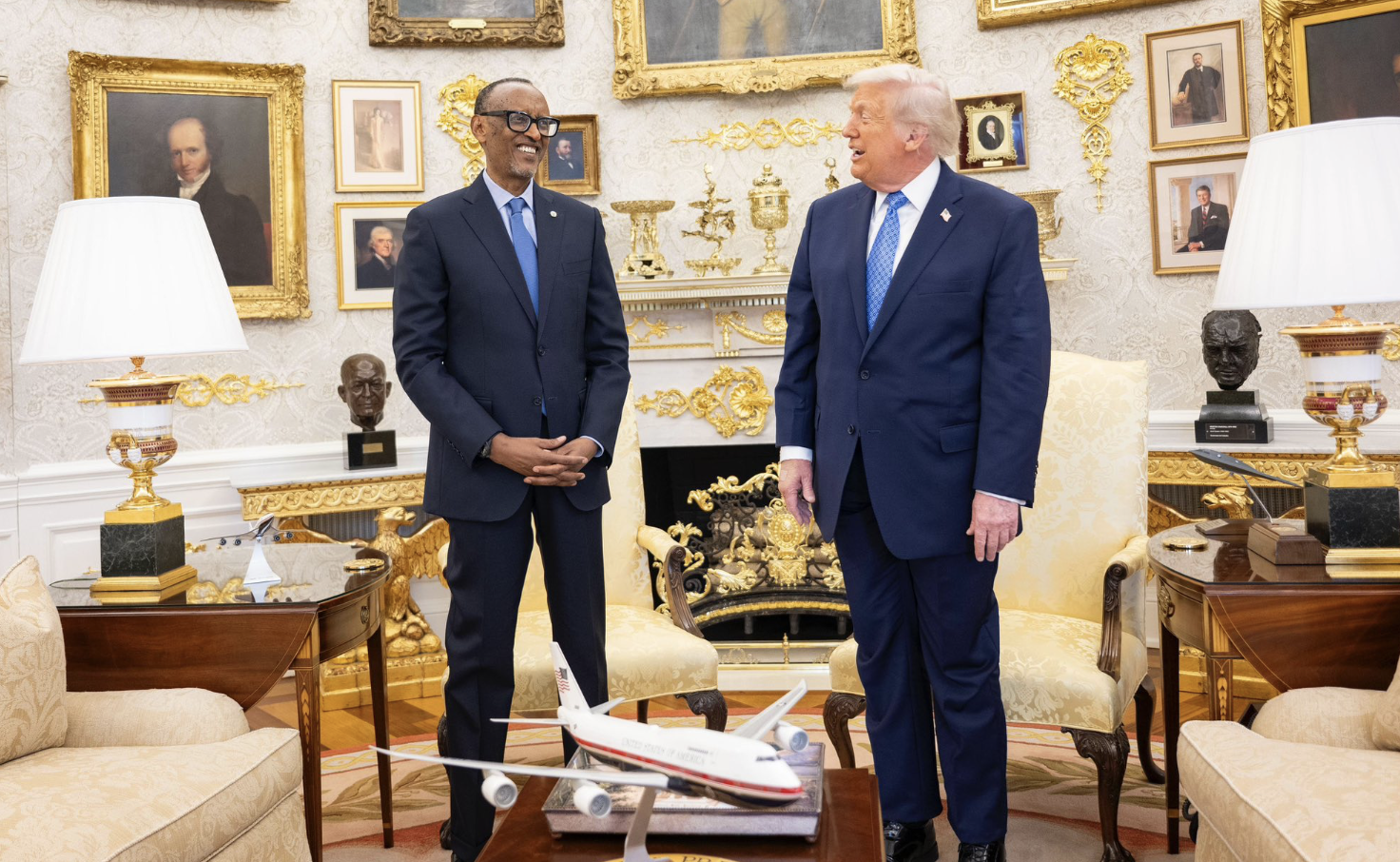

KINSHASA – Rwanda faces a fresh challenge to its economic and diplomatic strategy after US President Donald Trump announced plans to remove the country from a preferential trade programme, amid growing tensions over its regional policies and relations with Washington.
Trump notified Congress and the Rwandan government of his intention to withdraw Rwanda from the African Growth and Opportunity Act (AGOA) from January 1, 2027, US Trade Representative Jamieson Greer announced on November 2. South Africa was also included in the proposed withdrawal.
The decision places Kigali in a particularly sensitive position, threatening its preferential access to the US market at a time when its regional policies and relations with Washington are coming under increasing scrutiny.
Trade increasingly shaped by foreign policy
Established in 2000, AGOA allows eligible African countries to export thousands of products to the United States duty-free, subject to conditions covering the rule of law, human rights, labour standards, political pluralism and economic openness.
The Trump administration cited alleged practices inconsistent with the programme’s eligibility requirements, including concerns about trade and investment barriers, human rights, political pluralism, labour rights and national security.
Washington, however, has not provided detailed examples of every alleged violation, leaving room for diplomatic and political contestation by Kigali.
The decision underscores how the Trump administration increasingly views preferential access to the US market not merely as a mechanism for promoting trade, but also as an instrument of diplomatic and political leverage.
Economic consequences for Rwanda
Although Rwanda has a smaller trade exposure to the United States than South Africa, the withdrawal could affect important export sectors, particularly coffee and minerals.
According to figures cited by Reuters, Rwanda’s exports to the US include coffee and minerals, while the value of US imports from Rwanda reached approximately $44 million in 2025.
The loss of AGOA benefits does not necessarily mean an end to Rwandan exports to the United States. Rather, affected products could face higher tariffs, potentially weakening their competitiveness against suppliers from countries retaining preferential access.
For an economy seeking to establish itself as a regional hub for services, logistics, investment and trade, the consequences could extend beyond the immediate value of affected exports.
The broader concern is investor confidence. Predictable trade relations are particularly important for economies seeking international capital to finance industrial expansion and export diversification.
The DRC conflict and deteriorating relations with Washington
The proposed withdrawal comes amid mounting US pressure on Rwanda over the conflict in eastern Democratic Republic of Congo.
In recent days, Washington imposed sanctions on Rwanda’s Ministry of Defence and a financial institution, accusing them of supporting the M23 rebel movement operating in North and South Kivu.
Rwanda rejects allegations of supporting armed groups, while the United States maintains that Rwandan involvement contributes to regional instability.
The AGOA decision therefore adds an economic dimension to a conflict that has already extended beyond regional security.
Kigali faces a new strategic equation
The decision confronts President Paul Kagame’s government with the need to diversify export markets, strengthen commercial partnerships elsewhere and preserve diplomatic channels with Washington.
Yet the central issue extends beyond the loss of trade benefits. Rwanda’s exclusion highlights a broader transformation in US-Africa relations, in which economic instruments are increasingly deployed to influence political and strategic decisions.
For Kigali, the proposed AGOA withdrawal serves as a warning that the stability of international trade relations increasingly depends on the ability to reconcile economic interests, diplomatic commitments and regional security.
Any restoration of preferential access will depend on the evolution of relations with Washington and Rwanda’s compliance with the eligibility criteria established by the United States.
More than a trade dispute, Rwanda’s exclusion from AGOA illustrates the growing influence of geopolitics in determining Africa’s economic opportunities.