Xi Jinping’s Greek lesson
- OpinionsWorld
- August 28, 2026

In Beijing, China’s leader dared to teach Donald Trump some ancient history. The irony is that the lesson was really about power, and about who, these days, has more reason to be afraid
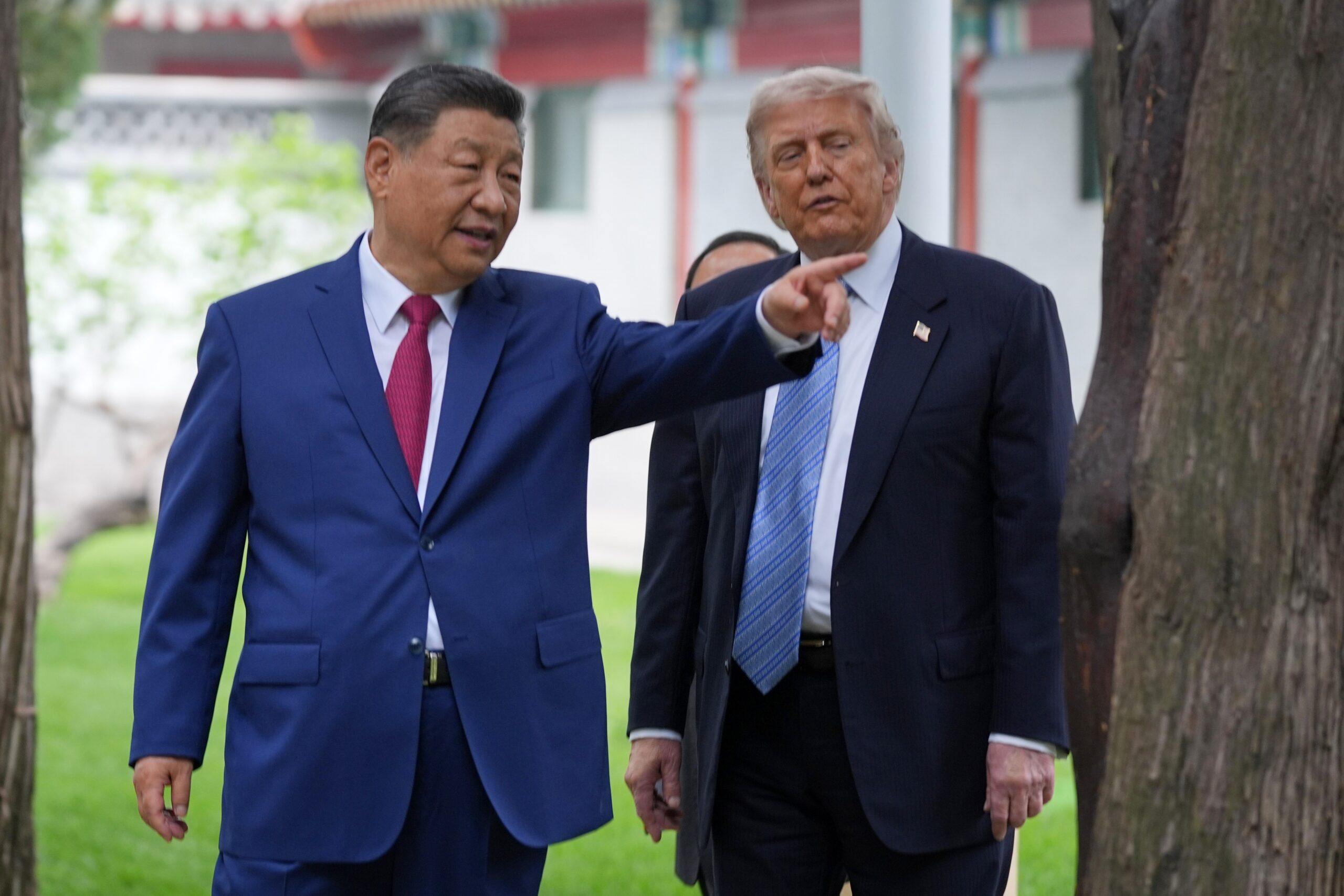
It takes a remarkably armoured ego to try to teach Donald Trump history, let alone ancient history. That is nonetheless what Xi Jinping did in May, at a closed-door session on the margins of the Beijing summit.
China’s leader invoked Thucydides, the Athenian general and historian who died some 2,400 years ago and wrote the classic account of the Peloponnesian War.
The idea he was reaching for is known in foreign-policy circles as the “Thucydides trap”: when a rising power challenges an established one, war between them becomes, if not inevitable, then extraordinarily likely.
The phrase was coined not in antiquity but at Harvard, by the political scientist Graham Allison, who in 2017 examined 16 historical cases of rising powers colliding with dominant ones, and found that 12 ended in war.
Xi asked Trump, according to accounts of the meeting, whether the two powers could escape that trap and forge “a new paradigm” of great-power relations.
The question was neither rhetorical nor gentle. It was a warning dressed up as erudition, and it came with a precise target: Taiwan, the island Beijing has considered a renegade province since the 1949 split, home to the world’s most advanced semiconductor production, and for more than 50 years, since Washington formally recognised the People’s Republic in 1979, the object of an American strategic ambiguity that promises to protect the island without ever quite saying how.
Xi told Trump, according to readouts of the encounter, that mishandling the Taiwan question would put the relationship in “great jeopardy”. The message was plain, war between the two powers is not Greek fate, it is an American choice, and the wrong choice has a name, reunification blocked by Washington.
What makes the lesson more interesting than a bare threat is the confidence behind it. A decade ago China visibly feared American coercion on trade, finance, technology and the military.
That fear appears to have shrunk considerably, because Beijing spent the intervening years preparing for precisely this moment.
On trade, Chinese control over rare earths and permanent magnets, essential to advanced weapons, electric vehicles and semiconductors, has handed Beijing a retaliatory lever Washington has yet to neutralise; the Pentagon depends almost entirely on Chinese processing to restock weapons consumed in the Middle East and Ukraine.
…
On finance, years of gradual de-dollarisation, strategic energy reserves and growing trade with the global South have reduced China’s exposure to Russia-style sanctions.
…
On technology, massive investment in chip self-sufficiency and a lead that some analysts credit China with in certain artificial-intelligence applications are eroding the value of American export controls. And on the military and nuclear fronts, the continued expansion of China’s arsenal makes any bet on escalation increasingly costly.
The mirror-image question, how much coercion Trump could actually bring to bear to bend China, has an uncomfortable answer for Washington.
The president arrives at this encounter carrying two recent wars that did not go the way he predicted. The 12-day war against Iran, in June 2025, produced neither the regime change nor the definitive destruction of Iran’s nuclear programme that the White House’s rhetoric had promised.
The military operation in Venezuela, which culminated in Nicolás Maduro’s capture this past January, delivered a spectacular headline but also a political and logistical morass whose cost is still being tallied. Neither episode projects the image of a superpower with the appetite or capacity for a prolonged confrontation with an adversary the size and nuclear standing of China. Xi has surely noticed.
The history lesson, then, was not really about Athens and Sparta: it was a reminder that American coercion, tested recently on far smaller stages, has shown its limits.
None of that stopped Trump from showering Xi with praise in Beijing, well beyond the usual diplomatic courtesies, describing him as a strong, widely respected leader, in a contrast that has not gone unnoticed among those who track his rhetoric about rivals.
He went home with some genuine commercial wins to show for it: a Chinese commitment to buy at least $17bn a year in American agricultural products through 2028, initial approval to purchase 200 Boeing aircraft, and vague promises to ease restrictions on rare earths.
What he did not bring home was any guarantee that the tariff truce would be extended beyond its November expiry, nor any Chinese retreat on Taiwan.
The two sides’ official readouts, tellingly, barely seem to describe the same meeting: Washington’s statements avoided mentioning Taiwan altogether; Beijing’s put the issue front and centre, treating it as a non-negotiable red line. Each capital wrote the story of the summit for its own audience.
Therein lies the real subtlety of Xi’s manoeuvre. By borrowing an American academic concept, coined at Harvard, about a Greek war, to describe Sino-American rivalry, China’s leader did two things at once.
First, he flattered his interlocutor with an erudite citation, knowing that Trump values the gesture of respect more than the substance of the lesson.
Second, and more importantly, he shifted the historical burden of choice onto Washington: if war comes, it will be because the dominant power failed to accommodate the rising one, just as Sparta failed to accommodate Athens.
It is a convenient reading, one that conveniently ignores that Beijing makes choices too, on Taiwan, on the South China Sea, on its own rearmament, but it is a powerful one precisely because it dresses up a very contemporary Chinese calculation in the borrowed inevitability of ancient Greece.
Allison himself, it is worth remembering, never said that war between Athens and Sparta, or between America and China, was destiny.
He said it was the most likely outcome absent difficult, painful choices by both sides. Xi appears to have absorbed half of that lesson: the half useful for pressuring an adversary.
Whether Trump, more inclined to close a “great deal” than to read the classics, absorbed the other half, the one that demands hard choices of him too, not just his rival, remains to be seen. It is the choice of whether to turn an island of 23m people into the spark that confirms, 2,500 years on, the diagnosis of an exiled Athenian general.