Algeria’s growth model faces a new test as inflation and fiscal pressures return
- Economic OutlookFeatured
- October 8, 2026

ALGIERS — Algeria’s economy continues to expand at a relatively strong pace, but a renewed rise in inflation, persistent fiscal deficits and falling foreign-exchange reserves are exposing the pressures behind its investment-led growth model.
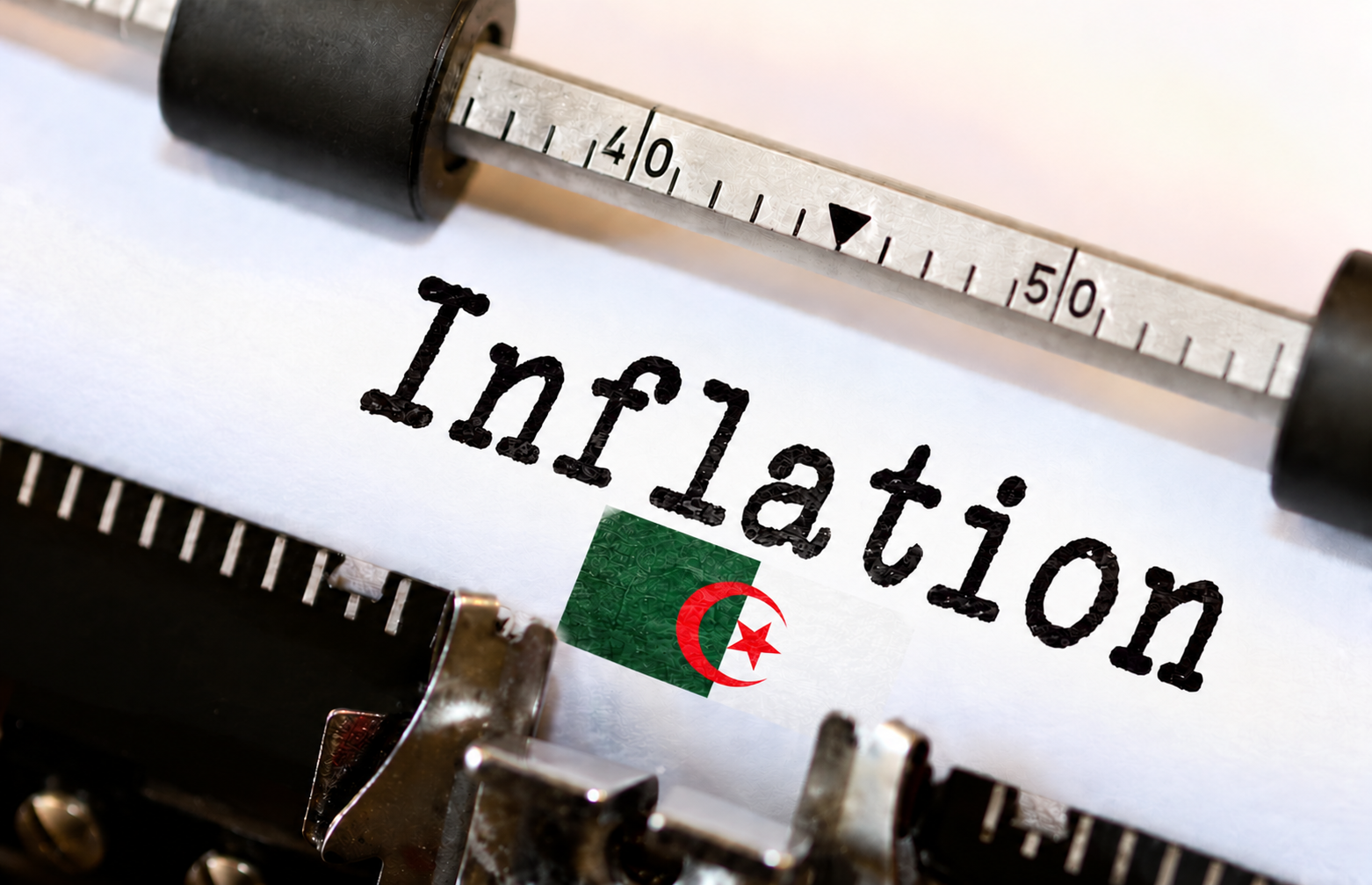
Real GDP growth reached an estimated 3.9 per cent in 2025, up from 3.7 per cent in 2024, while consumer-price inflation rose from a negative 2.0 per cent year-on-year rate in September 2025 to 5.2 per cent in April 2026, according to the International Monetary Fund.
The shift marks a reversal in the price environment rather than a return to the inflationary pressures seen in previous years.
Consumer prices had benefited from falling food prices, but the trend changed in late 2025 and early 2026. The IMF expects inflation to average about 5.5 per cent in 2026, as food-price deflation fades and other components of the consumer basket become more expensive.
The inflation rebound is taking place alongside relatively resilient economic activity. Growth has been supported by substantial public investment and continued expansion outside the hydrocarbon sector.
The IMF estimates that non-hydrocarbon activity grew 4.3 per cent in 2025 and expects it to expand by about 4 per cent in 2026. Hydrocarbon output is also projected to increase 2.7 per cent this year, taking overall GDP growth to about 3.8 per cent.
The composition of that growth, however, matters. Algeria has relied heavily on public investment to sustain domestic activity, while large fiscal deficits have reduced the space available to respond to future shocks.
The fiscal deficit narrowed in 2025 but remained equivalent to 10.5 per cent of GDP, while public debt rose to about 52.1 per cent of GDP. Higher financing requirements have also increased the importance of central-bank financing of the government.
The external position has weakened at the same time. Imports increased sharply in 2025, partly as a result of large public investment projects, while hydrocarbon export receipts weakened. The deterioration in the current account contributed to a significant decline in foreign-exchange reserves. Gross official reserves fell from $68.9bn in 2024 to about $51bn at the end of 2025, with the IMF projecting a further decline to roughly $46.5bn in 2026.
This creates a difficult policy trade-off, public investment can support growth, infrastructure and domestic demand, but when a large share of capital goods and equipment is imported, it also increases demand for foreign currency. If hydrocarbon revenues do not rise sufficiently to offset those imports, the result is pressure on the current account and a gradual erosion of external buffers.
Hydrocarbons remain Algeria’s main financial cushion. Higher oil and gas prices can strengthen export receipts, fiscal revenues and foreign-exchange reserves, providing the government with room to maintain investment and social spending.
But that same dependence leaves public finances and the external position exposed to commodity cycles. Stronger hydrocarbon revenues can therefore postpone, rather than eliminate, the need for deeper economic diversification.
The exchange rate adds another layer of complexity. Algeria operates a managed exchange-rate regime, while a significant premium persists in the parallel foreign-exchange market. The gap can distort incentives for businesses and consumers, complicate access to foreign currency and create additional pressure on import costs. Greater exchange-rate flexibility, alongside reforms to the foreign-exchange market, could help the economy absorb external shocks and narrow the gap between official and parallel markets.
Monetary policy faces a similar dilemma, the Bank of Algeria must contain renewed price pressures while supporting an economy in which public investment remains an important source of demand.
The IMF has warned that monetary conditions have eased alongside increased central-bank financing and has called for stronger safeguards around exceptional monetary financing. If broader inflationary pressures intensify, tighter monetary conditions may become necessary.
For households, the return of positive inflation after a period of falling consumer prices matters because the level of prices has not returned to its earlier position. A 5 per cent inflation rate means prices are rising again, not that they have fallen by 5 per cent. The impact on living standards will therefore depend on whether wages and employment grow fast enough to protect real purchasing power.
That is also the broader test of Algeria’s growth model. Strong GDP growth is economically important, but its sustainability will increasingly be judged by its ability to generate productive private investment, employment and higher real incomes without creating persistent fiscal and external imbalances.
Algeria has made progress in expanding agriculture, mining and other non-hydrocarbon activities, but deeper reforms will be needed to attract private capital, improve the business environment and reduce regulatory barriers.
A more competitive private sector could help broaden the export base and reduce the economy’s dependence on public spending and hydrocarbon revenues.
The central challenge is therefore no longer simply to maintain growth. Algeria must convert its investment and hydrocarbon revenues into a more diversified, private-sector-driven economy while containing inflation, rebuilding fiscal and foreign-exchange buffers and ensuring that economic expansion translates into jobs and sustainable gains in household incomes.