The inclusive leadership of Obama and Harris
- AmericaElectionWorld
- October 13, 2024

Symbols of change and hope
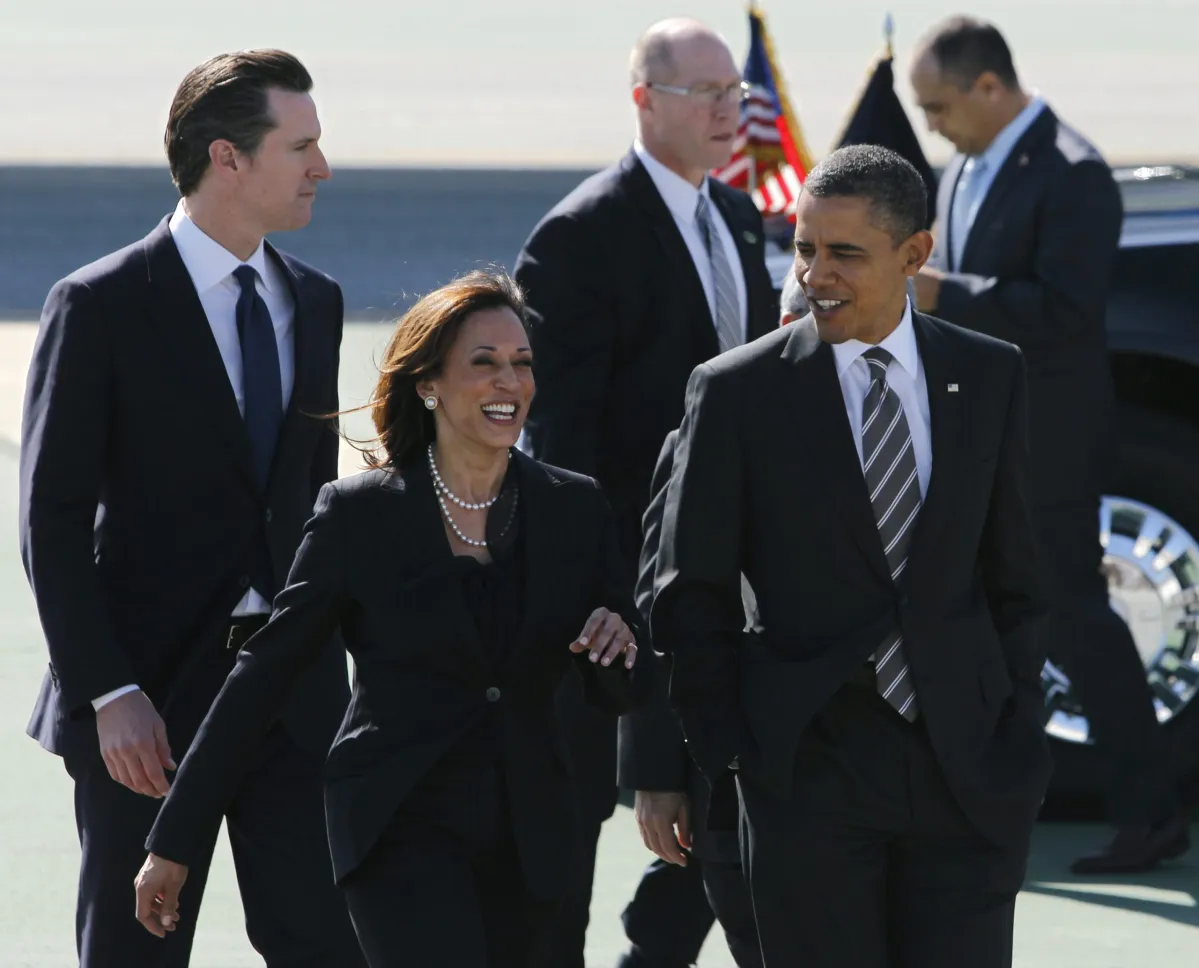
Barack Obama and Kamala Harris embody a new era of transformation in American politics, breaking historical barriers once thought impossible. As the first Black president of the United States, Obama, and Harris, the first Black and South Asian woman to serve as vice president, represent the potential of American democracy to evolve into something more inclusive and representative. Their presence in the highest offices of leadership signals a profound shift for millions of Americans who, for generations, have been marginalized and underrepresented.
This symbolism becomes even more powerful when contrasted with the era of division and exclusionary rhetoric associated with Donald Trump’s presidency. During Trump’s tenure, racial and political polarization intensified, fueled by rhetoric that often downplayed racial injustice and stoked resentment. Kamala Harris, in one of her speeches, highlighted this stark difference, stating: “Donald Trump was the only president of the United States who, when asked about white supremacists, said, ‘There were very fine people on both sides.’” This statement underscores the vast divide between the progressive optimism Harris and Obama champion and the exclusionary vision of the Trump era.
In contrast, Obama and Harris represent the opposite of such division. They champion the belief that inclusive and just leadership is not merely an option but a necessity. Their personal stories of overcoming adversity—Obama’s humble beginnings in Hawaii and Harris’s roots as the daughter of Jamaican and Indian immigrants—resonate deeply in a nation seeking renewal and representation. They prove that authentic leadership stems from a diversity of experiences, something Trump, with his elitist and divisive worldview, never grasped or promoted.
Harris’s rise, in particular, illustrates that the future of American leadership is rooted in diversity, progress, and inclusion. By breaking these paradigms, both Obama and Harris signal that progress is not just possible but inevitable, challenging the notion that the U.S. must remain tethered to a narrow, exclusionary worldview. As Harris said on another occasion: “Our government should be about lifting people up, not tearing them down.” This vision is what both leaders set in motion for the future—a leadership that opens doors for all, not just a select few, and overcomes the years of division and regression fostered by the Trump administration.
In contrast to Trump’s divisive approach, Obama and Harris envision a future where hope prevails, where inclusion drives progress, and where leaders govern with an unwavering commitment to justice and dignity for all Americans.