Africa doesn’t need permission from history
- OpinionsSAUTI
- July 17, 2026

Cheikh Anta Diop challenged Europe’s monopoly over the past. His legacy remains essential, as long as it does not become another orthodoxy.
Who gets to decide where civilization begins?
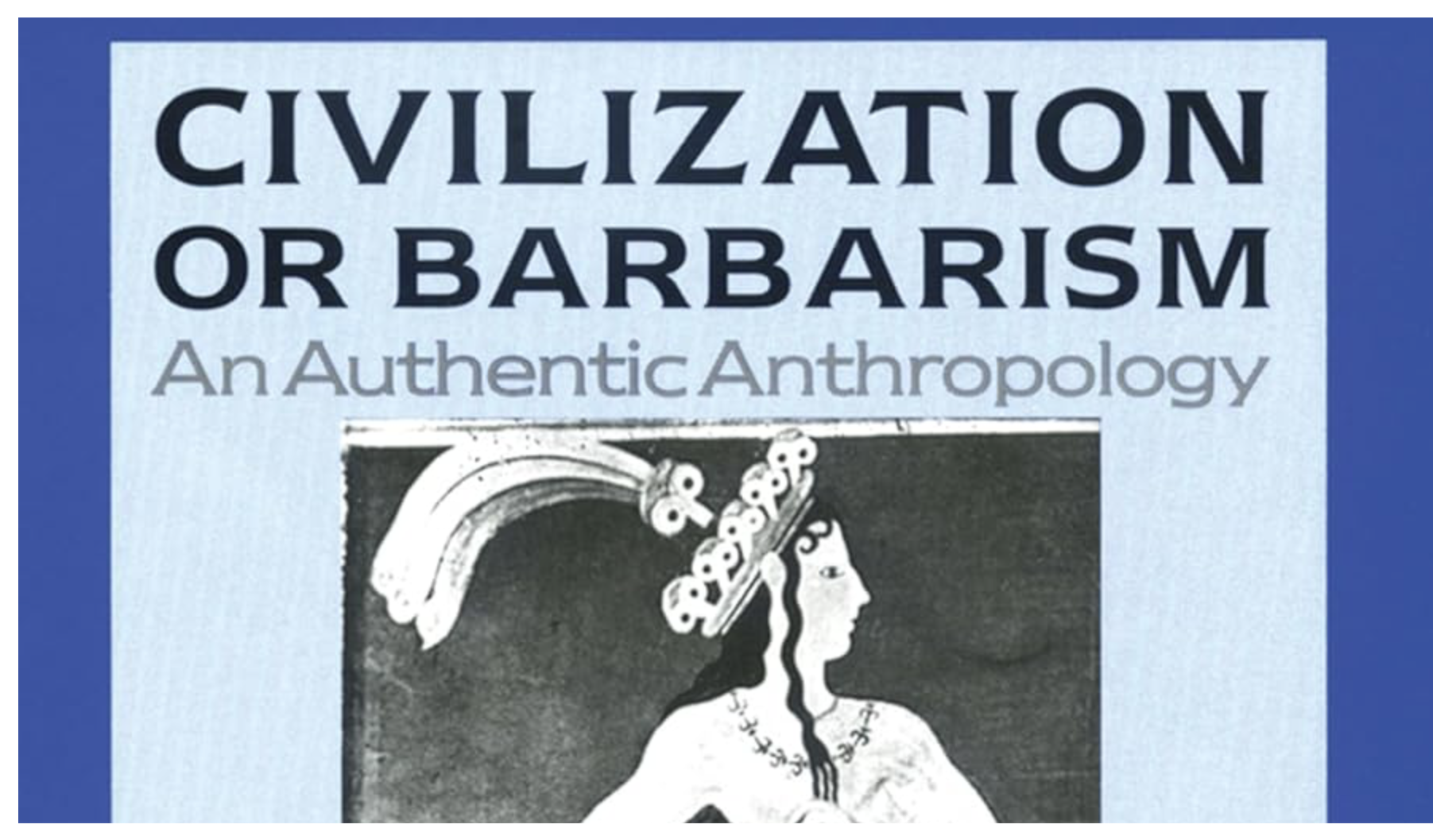
JOHANNESBURG – That deceptively simple question sits at the heart of Civilisation or Barbarism, the landmark work by Senegalese historian and scientist Cheikh Anta Diop.
More than four decades after its publication, the book continues to unsettle readers because it forces a confrontation with one of history’s longest-standing assumptions, that the story of civilization naturally flows from Greece to Rome to modern Europe, leaving Africa largely outside the narrative.
For generations, that version of history was presented as objective scholarship, in reality, it was also a hierarchy of prestige. Europe claimed reason, science and modernity. Africa was cast as a continent of oral traditions, tribes and societies waiting to be discovered rather than acknowledged. Diop shattered that narrative.
His argument was as bold as it was controversial. Humanity’s earliest origins, he insisted, were African. Pharaonic Egypt belonged firmly within African history, not detached from it.
Greek philosophy and science did not emerge in isolation but developed through centuries of interaction, exchange and learning across the Mediterranean. Africa, in his view, was not a passive observer of civilization but one of its principal architects.
For supporters, Diop became an intellectual liberator. For critics, he was a provocateur willing to challenge established scholarship with sweeping claims. Both assessments contain elements of truth.
The enduring importance of Civilisation or Barbarism is not that it settled the debate over Africa’s past. It is that it transformed who had the authority to participate in that debate.
Originally published in French in 1981, the book reads like several disciplines compressed into one volume. Diop moves from paleoanthropology to radiocarbon dating, from ancient Egypt to comparative linguistics, from political systems to philosophy, from biology to cultural history.
Today, such an undertaking would likely require an international research consortium, multiple databases and years of collaborative work. Diop relied instead on extraordinary scholarship, intellectual urgency and an unwavering belief that history itself had become a battlefield. That urgency explains the ambition of the project.
Recovering Africa’s past was never, for Diop, an exercise in nostalgia or a competition over who built the first monuments. It was a political act aimed at restoring intellectual sovereignty. A society taught that it has no history eventually learns to borrow other people’s categories, institutions and assumptions. Political independence, he argued, remains incomplete when cultural imagination is still governed from elsewhere.
That insight feels remarkably contemporary.
Many African countries today enjoy full political sovereignty while continuing to outsource significant parts of their historical narrative. School curricula often devote more attention to the European conferences that divided Africa than to the civilizations that flourished before colonial rule.
Academic prestige is frequently measured by publishing standards established far from African realities. Museums thousands of miles away continue to describe African cultural treasures as “universal heritage” when displayed abroad but “national claims” when their return is requested. The consequences extend well beyond symbolism.
Economic influence often follows intellectual authority. Those who determine what counts as legitimate knowledge frequently shape what deserves investment, patent protection or scientific recognition. Agricultural practices refined over centuries can be dismissed as folklore until they are repackaged as commercial innovation. African languages are routinely described as unsuitable for scientific inquiry, even though every scientific language became one only because people chose to produce science in it.
Diop understood something many development debates still overlook: dependency often begins in vocabulary long before it appears in trade balances, yet classics deserve readers, not disciples.
Some of Diop’s racial categories have not aged well. Contemporary archaeology and genetics increasingly describe ancient populations as fluid, interconnected and far more complex than the rigid racial classifications that dominated twentieth-century scholarship. At times, Diop’s effort to connect archaeology, linguistics, anthropology and biology stretches analogy into evidence.
Ironically, by attempting to trace too many achievements back to a single African origin, he occasionally mirrors the same obsession with historical ownership that characterized some of the Eurocentric narratives he opposed, that would simply replace one orthodoxy with another.
Civilizations are not corporations with permanent founding shareholders. They evolve through migration, commerce, conquest, adaptation and exchange. Ancient Egypt was undeniably African, but it was also Mediterranean, connected through the Nile Valley, Nubia, the Levant and wider networks of interaction. Recognizing its African identity corrects a historical distortion. Reducing it to racial essentialism merely creates a different one, there is another tension as well.
Recovered cultural identity can strengthen collective confidence, but it can also become an instrument of exclusion. Governments that invoke “African authenticity” are not always equally willing to tolerate Africans who disagree with official interpretations. Tradition should inspire institutional creativity, not become a tool for policing women, minorities or younger generations. The past serves society best when it expands today’s possibilities rather than restricting them.
Even so, the criticism that Diop merely politicized an otherwise neutral history misses a fundamental point, history had always been political.
The dominant politics simply wore the appearance of objective scholarship. Separating Egypt from Africa, minimizing centuries of intellectual exchange across the Mediterranean and portraying colonized societies as passive objects of history were themselves political choices. Diop exposed the assumptions behind those narratives instead of accepting them as settled fact.
His most enduring legacy, therefore, is not a definitive answer about the identity of the pharaohs, it is a blueprint for intellectual independence.
Africa needs more laboratories, archives, archaeological expeditions, linguistic research, publishing houses and universities capable of asking original questions while submitting their conclusions to rigorous scientific scrutiny. It needs international collaboration without intellectual dependency and confidence without complacency.
The greatest tribute to Diop would not be to repeat his conclusions, it would be to produce research strong enough to challenge them. The title of his book presents a stark choice, civilization or barbarism. But the real divide is neither racial nor geographical, it separates two fundamentally different ways of approaching knowledge.
Barbarism begins when any center of power insists that its version of history is the only one that can exist. Civilization begins when even those who liberated historical thinking remain open to being questioned.
Cheikh Anta Diop opened that door, Africa’s challenge now is to walk through it without closing it behind itself.