Mahama unveils three international panels to advance global reparatory justice agenda
- Politics
- June 21, 2026
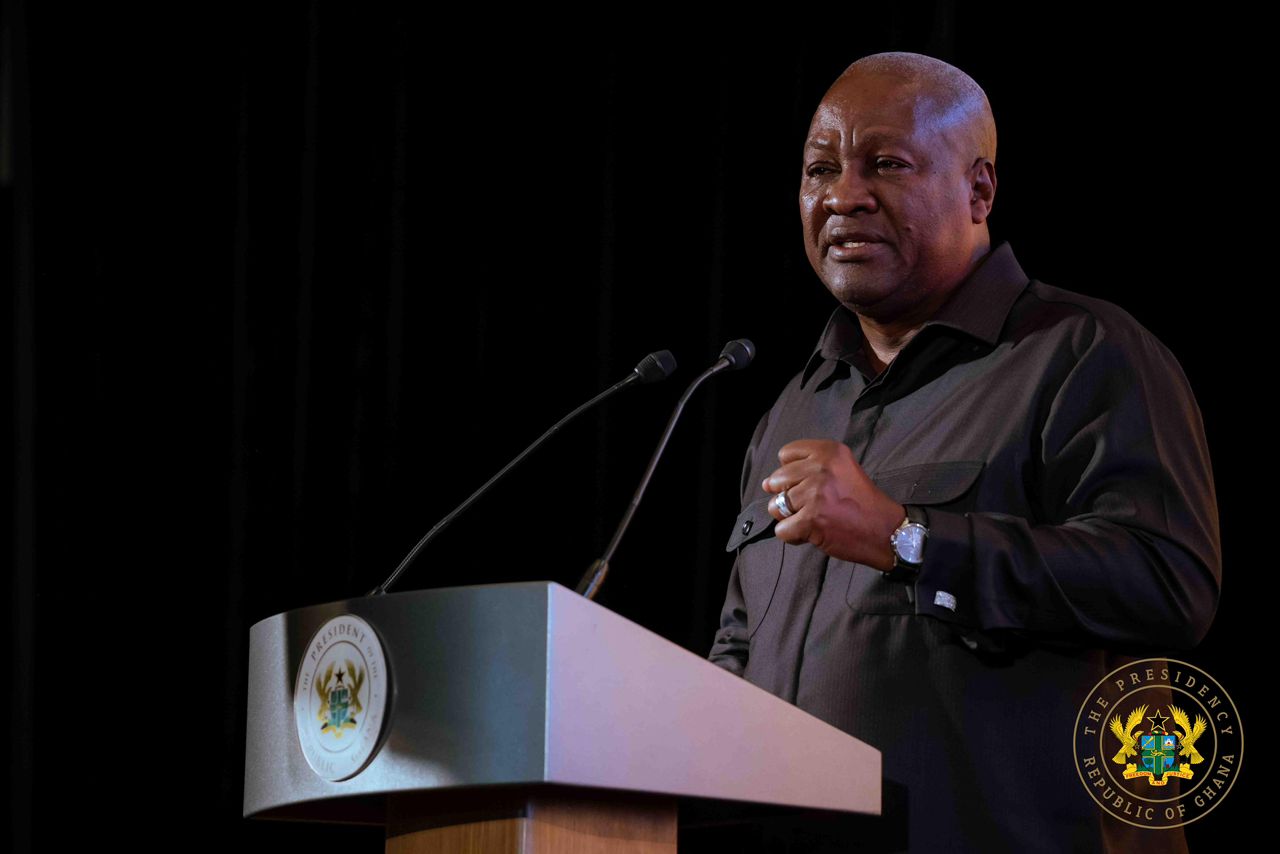

Accra, Ghana — Ghanaian President John Dramani Mahama has announced the creation of three international panels aimed at advancing the global reparatory justice movement, marking what supporters describe as a shift from advocacy to implementation.
Speaking at the opening of the “Next Steps Consultative Conference” in Accra on Saturday, Mahama said the new bodies would provide strategic, legal and technical support for efforts to address the enduring consequences of the transatlantic slave trade, colonialism and racial injustice.
The announcement comes amid growing international calls from African and Caribbean nations for historical accountability, cultural restitution and reparatory measures to address centuries of exploitation and displacement.
The three newly established bodies are the Global Advisory Panel on Reparatory Justice, the Expert Panel on the Restitution of Cultural Artefacts, and the Global Legal Panel on Reparatory Justice.
“Our objective is to establish a practical international roadmap that advances truth-telling, research, education, memorialization, restitution of cultural heritage and legal pathways toward reparatory justice,” Mahama told delegates.
The Ghanaian leader emphasized that the panels would complement rather than replace existing national and regional initiatives, helping to strengthen coordination across the growing global movement.
The conference brought together representatives from more than 80 countries, including heads of state, senior government officials, international organizations and civil society leaders.
Among those attending were Senegalese President Bassirou Diomaye Faye, Namibian President Netumbo Nandi-Ndaitwah, Liberian President Joseph Nyuma Boakai, São Tomé and Príncipe President Carlos Vila Nova, and Barbados Prime Minister Mia Amor Mottley, French President Emmanuel Macron addressed participants through a recorded video message.
The gathering also included representatives from the United Nations, the African Union, UNESCO, the United Nations Development Programme (UNDP), and the CARICOM Reparations Commission.
The initiative builds on recent momentum within the international reparations movement, including a landmark United Nations resolution recognizing the trafficking and enslavement of Africans as among the gravest crimes against humanity.
Mahama said the panels would draw on the CARICOM Ten-Point Plan, widely regarded as one of the most comprehensive frameworks for pursuing reparatory justice.
For Ghana, the issue carries particular historical significance, the country was home to some of the principal departure points for millions of Africans forcibly taken across the Atlantic during the slave trade.
Referencing sites such as Elmina, Cape Coast, Assin Manso and Osu, Mahama described them as enduring reminders of a system that reshaped societies across continents.
“Today, the descendants of those journeys have returned, not in chains, but as presidents, prime ministers, scholars, jurists, activists and citizens of the world,” he said.
Closing his remarks, Mahama stressed that the pursuit of reparatory justice should be rooted in reconciliation rather than division.
“We do not seek to reopen old wounds. We seek to heal those wounds,” he said. “We do not seek division. We seek justice, understanding and reconciliation grounded in truth.”
The establishment of the three panels represents one of the most ambitious institutional efforts in recent years to advance the global reparations agenda, a debate that continues to gain traction in diplomatic, legal and academic circles worldwide.