Why 43% could be enough to put the ANC back in command
- ElectionSouth Africa
- August 26, 2026
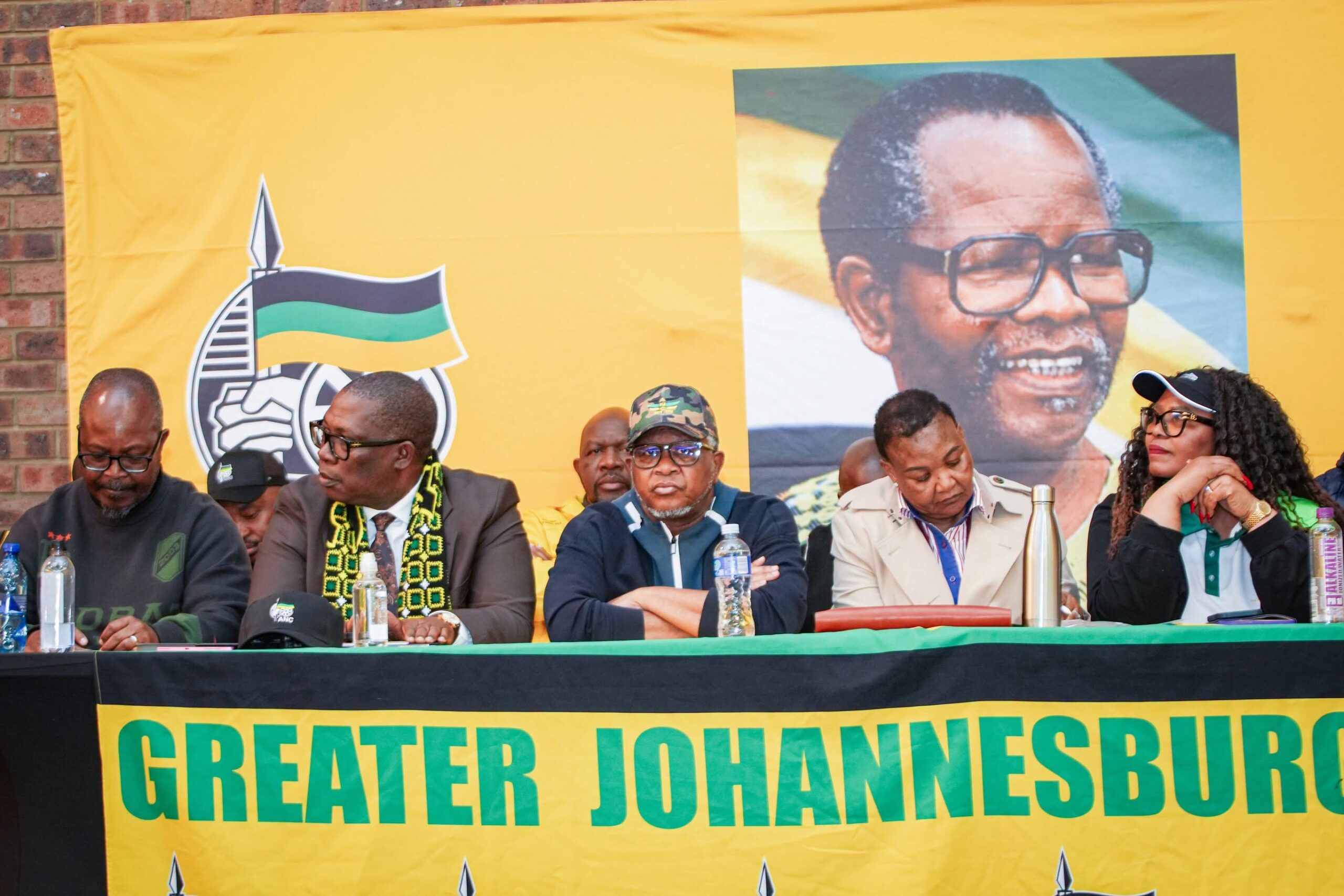

The African National Congress does not need to regain an outright majority to stage a political comeback. In an increasingly fragmented South Africa, a recovery towards 43% could leave it comfortably ahead of its rivals, and make it harder than ever to govern without it.
JOHANNESBURG — For most of democratic South Africa’s history, the African National Congress had a straightforward electoral objective, win more than half the vote and govern. That era is over. The more interesting question is no longer whether the ANC can return to 50%, but how far below it the party can fall while remaining the indispensable force in South African politics.
The answer may be surprisingly far.
Consider a scenario in which the ANC reaches about 43% of the vote. That would still look miserable beside the 69.7%it won at its peak in 2004. Yet in today’s fractured party system it could amount to a remarkably comfortable result. The Democratic Alliance (DA), uMkhonto weSizwe (MK), the Economic Freedom Fighters (EFF) and a collection of smaller parties are competing not merely against the ANC, but increasingly against one another.
The ANC’s great advantage is therefore no longer invincibility. It is indispensability.
The strange arithmetic of decline
There is no disguising the scale of the ANC’s retreat. Its share of the national vote fell from 69.7% in 2004 to 65.9% in 2009, 62.2% in 2014, 57.5% in 2019 and just 40.2% in 2024. At the last general election it secured only 159 of the National Assembly’s 400 seats, losing its parliamentary majority for the first time since apartheid ended.
Yet elections are contested against opponents, not history.
In 2024 the DA, the ANC’s nearest national rival, won only 21.8% and 87 seats. MK, associated with Jacob Zuma, burst onto the scene with 14.6% and 58 seats. Julius Malema’s EFF managed 9.5% and 39 seats.
Thus, even during the worst national election in its history, the ANC finished roughly 18 percentage points ahead of its closest competitor.
That is the paradox at the heart of South African politics. The ANC has declined dramatically. But no single opposition party has come remotely close to replacing it.
Why 43 matters
A rise from 40.2% to 43% would amount to only 2.8 percentage points. In relative terms, however, it would represent an increase of roughly 7% in the ANC’s share of the vote.
More importantly, its political significance would depend on what happened below it.
Suppose, illustratively rather than as a forecast, that the ANC secured 43%, the DA remained somewhere in the mid-20s, MK in the low-to-mid teens and the EFF in single digits. The ANC would still lack an outright majority. Yet its lead over its nearest rival could remain enormous.
The coalition arithmetic would then become distinctly favourable.
A party with 43% needs partners representing only another seven percentage points or so to assemble a majority. A rival with 25% must somehow bring together another 25 points from parties divided by ideology, personality, geography and history.
That distinction matters more than the psychological threshold of 50%.
The relevant question would cease to be, Can the ANC govern alone?
It would become, Can anybody govern without the ANC?
That is a much more comfortable political position.
There is an important caveat. South Africa votes in municipal elections on November 4th, and local and national elections cannot be compared mechanically. Turnout, candidates, local grievances and coalition dynamics differ substantially. A hypothetical municipal result of 43% would therefore not be directly equivalent to the ANC’s 40.2% at the 2024 general election.
But such a result would provide powerful evidence that the party’s decline had stabilised, and that 2024 might have marked a floor rather than another stop on an inexorable descent.
The opposition’s problem is fragmentation
To describe South Africa’s opposition collectively as being in decline would be misleading. The DA improved slightly between 2019 and 2024. MK went from non-existence to 14.6% of the national vote.
The more important weakness is fragmentation.
The voters abandoning the ANC have not moved en masse towards one alternative. They have scattered.
This is particularly evident within the political family that emerged from the liberation movement itself. Zuma was once an ANC president of South Africa. Malema led the ANC Youth League. MK and the EFF are, in different ways and from different generations, products of fractures within the ANC’s old political universe.
In 2024, the ANC, MK and EFF together captured roughly 64% of the national vote.
The political constituency once organised overwhelmingly beneath one banner has not disappeared. It has splintered.
That may eventually prove to be the ANC’s salvation.
The opposition’s problem is not necessarily a shortage of votes. It is its inability, so far, to concentrate enough of them behind a single national alternative.
The DA’s stubborn ceiling
The DA illustrates the problem.
The ANC shed almost 30 percentage points between 2004 and 2024. Yet the DA secured only 21.8% at the latter election, up modestly from roughly 20.8% in 2019.
In other words, the collapse of the ANC’s old majority did not produce a corresponding surge towards the country’s main liberal opposition party.
Participation in the Government of National Unity creates a further complication.
Before 2024 the DA could offer voters an uncomplicated proposition: the ANC has governed badly, so replace it.
Now it governs alongside it.
If the economy improves and public services become more reliable, both parties will claim credit. The DA can argue that its participation imposed greater administrative and economic discipline. Cyril Ramaphosa can counter that the ANC built the coalition, retained the presidency and provided the political stability in which reform became possible.
Opposition and government have become harder to distinguish.
For the party holding the presidency, that ambiguity need not be entirely unwelcome.
Zuma has a different problem
MK poses a more immediate threat in parts of the country, particularly KwaZulu-Natal. Its 14.6% debut was among the most consequential developments of the 2024 election.
But insurgent parties eventually face a test that charismatic leaders cannot avoid: organisation.
Municipal elections require ward candidates, local branches, polling agents, voter databases and the ability to mobilise supporters street by street. Personal popularity must become institutional capacity.
The ANC has spent three decades constructing precisely such machinery.
Its organisation has undoubtedly weakened. In some municipalities it has become part of the problem, associated with patronage, factionalism and administrative incompetence. But it remains one of the few political organisations with a genuinely national footprint.
MK must prove that enthusiasm for Mr Zuma can survive his eventual departure from centre stage.
The ANC merely has to prove that its machinery still works.
The EFF is being squeezed
The EFF faces an even clearer strategic difficulty. For years Mr Malema enjoyed an almost uncontested position as the radical alternative to the ANC. MK changed that.
The EFF received roughly 10.8% in 2019. In 2024, despite the ANC suffering its greatest electoral collapse, the EFF slipped to 9.5%.
The striking fact is not simply that the EFF declined. It is that it failed to capture the political windfall created by the ANC’s weakness.
MK did.
The result is an opposition increasingly divided into separate markets: the DA occupies much of the liberal and reformist space; MK competes for populist and Zuma-aligned voters; the EFF contests the radical left; smaller parties fight over regional, ethnic, religious and local constituencies.
Each can hurt the ANC.
None has yet demonstrated that it can replace it.
The ANC’s largest potential constituency does not vote
The most promising source of an ANC recovery may not belong to another party at all.
It is abstention.
In 2024 approximately 16.29m of South Africa’s 27.78m registered voters cast ballots, putting turnout at about 58.6%. It had been roughly 66% in 2019, 73% in 2014 and close to 89% in 1999.
At the 2021 municipal elections, turnout was only 45.9%.
This changes the arithmetic of an ANC comeback.
Millions of voters did not necessarily abandon the party for the DA, MK or EFF. Some abandoned electoral politics altogether.
For the ANC, persuading a disillusioned former supporter to vote again may be easier than converting a committed DA or MK voter.
The route towards 43%, therefore, need not run primarily through opposition territory.
It may run through the homes of people who stayed away.
Geography will determine whether the comeback is real
National percentages can also conceal the battle that actually matters.
The ANC must defend its stronger positions in provinces such as the Eastern Cape and Limpopo while preventing further erosion elsewhere. In KwaZulu-Natal, its task is more existential: stop MK from turning the extraordinary Zuma-driven realignment of 2024 into a permanent political order.
Then there is Gauteng.
Johannesburg, Tshwane and the surrounding urban economy matter far beyond their municipal boundaries. They contain precisely the voters with whom the ANC has struggled: younger, urban, economically frustrated citizens who are less attached to liberation-era loyalties.
The Western Cape presents a different challenge. The objective there is less plausibly to displace the DA outright than to prevent its dominance from expanding into a broader national story of competent opposition government.
A genuine ANC revival would therefore not require uniform gains everywhere. It would require holding its heartlands, stemming losses in KwaZulu-Natal and becoming competitive enough again in Gauteng to demonstrate that urban decline is reversible.
Fixing the state is now an electoral strategy
None of this arithmetic matters if the ANC cannot improve government.
In the second quarter of 2026 South Africa’s official unemployment rate stood at 33.6%. Some 8.5m people were unemployed, compared with 16.7m in work. On the broader measure, labour underutilisation reached 46.3%.
These figures explain why macroeconomic improvements do not automatically translate into votes.
The ANC of Nelson Mandela could campaign as the organisation that liberated South Africa.
The ANC of Cyril Ramaphosa must campaign as the organisation capable of repairing it.
More reliable electricity helps. But municipal voters encounter the state through more mundane things: whether water emerges from the tap, rubbish disappears from the pavement, sewage remains in the pipes, streetlights work and potholes are filled.
For the ANC, administrative competence is no longer merely good government, it is campaign strategy.
A different sort of victory
The November election will therefore test whether the ANC has understood the political system created by its own decline.
Its strategic objective need not be the restoration of the old 50%-plus model. That South Africa may have disappeared.
Instead, the ANC needs to do five things: remobilise former supporters who stopped voting; demonstrate visible improvements in municipal services; prevent MK from consolidating its gains in KwaZulu-Natal; stabilise its urban vote, particularly in Gauteng; and exploit the fact that its opponents remain divided among several incompatible political projects.
If it can do so, a result around 43% could transform the political narrative.
It would not recreate the ANC of 2004. Nor would it erase the nearly 30 percentage points lost over two decades.
But it could suggest that 2024 represented the bottom of the decline rather than another milestone on the way down.
More importantly, it would change the balance of coalition power.
An ANC in the low 40s, facing several rivals far below it, could negotiate from strength. Smaller parties would have incentives to bargain with it. Building an anti-ANC coalition would require bringing together organisations whose economic programmes, leaders and constituencies often have little in common.
The ANC would no longer be hegemonic.
It might instead become something better suited to South Africa’s new political age: indispensable.
For three decades the ANC dominated because it could win majorities on its own. The opposition waited for that majority to disappear, assuming power would eventually follow.
The first happened in 2024.
The second has not.
That is why 43% could matter so much. In a fragmented democracy, the largest party need not command a majority if every plausible route to a majority still runs through it.
South Africans demonstrated in 2024 that the ANC could lose its majority. In November they may discover the more intriguing possibility: losing a majority is not the same thing as losing power.