Nchimbi’s resignation exposes a rare fracture at the top of Tanzania’s government
- PoliticsTanzania
- August 26, 2026
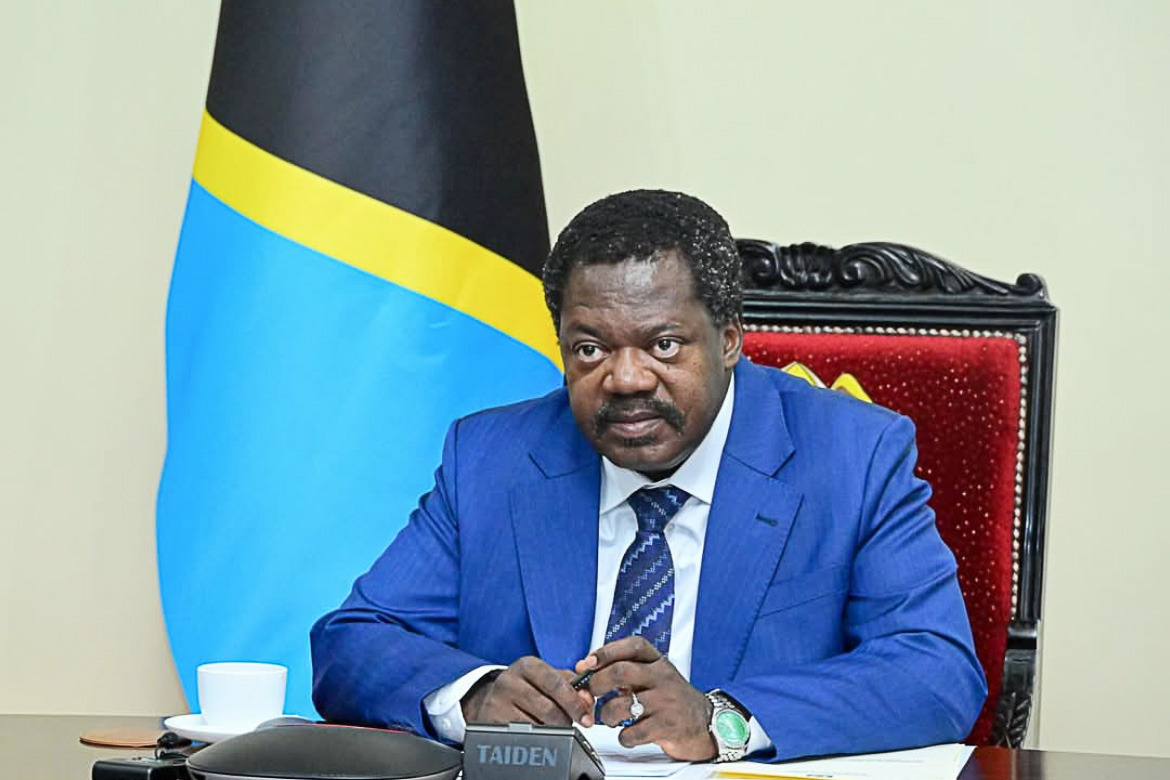

ANALYSIS | The vice-president says he is leaving because President Samia Suluhu Hassan wants change. The constitutional transition may be orderly, but the politics behind it remain opaque.
JOHANNESBURG – Emmanuel Nchimbi’s decision to resign as Tanzania’s vice-president is constitutionally straightforward. Politically, it is anything but.
President Samia Suluhu Hassan accepted his resignation on 26 August, a day after Nchimbi announced that he would leave office, retire from politics and withdraw from public service on 4 September.
The official process appears orderly. The wording of his departure does not.
Nchimbi said he had promised Samia in August 2025 that he would step aside whenever she felt she needed a different vice-president. He added that he was now “convinced beyond doubt” that the President wanted a change.
That sentence is the political heart of the story. Nchimbi did not allege that he had been dismissed, nor did he accuse the President of forcing him out. But he made clear that his decision was linked to what he believed Samia wanted. It is difficult to reconcile that language with the idea of an entirely voluntary retirement.
His departure, less than a year after taking office, is the first resignation by a Tanzanian vice-president since independence. In a country where the ruling Chama Cha Mapinduzi, or CCM, has long managed internal competition away from public view, the announcement offers an unusual glimpse of pressure at the top of the state.
A departure preceded by signs of tension
Reports of strain did not begin with Nchimbi’s resignation.
During parliamentary debate in June and July, remarks about a political “Judas” inside the government prompted speculation that a senior official was being accused of betrayal.
The speaker did not name Nchimbi. Any claim that he was the intended target therefore remains an interpretation, not a verified fact.
The controversy intensified in August when the weekly newspaper Mwanahalisi reported that Nchimbi was resisting pressure to resign. Tanzanian authorities suspended the publication for six months, citing breaches of media law and journalistic ethics.
Regulators highlighted errors including a wrongly captioned photograph.
Those errors matter. They prevent the newspaper’s account from being treated as conclusive evidence. But the timing also matters.
Days after a publication was sanctioned for reporting pressure on the vice-president, Nchimbi announced that he was leaving because he believed the President wanted a replacement.
The sequence does not prove every allegation made by Mwanahalisi. It does strengthen the case for independent scrutiny of the relationship between the presidency, the vice-presidency and the authorities responsible for regulating the media.
Tanzania has not publicly disclosed whether Samia asked Nchimbi to resign, whether the two disagreed over policy or whether senior CCM figures negotiated his exit.
Neither leader has described an open confrontation.
The available evidence supports a narrower conclusion, confidence between the country’s two most senior elected officials had weakened, or Nchimbi had come to believe that it had.
Why a negotiated exit is the most plausible explanation
Three broad explanations have emerged.
The first is the official one, Nchimbi wished to retire from politics and public service. His statement supports that account, but his reference to Samia’s desire for change leaves it incomplete.
The second is that an open power struggle had made his position untenable. The preceding controversies and the unusual language of his resignation lend some weight to that theory.
There is, however, no public documentary evidence of a direct confrontation or a defined policy dispute between the President and her deputy.
The third, and most plausible, explanation is a negotiated withdrawal under political pressure.
Such an arrangement would serve both sides. Nchimbi can present his departure as an act of loyalty and the fulfilment of an earlier promise.
Samia can reorganise the leadership without initiating a damaging impeachment process or publicly acknowledging a rupture inside the CCM.
The polite tone of the exchange does not disprove the existence of pressure. In tightly managed political systems, courtesy is often the instrument through which conflict is contained.
The constitutional clock is now running
Nchimbi cited Articles 50(2)(c) and 149(2) of Tanzania’s Constitution in announcing his resignation.
Once the vice-presidency becomes vacant on 4 September, the President must appoint a replacement as soon as possible and no later than 14 days after the vacancy arises.
On that timetable, Samia should name a successor by around 18 September.
Her nominee must then be confirmed by a majority of the National Assembly before taking the oath of office. The vote provides a constitutional check, although the CCM’s overwhelming parliamentary strength makes the rejection of Samia’s candidate unlikely.
The choice is also constrained by the structure of the United Republic. Tanzania’s political system seeks to balance Zanzibar and the mainland at the top of government.
Because Samia comes from Zanzibar, the next vice-president is expected to come from mainland Tanzania, as Nchimbi does.
The replacement will not be a ceremonial choice. The vice-president is the principal assistant to the head of state and the constitutional successor if the presidency becomes vacant.
Samia herself moved from the vice-presidency to the presidency after John Magufuli died in office in March 2021.
A test for Samia and the CCM
The identity of the next vice-president will offer the clearest indication of Samia’s intentions.
A technocrat with a limited independent political base would suggest that the President is prioritising control and administrative stability.
A senior CCM organiser would point to an effort to reinforce party discipline. A figure associated with dialogue, constitutional reform or national reconciliation could signal an attempt to rebuild public trust.
The choice comes at a difficult moment for Tanzania.
The African Union’s election observation mission concluded that the October 2025 general election did not comply with the organisation’s democratic principles and international standards.
Observers documented legal shortcomings, restricted political competition, disruptions to voting, violence and an internet shutdown.
European governments and the European Union delegation later urged Tanzanian authorities to protect fundamental freedoms and act on recommendations issued by the AU and the Southern African Development Community.
A Tanzanian inquiry reported in April 2026 that 518 people had died in post-election violence, according to the Associated Press.
The commission rejected allegations of mass graves, while opposition parties and rights groups disputed parts of the official account.
The resignation therefore lands in a political environment already marked by contested legitimacy, demands for accountability and concerns over shrinking civic space.
For Samia, appointing a new deputy is not simply a matter of filling a vacancy. It is an opportunity to reshape the administration, manage rival factions within the CCM and influence the emerging contest over who may eventually succeed her.
The questions that remain unanswered
The presidency has confirmed the transition, but it has not explained what “change” Nchimbi believed Samia wanted.
Did the President directly communicate that he had lost her confidence?
Were party leaders involved in negotiating his departure?
Did disagreement over the response to the 2025 election crisis play a role?
Was the pressure connected to the longer-term battle over the CCM’s leadership and the 2030 succession?
There is not yet enough evidence to answer those questions responsibly.
What happens after 4 September may provide further clues. If Nchimbi is allowed to retire quietly and retains the respect of the party, that would support the interpretation of an orderly political settlement. Public attacks, investigations or the removal of privileges would suggest that his exit was closer to a purge.
Parliament’s handling of Samia’s nominee will be equally revealing. A rapid and unanimous confirmation would demonstrate the CCM’s ability to close ranks.
Absences, criticism or delayed approval could expose a deeper internal split.
The fate of Mwanahalisi must also remain part of the story. Its reporting contained errors, but the subsequent resignation makes the underlying subject undeniably newsworthy.
A six-month suspension risks creating the impression that media regulation is being used not only to enforce standards, but also to discourage investigation of divisions within government.
An orderly transition with an opaque cause
Tanzania’s constitutional machinery appears capable of managing Nchimbi’s resignation. That is important in a region where leadership disputes can quickly become institutional crises.
But constitutional order should not be mistaken for political transparency.
Nchimbi’s message was carefully calibrated. It was respectful enough to avoid immediate confrontation, yet explicit enough to place on record that he was leaving because he believed the President wanted another deputy.
On the evidence now available, his departure is best understood not as a coup, a formal dismissal or a routine retirement, but as a negotiated exit under pressure.
The name Samia puts before Parliament, and the treatment Nchimbi receives after leaving office, will determine whether this episode closes quietly or becomes the first visible chapter in a wider struggle over the future of power in Tanzania.