Equatorial Guinea’s public sector overhaul: Can transparency and meritocracy take root?
- Central AfricaEquatorial GuineaPolitics
- July 7, 2025

SPECIAL REPORT | AfricaHeadline | July 2025
Equatorial Guinea Unveils Transparent Hiring Reform Amid Generational Shift in Public Sector
In a significant policy shift that has surprised observers across Central Africa, Equatorial Guinea has implemented one of the largest public sector hiring reforms in its recent history.

AfricaHeadline Reports Team
editorial@dw-demosnewstaion.online
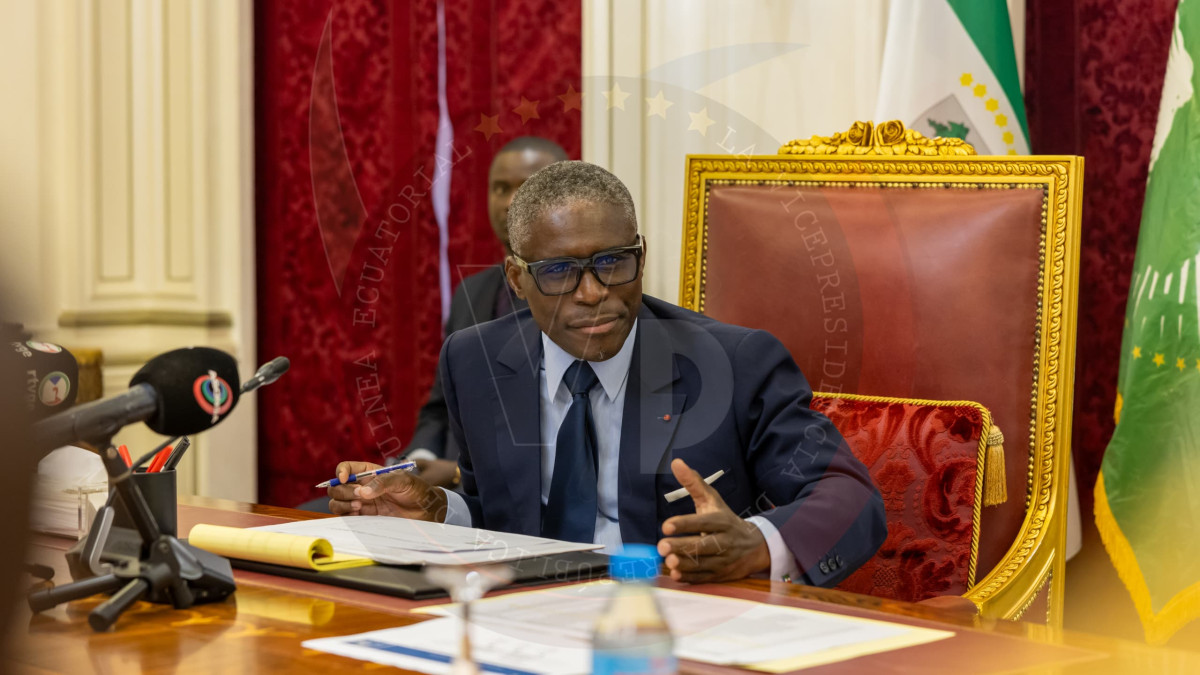
Under the direct oversight of Vice President Nguema Obiang Mangue, the government has recruited 1,051 new civil servants through what it describes as a transparent, merit-based and fiscally disciplined process. The initiative signals a break from a past marked by patronage, opaque procedures and limited opportunities for young professionals.
The scale of the reform is evident in the numbers. The 2025 recruitment process saw a dramatic increase in available positions—rising from 417 in 2024 to more than 1,000 this year. Of the 1,206 applicants, 888 submitted complete documentation, while 154 failed to appear for the selection procedures. The government responded by offering 163 of the remaining vacancies to alternates with the highest scores, reinforcing the merit-based approach.
According to figures verified by the Treasury, the recruitment of these new civil servants will cost the state an estimated 5.7 billion CFA francs annually, equivalent to around 9.3 million US dollars. This is based on an average monthly salary of 450,000 CFA francs (approximately $730), including administrative overhead. Compared with other key sectors in the 2025 national budget, public administration now represents about 6% of government spending, with education and infrastructure continuing to receive the largest allocations.
The reform process has been lauded for its transparency. A standardised scoring system weighted academic credentials, written test results, and document verification. For the first time, lists of successful applicants and their alternates were published online, with open access for the general public.
This level of visibility has been rare in Equatorial Guinea and is still absent in neighbouring countries such as Congo-Brazzaville and Angola, where public recruitment processes have been criticised for delays, limited oversight, or a lack of publicly available criteria.
At the heart of the reform is a strategic generational shift. Over the past two years, roughly 600 civil servants retired under a voluntary retirement scheme supported by the Ministry of Public Administration and Reform.
This policy created space for a younger workforce, with the government aiming to reduce the average age of public servants from 52 to 44 years by 2027. The change is intended to combat the country’s persistently high youth unemployment rate, which was estimated at 27.6% in 2024.
Officials say the broader goal is to improve institutional efficiency. The government expects to see a 25% increase in internal productivity metrics by 2026, particularly in key public services such as civil registration, healthcare delivery, and administrative response times.
In the long term, the reforms are also expected to help rebuild public trust. Surveys from regional organisations such as Afrobarometer indicate that fewer than 40% of Equatoguineans currently express confidence in their state institutions.
While many remain cautious, analysts agree that the reform marks an important shift in tone and practice. The personal involvement of Vice President Nguema Obiang Mangue has been interpreted as a political calculation aimed at building credibility through governance.
Observers say that if the current standards are maintained and extended to future recruitment cycles, Equatorial Guinea could emerge as an unlikely regional leader in civil service reform.
However, the road ahead remains uncertain. The success of the initiative will depend on continued political will, proper integration of the new hires, and the availability of fiscal space to sustain the expansion. There are open questions about whether these reforms can survive beyond the current political cycle, or if they risk being reversed once the spotlight fades.
Despite these uncertainties, the message to Equatorial Guinea’s youth is clear: merit is beginning to matter. For a country long associated with centralised control and limited social mobility, this alone marks a significant milestone.
In a region where civil service appointments have often been viewed as instruments of political reward, the Malabo model offers a potential roadmap—one built on performance, transparency, and data-driven decision-making.
Equatorial Guinea’s experiment with public sector reform may still be in its early stages, but it has already opened a new chapter in the country’s governance story. If sustained, it could set a precedent for other African states searching for credible, inclusive, and results-oriented public service delivery.