Angola: Closing ranks around the Leader
- AngolaOpinions
- July 21, 2026
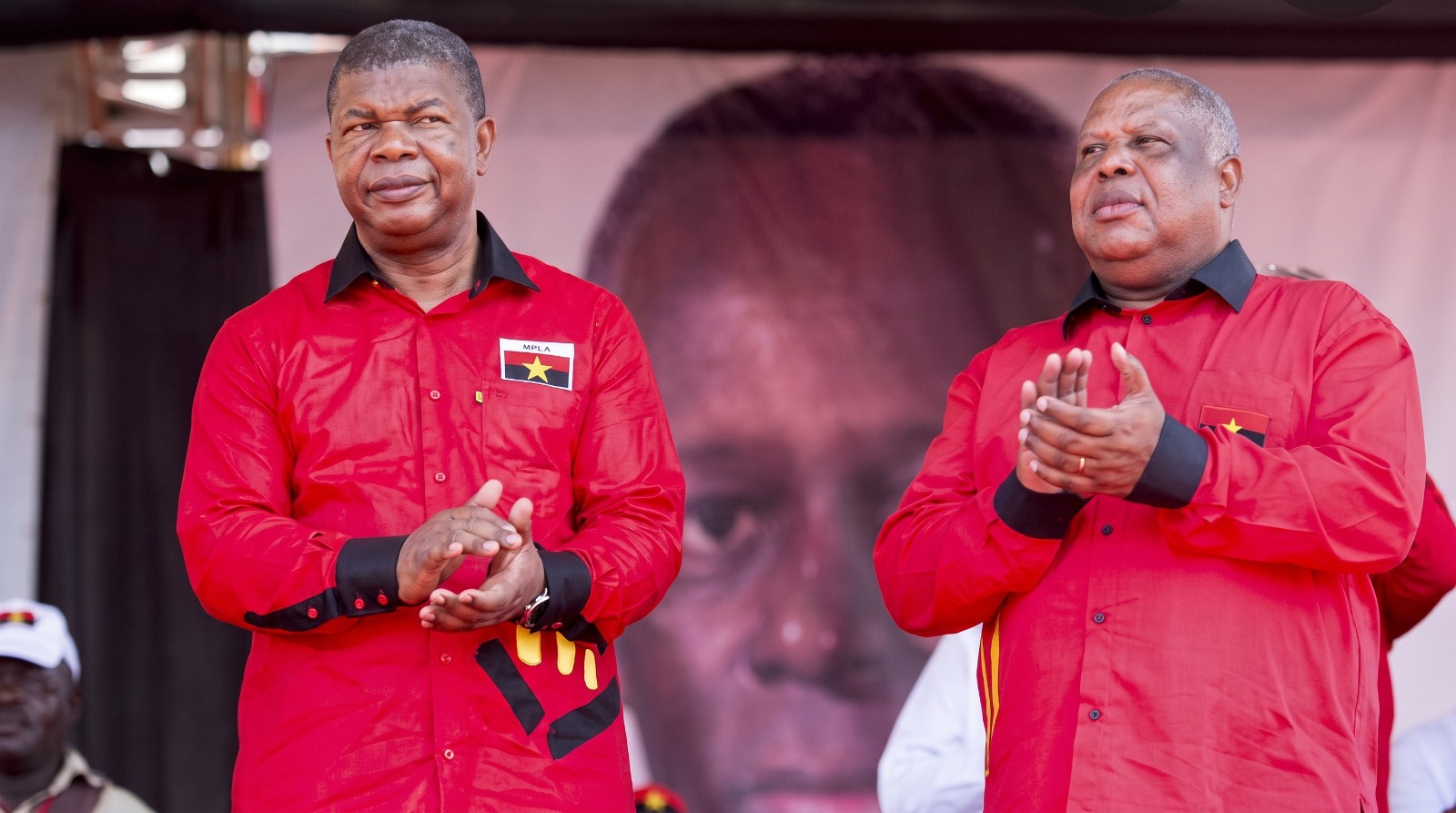

By excluding Higino Carneiro from the race, the MPLA has preserved party discipline. It may also have narrowed its own capacity for renewal.
JOHANNESBURG – In politics, few expressions reveal as much about an organisation as the slogans it chooses to repeat. Within the MPLA, “closing ranks around the leader” is presented as a call for unity. In practice, it serves as a description of how power is exercised. Unity is prized; internal competition considerably less so.
It was precisely that boundary that Higino Lopes Carneiro chose to test. A retired general, former minister, former provincial governor and long-standing party figure, he put himself forward as a candidate for the MPLA presidency, challenging João Lourenço ahead of the party’s Ninth Ordinary Congress, scheduled for December. The outcome came swiftly.
On July 21st, the party’s nominations subcommittee rejected his bid, citing an insufficient number of valid endorsements and a series of alleged irregularities, including forged signatures and the improper use of identity documents. Carneiro’s team has said it will appeal. Until the relevant party bodies, and, if necessary, the courts, have ruled, those claims remain precisely that: allegations.
Even so, the episode reveals far more than a procedural dispute.
The first problem belongs to the challenger himself.
Carneiro appears to have mistaken political prominence for organisational strength. In a highly disciplined party, name recognition is no substitute for an electoral machine capable of delivering a procedurally flawless campaign. If enough signatures could be invalidated to sink the candidacy, then the operation failed where failure was least affordable: organisation.
The second problem belongs to the party.
The MPLA continues to behave much like other African liberation movements that have remained in power for decades. Like ZANU-PF in Zimbabwe or, for many years, FRELIMO in Mozambique, it preserves a political culture in which cohesion tends to be valued above internal pluralism. Such discipline was understandable in a guerrilla movement. It becomes more problematic when applied to a party that has governed a sovereign state for nearly half a century.
That does not mean every candidacy should be accepted regardless of the rules. Any political party has both the right and the responsibility to enforce rigorous procedures. Yet it is equally true that, when the incumbent controls the party’s principal institutions and the only credible challenger is eliminated before delegates cast a vote, the distinction between formal legality and genuine competition inevitably becomes harder to sustain in the eyes of the public.
This is where the third difficulty emerges, once again involving Carneiro.
His candidacy carried substantial political and legal baggage, in May he was formally named as a suspect in a case involving alleged embezzlement and aggravated fraud.
In June prosecutors announced another investigation concerning alleged embezzlement and money laundering. His lawyers reject the accusations, and earlier proceedings ended without conviction. As in any state governed by the rule of law, investigation is not guilt. Politics, however, operates on a different timetable from the courts. Public perception often reaches its verdict long before judges do.
That circumstance gave President João Lourenço an obvious advantage. His anti-corruption campaign has been praised by some and criticised by others as selective. Whatever one’s view, a challenger under criminal investigation is unlikely to persuade party members that he embodies political renewal.
Yet removing a rival does not necessarily resolve the question that his candidacy exposed.
João Lourenço is constitutionally barred from seeking a third presidential term in 2027. Leadership of the MPLA will therefore become even more consequential, since it will largely determine who succeeds him as the party’s presidential candidate. The narrower the space for internal competition today, the less predictable tomorrow’s succession may become.
There is an irony that is difficult to ignore. Political organisations often justify discipline as the price of stability. Frequently, they achieve precisely that, for a time. The danger arises when discipline ceases to organise debate and instead replaces it. At that point, the ranks remain tightly closed, but ideas cease to circulate.
Higino Carneiro’s failed bid may ultimately be remembered as nothing more than a poorly organised campaign. Equally, it may become another chapter in the long history of dominant parties that mistake consensus for the absence of competition.
For the MPLA, the larger question is no longer simply who wins the next congress. It is whether a party that discourages internal contestation can successfully renew itself once the generation that currently leads it inevitably leaves the stage.