Angola’s inflation slows to 9.33% in July, lowest level in at least five years
- AngolaEconomic
- August 7, 2026

JOHANNESBURG – Angola’s annual inflation rate eased to 9.33% in July, according to Press Release No. 7 from the National Institute of Statistics (INE), extending a disinflation trend now more than a year old.
The reading marks a deceleration of 0.78 percentage points from June, when the year-on-year rate stood at 10.11%, and of 10.15 percentage points from July 2025, when the National Consumer Price Index (IPCN) was still rising at an annual pace of 19.48%. On a monthly basis, the headline index rose from 264.79 to 266.78 points (base December 2020 = 100), a month-on-month increase of about 0.75%.
The decline extends an unbroken trend that began in mid-2025: annual inflation has fallen every month since the 19.48% recorded in July last year, passing through 15.70% in December and 10.88% in May, before reaching the current 9.33%, the lowest monthly reading in the series reported by INE since at least 2021.
The annual average rate, calculated as the 12-month geometric mean, has also declined steadily, from 28.03% in 2024 to 20.12% in 2025 and 13.72% for the period through July 2026.
Food remains the main driver of inflation
A breakdown by expenditure class shows the slowdown has been far from uniform. Education recorded the sharpest annual increase, at 25.24%, standing well apart from the rest of the basket. It was followed by food and non-alcoholic beverages (10.40%), housing, water, electricity and fuels (10.17%), and health (10.16%), all above the national average. At the other end of the scale, transport (3.65%) and recreation and culture (4.73%) posted the smallest increases.
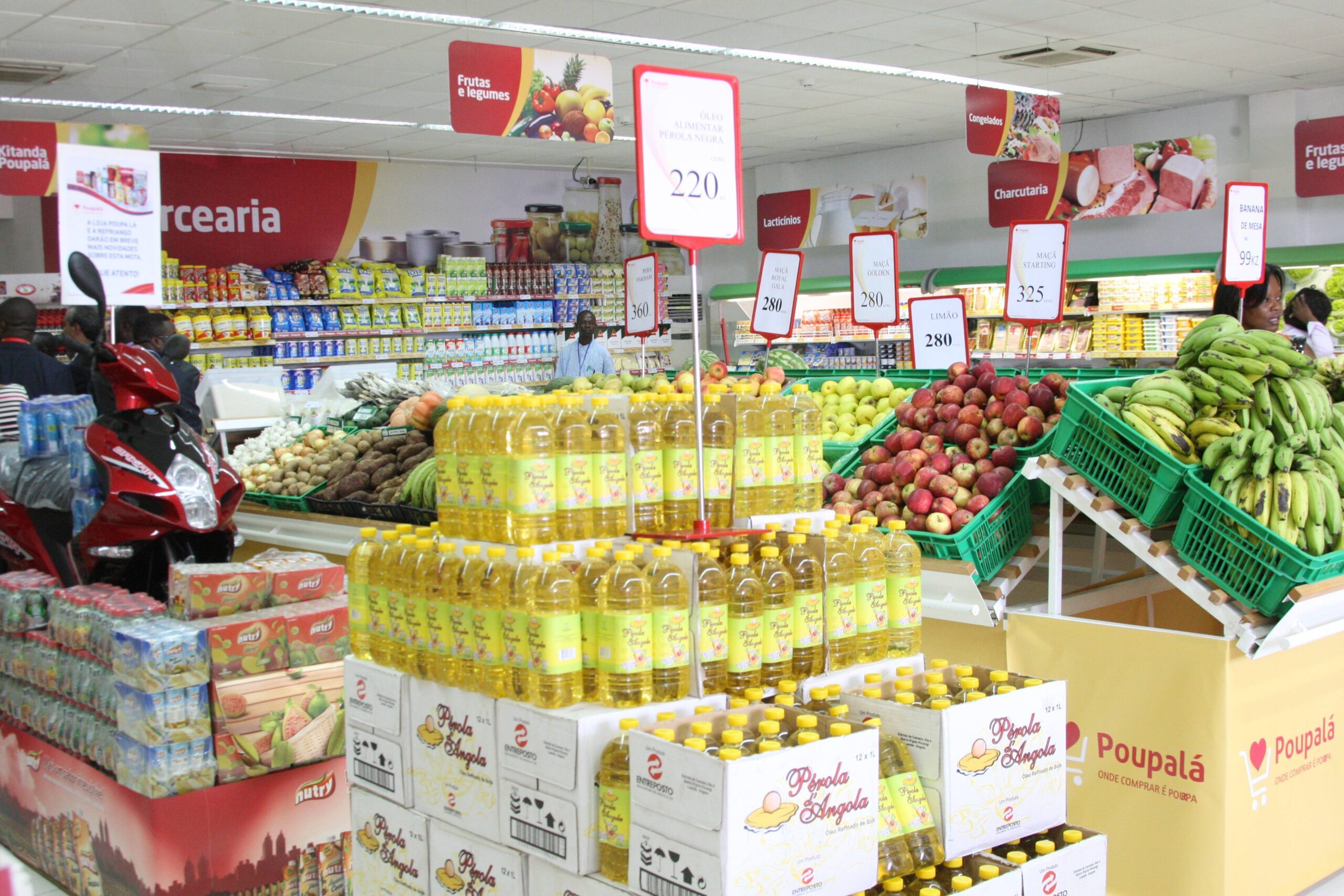
But the highest percentage change is not the same as the biggest weight in the headline figure. In terms of actual contribution to July’s inflation, food and non-alcoholic beverages was by far the dominant class, accounting for 6.30 percentage points of the 9.33% total, meaning 67.49% of the month’s entire inflation originated from this single category. The remaining contributions were far more diluted: education (0.47 points; 4.99% of the total), miscellaneous goods and services (0.46 points; 4.90%), and health (0.44 points; 4.71%). All other classes contributed less than 0.44 percentage points each.
The contrast illustrates a dynamic typical of economies where food carries a heavy weight in the consumption basket: a category such as education can post the year’s largest percentage jump without determining the direction of the headline index, while food, with a comparatively more moderate annual increase, continues to drive the aggregate price trend because of its outsized share of household budgets.
Sharp regional disparities
The national IPCN masks significant differences across provinces. Cabinda recorded the country’s highest annual inflation rate, at 13.09%, followed by Malanje (12.01%) and Lunda Sul (11.40%). At the other extreme, Cuanza Norte posted the lowest rate, at 6.00%, followed by Huambo (6.59%) and Cunene (6.86%), a gap of more than seven percentage points between the two ends of the country, a sign that the benefits of disinflation are reaching the territory unevenly.
With annual inflation falling for a twelfth consecutive month and edging closer to single-digit territory, Angola’s disinflation process shows clear signs of maturing, even as the monthly pace, about 0.75% in July, suggests price pressures have not disappeared.
The trajectory of food and non-alcoholic beverages, which continues to account for more than two-thirds of total monthly inflation, remains the key variable in determining whether the country can sustain low single-digit inflation in the months ahead.