Algeria’s state banks face test as government financing risks squeezing private credit
- AlgeriaEconomic
- August 8, 2026
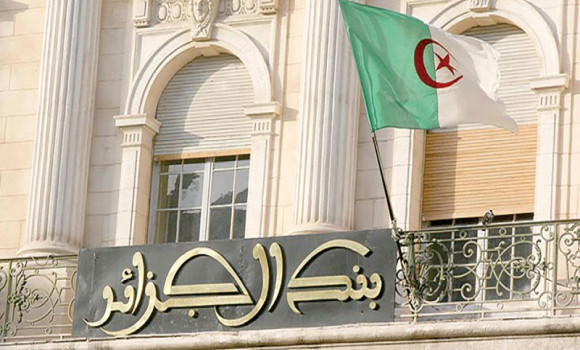

IMF warns of deep links between the state, public companies and government-owned lenders as Algeria seeks to modernize banking and shift more capital toward private-sector growth
ALGIERS — Algeria’s banking system faces a growing balancing act: funding the government’s large financing needs without crowding out credit to private companies as the country seeks to diversify an economy still heavily dependent on hydrocarbons.
The economy is projected to expand 3.8% in 2026, after estimated growth of 3.9% in 2025, according to the International Monetary Fund. But the fiscal backdrop is putting increasing pressure on the financial system. Algeria’s budget deficit stood at 10.5% of gross domestic product in 2025, while large financing requirements pushed public debt to 52.1% of GDP.
That tension is particularly significant in a financial system where public banks remain closely linked to the state and state-owned enterprises. The IMF identified those connections as a key risk to Algeria’s economic outlook and said stronger financial-sector oversight is needed to contain vulnerabilities arising from what it calls the sovereign-SOE-public bank nexus.
The pressure has become more pronounced as monetary conditions eased and central-bank financing of the government increased in 2025. The IMF warned that continued reliance on monetary financing could undermine price stability and policy credibility.
Against that backdrop, Bank of Algeria Governor Mohammed Lamine Lebbou is pushing for a more modern financial system built around broader financial inclusion, digital payments, more diversified banking products and stronger financing for domestic production.
At a meeting with commercial-bank executives in June, the central bank said the industry was consolidating deposit collection while maintaining financing for the economy.
The challenge for Algiers is increasingly one of capital allocation: ensuring that government borrowing and state-company financing do not absorb banking-system resources that could otherwise fund private investment.
For Algeria, that could determine whether banking modernization becomes merely a technological upgrade, or helps deliver the broader transition toward the private-sector-led growth the IMF says the economy needs.