The price of stability: Why 14 African Nations still depend on the CFA Franc
- Opinions
- August 29, 2026
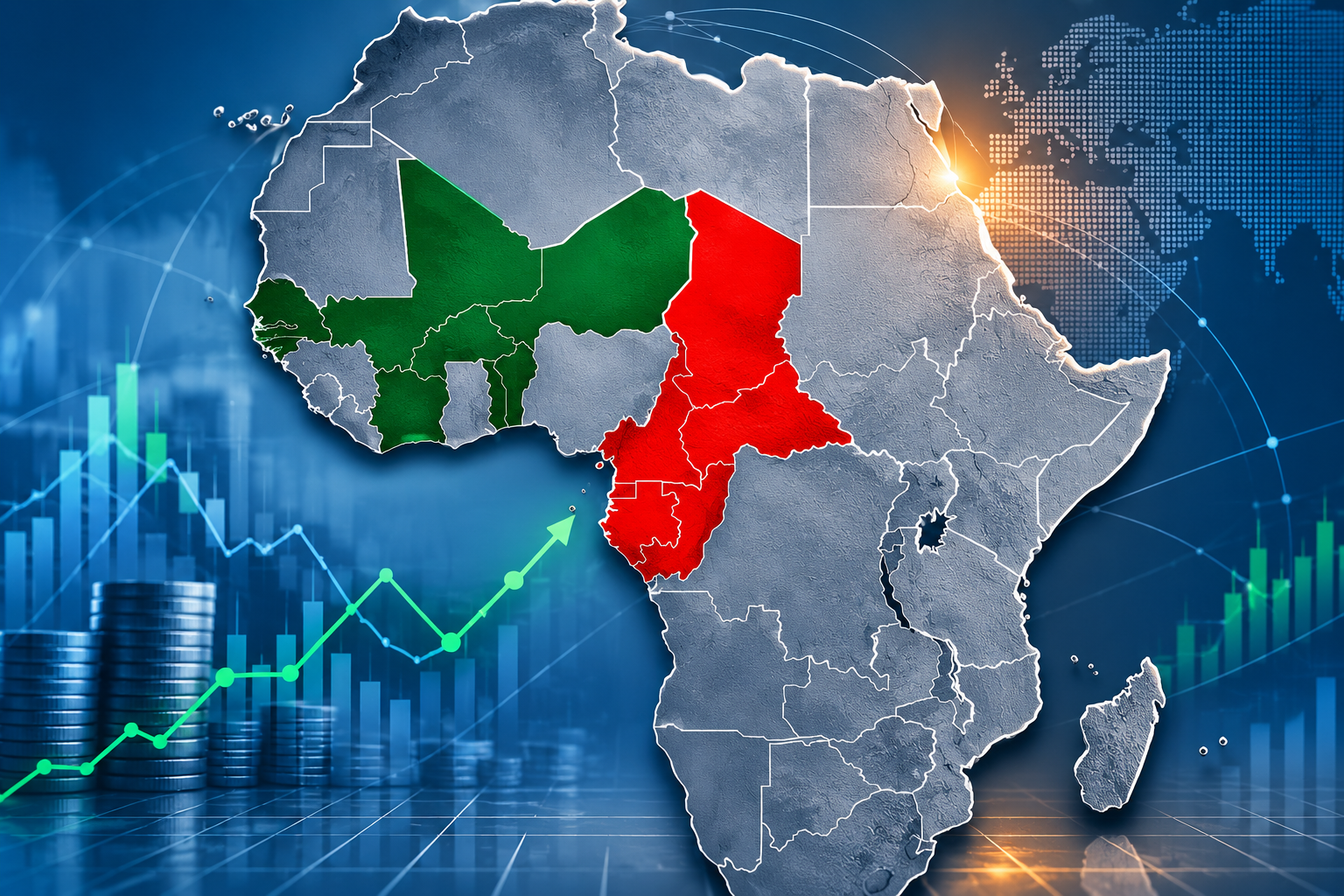

Eighty years after its creation, the CFA franc still offers 14 African countries something many of their neighbours struggle to secure: monetary stability. But that stability comes with an uncomfortable question. How sovereign can a currency be when its ultimate guarantee still lies in Paris?
In Dakar and Yaoundé, the banknotes look unmistakably African. They carry animals, landscapes, masks and images drawn from the continent. African central banks manage monetary policy and African officials make the day-to-day decisions.
Yet the anchor remains on the other side of the Mediterranean.
That is the fundamental paradox of the CFA franc. It is an African monetary arrangement born out of French colonial rule; a source of genuine stability that also constrains monetary autonomy; and one of the continent’s longest-running experiments in regional integration, whose external credibility still depends, to varying degrees, on its former colonial power.
The CFA is not simply a colonial fraud, as its fiercest critics sometimes claim. Nor is it merely an efficient monetary union unfairly maligned by politics, as some defenders suggest, the truth is more uncomfortable.
The system survived for eight decades partly because it works. And that may also be the reason the relationship behind it has proved so difficult to dismantle.
A currency born in an empire
The CFA franc was created on 26 December 1945, when France ratified the Bretton Woods agreements and declared the parity of the French franc to the International Monetary Fund.
CFA originally stood for franc des Colonies françaises d’Afrique, the franc of the French Colonies in Africa.
There was little ambiguity about its purpose.
France emerged from the Second World War needing to reorganise its empire, protect foreign reserves and manage colonial territories whose economic structures differed considerably from those of metropolitan France. The CFA allowed Paris to keep its African colonies inside a monetary area under French control while partially insulating them from fluctuations in the French franc.
At its creation, one CFA franc was worth 1.70 French francs. In 1948, that rose to two French francs. When France introduced the “new franc” in 1960, the parity became one CFA franc to 0.02 French francs, that same year, many African colonies achieved political independence.
Monetary independence proved more complicated.
The initials survived, but their meaning changed. In West Africa, CFA came to stand for the Communauté Financière Africaine. In Central Africa, it became the Coopération Financière en Afrique Centrale, the terminology changed. Much of the architecture survived.
Today, there are effectively two CFA francs.
The XOF is used by the eight members of the West African Economic and Monetary Union: Benin, Burkina Faso, Côte d’Ivoire, Guinea-Bissau, Mali, Niger, Senegal and Togo. It is issued by the Central Bank of West African States, the BCEAO.
The XAF circulates among the six members of the Central African Economic and Monetary Community: Cameroon, the Central African Republic, Chad, the Republic of Congo, Equatorial Guinea and Gabon. It is issued by the Bank of Central African States, the BEAC.
The two currencies have the same value but are not freely interchangeable.Since 1999, both have been pegged to the euro at CFAFr655.957 to €1. France guarantees convertibility through the French Treasury.
That guarantee is the source of both the CFA’s greatest strength and its deepest political vulnerability.
Stability is not an illusion
Any serious criticism of the CFA must begin by acknowledging something that political slogans often ignore, the monetary stability it provides is real.
A fixed exchange rate reduces currency risk for investors and importers. It makes long-term contracts easier to price, restricts governments’ ability to finance deficits simply by creating money and can protect citizens from the consequences of reckless monetary policy.
For countries with weaker institutions, external monetary discipline can act as an imperfect substitute for domestic credibility.
During the 1980s, average inflation in the CFA zone was about 4.2 per cent, compared with 6.5 per cent in France. IMF research found that, until the middle of that decade, CFA countries combined relatively low inflation with economic performance that compared favourably with much of sub-Saharan Africa, that matters.
Africa has no shortage of examples demonstrating that possessing a national currency does not automatically produce economic sovereignty. A government may control its printing presses and still lose control of inflation, reserves and the exchange rate.
Ghana, Nigeria, Kenya, South Africa, Botswana and Morocco have all followed different monetary paths outside the CFA system, with widely differing results. Some have built considerable monetary credibility. Others have experienced severe currency depreciation or repeated bouts of inflation.
The relevant comparison, therefore, is not between the CFA and some theoretical version of perfect monetary sovereignty.
It is between different ways of creating economic credibility, but stability is not development.
A constant temperature may preserve an organism. It does not make it grow.
The price of importing credibility
Pegging the CFA to the euro means tying African economies to monetary conditions largely determined by Europe.
When the euro strengthens, exports from CFA countries can become more expensive for customers paying in dollars or other currencies. Yet many of these economies depend heavily on commodities such as oil, cocoa, cotton and gold, and their productive structures bear little resemblance to those of the eurozone.
A single exchange rate must also serve 14 very different economies.
An oil shock can benefit Gabon while hurting Senegal. Falling cotton prices can damage Mali without producing the same consequences in Cameroon.
Without extensive labour mobility, substantial fiscal transfers or deep regional trade, adjustment cannot easily take place across borders. Instead, it falls on wages, employment, public spending and economic growth.
It is, in effect, a monetary union without a genuine political union, a difficulty familiar even to the much richer eurozone.
This exposes the central economic question surrounding the CFA after 80 years.
If monetary stability is the system’s principal achievement, has that stability generated enough investment, industrialisation, trade and productivity to compensate for the sovereignty surrendered to maintain it?
The answer is much less convincing than the record on inflation.
1994: when households paid the bill
The danger of a fixed exchange rate is that it can appear stable long after it has ceased to reflect economic reality.
From the mid-1980s into the early 1990s, appreciation of the French franc, worsening terms of trade and rising relative labour costs left the CFA increasingly overvalued.
Because individual governments could not adjust their exchange rates, they attempted to restore competitiveness internally through wage restraint, budget cuts and weaker domestic demand, the consequences were painful.
Between 1986 and 1993, real income per person across the CFA zone fell by an average of about 2.6 per cent a year. Then came the reckoning.
On 12 January 1994, following years of negotiations involving African governments, France and the IMF, the CFA franc was devalued by 50 per cent.
One French franc, previously worth CFAFr50, suddenly bought CFAFr100.
The devaluation restored competitiveness and helped exports and economic growth recover. Between 1994 and 1996, real income per capita increased by roughly 0.8 per cent annually.
Macroeconomics, however, has an elegant vocabulary for describing very tangible suffering.
For ordinary households, a 50 per cent devaluation meant more expensive medicines, fuel, machinery and imported food. Average inflation in the zone approached 33 per cent in 1994. Wages did not immediately keep pace.
Purchasing power became part of the adjustment mechanism.
The devaluation may have been economically necessary. The political question is why correction was delayed until it had to be so brutal, and how much influence the people who ultimately paid for it had over decisions negotiated behind closed doors.
The episode exposed the CFA’s implicit bargain: stability can postpone adjustment, but when the peg eventually becomes unsustainable, the bill may arrive all at once.
And those who pay it are rarely those who negotiated the arrangement.
The invisible price of limited sovereignty
Perhaps the most politically explosive criticism of the CFA has concerned African foreign reserves historically deposited with the French Treasury.
For decades, CFA central banks were required to keep a significant share of their reserves in so-called comptes d’opérations, or operations accounts. France also participated in parts of the monetary governance system.
This did not mean, as is sometimes claimed, that Paris simply confiscated half of Africa’s wealth. The reserves remained the property of the central banks, earned interest and formed part of the mechanism supporting convertibility, but the political symbolism was impossible to ignore.
Formally sovereign African states relied on their former colonial power to underpin the credibility of their currencies.
In West Africa, important elements of that structure changed following reforms agreed in 2019. The requirement to centralise reserves at the French Treasury ended, the BCEAO operations account was closed and French representatives withdrew from the central bank’s governing bodies.
The fixed parity with the euro and the French convertibility guarantee, however, remained.
Central Africa went less far. Within CEMAC, France continues to play a role in the institutional arrangements and the operations-account mechanism remains.
It is therefore misleading to speak of “the CFA system” today as though nothing has changed or as though its West and Central African versions were identical.
Yet the West African reforms also revealed the limits of symbolic decolonisation.
Removing French officials and repatriating reserves matter. But if the currency remains rigidly pegged to the euro and its ultimate convertibility is guaranteed by the French Treasury, part of its international credibility still rests upon an asymmetric relationship.
Paris may have left part of the room. It still holds the fire extinguisher.
The integration that failed to integrate enough
There is another uncomfortable truth, and this one cannot simply be blamed on France.
The tragedy of the CFA is not only that European influence endured. It is that African governments failed to turn a shared currency into a genuinely shared economy.
A common currency should encourage regional trade, create cross-border supply chains and make national frontiers economically less significant.
Yet markets across UEMOA and, particularly, CEMAC remain fragmented by inadequate infrastructure, administrative barriers, insecurity, high transport costs and political rivalry.
The countries share money without sufficiently sharing roads, electricity, information, finance or trust.
The CFA made imports from Europe predictable. It did not make trade between neighbouring African countries the central engine of development.
It provided nominal stability, but did not automatically create financial systems capable of funding industrialisation, agricultural transformation and small businesses at the scale required, it imposed monetary discipline. It could not impose good government.
Blaming France for every failure is therefore too convenient.
African presidents, ministers, protected business interests and patronage networks have also operated within, and sometimes benefited from, a system that reduces uncertainty, facilitates capital movements and provides a useful external explanation for domestic shortcomings.
Dependence survives not only because Paris preserves elements of it, but because African political and economic interests have also learned how to live within it.
Leaving is not liberation
Abandoning the CFA would certainly increase formal monetary sovereignty.
A country could determine its own exchange rate, issue its own currency and set interest rates according to domestic conditions. Currency depreciation could potentially absorb external shocks rather than forcing adjustment entirely through wages, employment and government spending.
But printing a new banknote is easier than printing trust.
Without independent central banks, credible statistics, adequate foreign reserves, sound public finances and robust financial systems, monetary liberation can quickly become inflation, capital flight and currency collapse.
A “sovereign” currency that loses purchasing power every month does not make its citizens more economically free, it makes them poorer.
This is why Africa’s real choice is not simply between the CFA and emancipation.
It is between credibility that is partly imported and credibility that African institutions are capable of producing themselves.
There are alternatives, adjustable exchange rates, currency baskets better reflecting African trade patterns, multilateral rather than bilateral guarantees, greater flexibility for commodity exporters and importers, or regional currencies governed entirely by African institutions.
But every alternative carries the same demanding prerequisites: adequate reserves, credible fiscal rules, effective banking supervision, political accountability and mechanisms through which stronger members support weaker ones during crises.
A currency does not become pan-African merely because it is printed in Africa.
It becomes pan-African when the institutions supporting it answer to African citizens and when the costs and benefits of monetary stability are distributed through legitimate African political institutions.
Africa’s last independence
The CFA franc will survive for as long as its members believe the risks of leaving are greater than the political discomfort of staying.
That calculation is not irrational.
Africa’s experience contains enough examples of currencies damaged by inflation, fiscal indiscipline and poor governance to make caution understandable.
But remaining has a price too.
A rigid exchange rate constrains responses to crises, can undermine competitiveness and perpetuates the uncomfortable impression that African monetary stability still requires European certification.
The CFA has helped prevent certain kinds of economic disaster.
It has been much less successful at producing the structural transformation that might justify eight decades of constrained monetary sovereignty.
The CFA is therefore less like an iron chain than an insurance policy written during colonial rule. It protects its holders against certain risks, charges autonomy as part of the premium and is difficult to cancel because there is insufficient confidence in what would replace it.
That is the real sadness of this story.
Africa’s pursuit of monetary integration is not the problem, a continental or regional monetary architecture remains a legitimate and potentially powerful ambition.
The problem is that one of Africa’s longest experiments in financial integration began as an instrument of empire and, eight decades later, has still not achieved entirely African legitimacy.
The final stage of monetary decolonisation will not come merely when the letters “CFA” disappear from African banknotes.
It will come when African countries can freely choose their monetary architecture, backed by institutions strong enough to make the choice credible.
The objective should not be to exchange stable dependence for disastrous sovereignty, it should be to build an Africa that no longer needs to make that choice.