Europe wants a new partnership with Nigeria. Turning investment into industry will be the real test
- Economic
- June 25, 2026
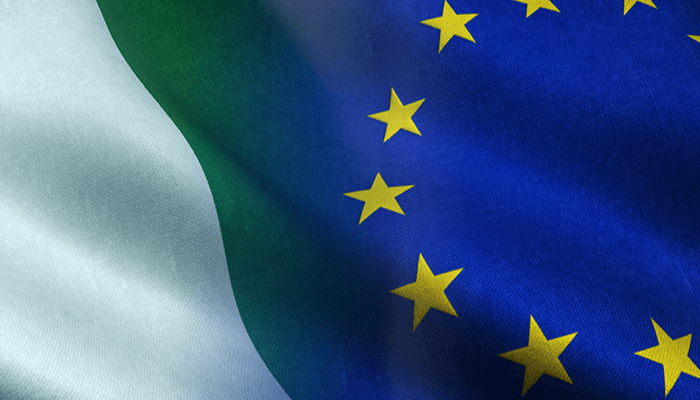

Brussels is replacing aid with capital, but Nigeria’s structural weaknesses remain the greatest obstacle to transforming Europe’s ambitions into lasting economic growth.
JOHANNESBURG – For decades, the relationship between Europe and Nigeria followed a familiar script. Europe financed development programmes, while Nigeria remained one of Africa’s largest recipients of technical assistance. That model is now being quietly dismantled.
The European Union is repositioning itself as an investor rather than a donor, betting that private capital, industrial partnerships and infrastructure projects will deliver more durable results than traditional development aid. Nigeria, Africa’s largest economy by population and one of its largest consumer markets, has become the centrepiece of that strategy.
The change reflects more than a shift in diplomatic language. It is a recognition that Africa’s future economic geography is being redrawn. Europe faces growing competition from China, the United States, Turkey and Gulf states, all of which are expanding their commercial presence across the continent. Winning influence increasingly depends not on the volume of aid offered but on the quality of investment delivered.
The European Union’s Global Gateway initiative embodies this new approach. Through a combination of grants, concessional finance, guarantees and private investment, Brussels hopes to mobilise capital into sectors capable of transforming Nigeria’s productive capacity: renewable energy, digital infrastructure, transport logistics and pharmaceutical manufacturing.
The figures are substantial. Between 2021 and 2027, the EU has earmarked around €730 million in grants for Nigeria, while the European Investment Bank manages a lending portfolio of approximately €1.5 billion. Yet the headline numbers tell only part of the story. The underlying objective is to attract significantly larger flows of private investment by reducing financial risk and improving investor confidence.
Whether that ambition succeeds depends less on European financing than on Nigerian reforms.
Foreign investors have long identified the same obstacles: unreliable electricity, foreign exchange volatility, inconsistent regulation, weak contract enforcement and costly logistics. These are not problems that concessional finance alone can solve. Without sustained domestic reforms, even generous external funding risks producing isolated projects rather than broad-based industrial transformation.
Trade illustrates both the opportunities and the limitations of the partnership. The European Union already grants duty-free access to almost all Nigerian exports, and Europe remains one of Nigeria’s largest export destinations. The challenge is therefore not access to markets but the composition of exports. Crude oil still dominates trade, while manufactured goods account for only a modest share. Until Nigeria develops a more competitive industrial base, preferential market access will remain an underused advantage.
The partnership also introduces new obligations. European environmental regulations, including the EU Deforestation Regulation due to take full effect by 2027, will require Nigerian exporters to demonstrate that commodities such as cocoa and palm oil are produced without contributing to deforestation. Compliance will increase costs in the short term but may ultimately strengthen the competitiveness of producers capable of meeting higher international standards.
Europe’s strategy should also be understood in its geopolitical context. The Global Gateway is widely seen as Brussels’ response to China’s Belt and Road Initiative. Although European officials reject direct comparisons, both initiatives seek to deepen economic influence through infrastructure and investment. The difference lies in emphasis. China has traditionally prioritised large-scale physical infrastructure, whereas Europe increasingly focuses on sustainable finance, regulatory standards and private-sector participation.
For Nigeria, this growing competition among external partners presents an opportunity rather than a dilemma. A wider range of investors provides greater access to capital, technology and export markets. However, competition among foreign powers does not automatically translate into development. That depends on Nigeria’s capacity to negotiate effectively, strengthen its institutions and ensure that foreign investment supports domestic industrialisation rather than reinforcing dependence on commodity exports.
The deeper significance of the evolving EU-Nigeria relationship lies not in the financial commitments announced at investment forums but in the economic model it seeks to promote. If successful, it could accelerate Nigeria’s transition from a resource-dependent economy to a manufacturing and services hub serving both African and European markets. If reforms stall, however, the partnership risks becoming another catalogue of ambitious projects constrained by familiar structural weaknesses.
Europe has made its strategic choice. It now sees Nigeria less as a beneficiary of development assistance than as an indispensable economic partner. Whether Nigeria can convert that confidence into sustained industrial growth will depend far more on domestic policy than on European capital. That, ultimately, is the real test of this new partnership.