Morocco blocks mass migration attempt into Ceuta
- MoroccoWorld
- October 10, 2024
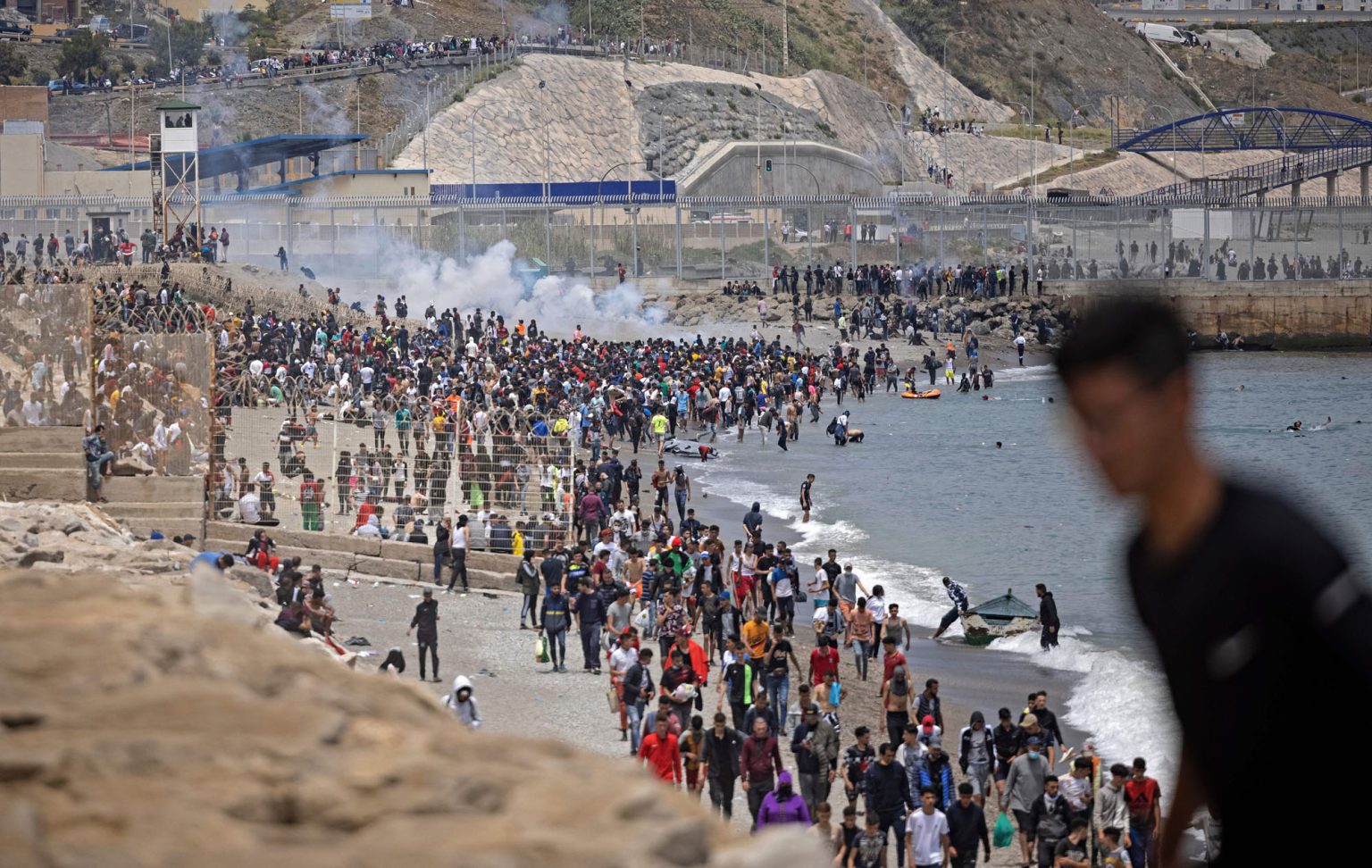

Moroccan security forces successfully stopped a coordinated mass migration attempt at the border with Spain’s North African enclave of Ceuta, following a call on social media for a large-scale effort to cross into European territory, authorities confirmed on Monday.
According to the Spanish Interior Ministry, several groups of migrants, numbering in the hundreds, attempted to breach the heavily fortified border fence—a structure that has long been a focal point for migration tensions. However, none of the migrants managed to cross into Spanish territory. The ministry emphasized that enhanced security efforts on both sides of the border, involving more than 300 Moroccan security personnel and additional Spanish reinforcements, ensured the situation was “brought under control swiftly.” Spain’s southern border remains one of the primary points of entry for migrants seeking to reach Europe, and so far in 2024, Ceuta and Melilla have recorded over 4,500 attempted crossings.
In recent days, social media platforms have been flooded with messages urging people to gather en masse in Ceuta for a planned migration effort. Videos circulating on local networks showed groups of migrants gathering in the hills near the Moroccan border town of Fnideq. In response, Moroccan authorities deployed an increased security presence, including helicopters and additional ground forces, to prevent any breaches. Spain also mobilized border control units and used aerial surveillance to monitor the situation.
Morocco plays a critical role in controlling migration flows from Africa to Europe. In 2023 alone, Moroccan authorities intercepted more than 50,000 people attempting to cross into Spain, a figure that reflects the persistent pressures on the region. The Ceuta and Melilla borders, heavily fortified with fences over six meters high, have been the scene of frequent mass migration attempts, making these enclaves critical in Europe’s migration control strategy. Since 2020, migration flows into Ceuta have fluctuated, with peaks often linked to economic and political crises in sub-Saharan Africa, contributing to the continuing challenges both Spain and Morocco face in maintaining secure borders.
The coordinated security efforts between Morocco and Spain demonstrate the importance of bilateral cooperation in managing migration. With over 22,000 people having crossed from Morocco into Spain via land and sea in 2024 alone, the stakes remain high for both nations as they continue to address one of Europe’s most pressing humanitarian and security challenges.