TAAG is becoming the biggest reputational risk to Angola’s economic strategy
- Opinions
- June 15, 2026

Analysis | Opinion (Version PT)
Angola has invested more than $3 billion in the construction of the Dr. António Agostinho Neto International Airport. It has poured billions more into roads, ports and rail infrastructure. It promotes the Lobito Corridor as one of Africa’s most strategic logistics projects. It hosts international investment summits and seeks to attract tourists, investment funds, multinational corporations and global operators.
Yet there is one problem that no modern airport can solve: a lack of operational trust.
International investors do not make decisions based solely on political speeches or institutional presentations. They assess execution. They assess efficiency. They assess predictability, above all, they assess risk.
And it is precisely on that front that TAAG is increasingly becoming an economic liability for Angola.
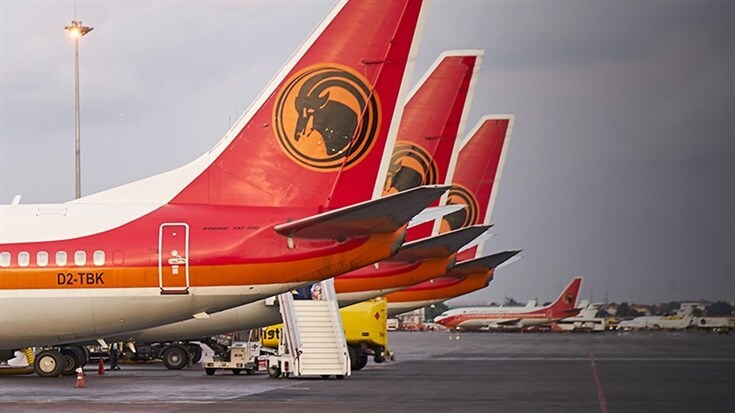
The national carrier should be one of the country’s most powerful tools of economic diplomacy. It should serve as a platform for regional connectivity, tourism promotion and investment facilitation. Instead, recurring reports of delays, operational disruptions and flight cancellations are producing the exact opposite effect: they are increasing the perception of risk associated with Angola as a destination for business and investment.
The issue is particularly serious because it comes at a time when the government is seeking to position Angola as a regional business hub connecting Southern Africa, Central Africa and international markets. The strategy itself is sound. Geography favors Angola. Natural resources favor Angola. New infrastructure favors Angola. What continues to fall short is the ability to convert potential into execution.
The situation becomes even harder to understand when considering the country’s available human capital. Is it credible to suggest that an airline with more than eight decades of history lacks the talent required to deliver basic levels of operational reliability? Angola has produced pilots, aerospace engineers, maintenance specialists, airport managers and aviation professionals who today work for some of the world’s most respected airlines. If the same operational shortcomings continue to recur year after year, the issue is no longer one of technical competence. It becomes a question of leadership, management, organization and accountability.
International markets do not punish countries for making mistakes. They punish countries for repeating the same mistakes for too long, the reality is that Africa’s competition is not waiting for Angola.
While Luanda seeks to establish itself as a regional gateway, Addis Ababa operates Africa’s largest airline, serving more than 150 destinations through an aviation ecosystem designed to support trade, investment and connectivity. While Angola positions the Dr. António Agostinho Neto International Airport as a regional benchmark, Kigali continues to expand its international conference industry. Nairobi strengthens its role as East Africa’s financial center. Casablanca consolidates its position as a bridge between Africa and Europe.
Each of these markets has understood a simple reality: aviation is not merely transportation. It is economic policy.
The Angolan paradox is increasingly evident.
The country now possesses an airport designed to handle up to 15 million passengers annually. It occupies a strategic position between the SADC and ECCAS markets. It has an expanding national carrier undergoing fleet renewal through Airbus A220 and Boeing 787 aircraft. It also stands to benefit from the liberalization of African air transport, a process that industry studies suggest could add between $1.5 billion and $2.5 billion to Angola’s GDP in the years ahead.
Yet none of these advantages can generate meaningful returns if passengers lose confidence in the system.
The real cost of a canceled flight is not the hotel accommodation provided to stranded passengers. It is not the meal voucher issued during a delay. It is not even the financial compensation paid afterward.
The real cost is invisible.
It is the investor who reduces the frequency of business trips to Angola. It is the multinational corporation that chooses to host its next conference in Kigali rather than Luanda. It is the tour operator that redirects travelers to Zanzibar, Cape Town or Marrakesh. It is the international fund manager who concludes that more predictable alternatives exist elsewhere on the continent.
None of these decisions will appear in the airline’s annual reports, all of them, however, have consequences for the national economy.
Industry data show that TAAG carried approximately 921,000 passengers in 2022, while Ethiopian Airlines transported more than 11 million during the same period, the difference is not merely one of scale, it is a difference in economic model.
Ethiopia transformed its national airline into a strategic instrument of national development. Angola, by contrast, continues to treat its carrier as a state-owned enterprise perpetually undergoing modernization.
Markets do not reward intentions, they reward results.
The debate is no longer whether TAAG faces operational challenges. Every airline does.
The real issue is that Angola is entering a decisive phase of its economic diversification strategy. Tourism has been identified as a priority sector. The Lobito Corridor has become a geopolitical priority with international backing. The new airport has been presented as a symbol of a new Angolan economy. African aviation integration is opening unprecedented opportunities for growth and connectivity.
Against that backdrop, persistent operational shortcomings cease to be a corporate issue, they become a national competitiveness issue.
International investors do not evaluate a country solely on the basis of its assets. They evaluate its ability to manage them.
And no economy can project efficiency to the world when its primary gateway continues to raise questions about the reliability of the system itself, the infrastructure exists, the potential exists, the capital is available, what remains to be demonstrated is the most fundamental requirement of all: the ability to execute and in global markets, that is precisely where opportunities are won,or lost.