AfricaHeadline Analysis: The narrow path that could take the ANC to 43%
- ElectionOpinions
- September 12, 2026
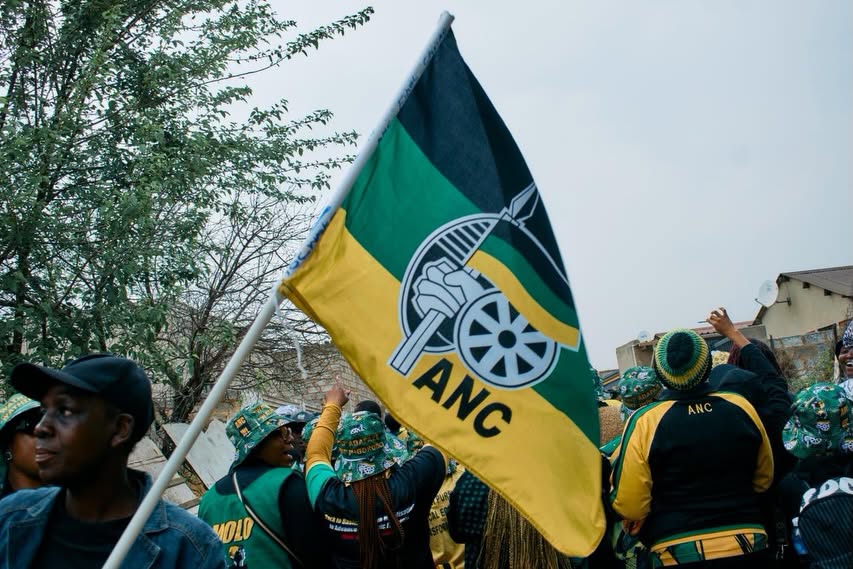

Turnout, the recovery of former supporters and a fragmented opposition could help the party outperform current polling, but reaching 43% would require a substantial electoral recovery
AFRICAHEADLINE ANALYSIS
The African National Congress remains ahead of its rivals before South Africa’s municipal elections on November 4, 2026, but is still well short of an outright majority.
A Social Research Foundation poll puts the ANC at 34%, compared with 27% for the Democratic Alliance. The figures confirm that the ANC remains South Africa’s largest political force, while also illustrating the scale of the party’s decline.
An AfricaHeadline scenario analysis suggests that the ANC could reach between 41% and 43% under particularly favourable conditions. This range is neither the result of a new poll nor a formal statistical forecast. It is an editorial sensitivity test examining how turnout, party mobilisation, the recovery of former supporters and opposition fragmentation could affect the final result.
From 34% to 43%: a demanding recovery
Moving from 34% to 43% would represent a nine-percentage-point increase, equivalent to relative growth of approximately 26.5% from the party’s current polling level.
That would not be a minor adjustment explained by a poll’s margin of error. It would require a considerable electoral recovery during the final phase of the campaign.
To reach 43%, the ANC would need to combine above-average turnout among its supporters with the return of voters who have drifted towards abstention. It would also have to contain further losses to the uMkhonto weSizwe Party, known as MK, and the Economic Freedom Fighters.
The 43% figure should therefore be understood as the upper limit of a favourable scenario, rather than the most likely outcome.
The organisational advantage
Opinion polls measure declared preferences. Elections measure who actually turns out to vote. That distinction may favour a party with established local structures.
The ANC retains a territorial presence that none of its rivals can match nationally, particularly in Limpopo, the Eastern Cape, North West, the Free State and numerous rural and peri-urban municipalities.
Its network of provincial, municipal and community structures could help increase turnout among the party’s historical base, especially in areas where opposition parties have weaker organisations.
Effective mobilisation would not automatically add a fixed number of percentage points to the ANC’s result. Instead, it could increase the party’s share of valid votes if its supporters turn out at a higher rate than those backing its rivals.
This is one of the main ways in which the ANC could outperform headline polling figures.
Two polls, two different measurements
The Social Research Foundation and Ipsos findings should not be combined directly because they come from separate surveys with different samples and methodologies.
The SRF poll provides an indication of national party support, placing the ANC at 34% and the DA at 27%.
Separately, Ipsos interviewed 3,600 South Africans in their homes and preferred languages between June and July 2026. Its analysis of registered voters carries a maximum margin of error of approximately 1.77 percentage points.
In Ipsos’s simulated ballot exercise, 81.8% of registered voters selected a political party. The remainder did not express a firm party choice.
This suggests that a significant section of the electorate may still be open to persuasion, but it does not mean that all those voters are undecided or available to the ANC.
The party would have to compete for those voters while re-engaging parts of its historical base that have migrated towards abstention.
Opposition fragmentation
Although the DA is gaining ground, its expansion remains geographically uneven, it dominates Cape Town and is competitive in Tshwane, Johannesburg and other major cities, but does not yet possess the ANC’s nationwide reach.
MK draws much of its strength from KwaZulu-Natal, while the EFF, ActionSA, Inkatha Freedom Party and Patriotic Alliance divide other parts of the electorate.
That fragmentation may work to the ANC’s advantage. Even without recovering an outright majority, the party could still lead the aggregate national municipal vote and secure a decisive position in numerous councils.
South African municipal elections are determined council by council, meaning that a national lead does not automatically guarantee control of the largest number of municipalities. It would, however, strengthen the ANC’s hand in post-election coalition negotiations.
The metropolitan obstacle
The path to 43% remains narrow. In Johannesburg, the ANC polls at approximately 31%, against 28% for the DA — a lead small enough to be reversed during the campaign. The DA leads in Tshwane with 31%.
In eThekwini, MK stands at 55%, highlighting the scale of the ANC’s losses in its former KwaZulu-Natal stronghold.
Municipal performance remains the party’s greatest vulnerability. Failures involving water, electricity, refuse collection, sanitation, road maintenance and financial management could turn the election into a referendum on local service delivery.
The ANC’s national machinery may protect it from an electoral collapse, but it cannot fully neutralise community frustration.
Three possible outcomes
AfricaHeadline identifies three broad ranges. These are analytical scenarios, not scientific forecasts:
Lower scenario — 33% to 35%: dissatisfaction with municipal government dominates the campaign, ANC turnout remains weak and the party continues losing support to MK, the EFF and other competitors.
Central scenario — 36% to 40%: the ANC retains its core electorate, recovers some disengaged supporters and remains the largest party without staging an exceptional comeback.
Upper scenario — 41% to 43%: disciplined campaigning, favourable turnout, the return of former supporters and continued opposition fragmentation allow the ANC to outperform current polling.
The upper range is not produced by mechanically adding assumed gains from undecided voters, mobilisation and local candidates. These factors overlap and must instead be treated as political conditions capable of changing the composition of valid votes.
A victory, but not a return to past dominance
The ANC secured 45.59% in South Africa’s 2021 municipal elections. Even a 43% result in 2026 would leave it about 2.6 percentage points below its previous performance.
Reaching 43% would therefore not represent a return to the ANC’s former electoral dominance. It would, however, amount to a significant recovery from the 34% recorded in the SRF poll.
Such an outcome could preserve the ANC’s position as South Africa’s largest municipal party, give it substantial influence across numerous councils and allow it to negotiate coalitions from a position of strength.
AfricaHeadline’s assessment is that the election will be shaped by the contest between two realities: the political decline captured by opinion polls and the organisational capacity the ANC still commands on the ground.
If Cyril Ramaphosa’s party converts its national machinery into effective turnout, recovers disengaged supporters and persuades communities that it can repair failing municipalities, it could approach 43%.
That would neither deliver an outright majority nor restore the ANC’s former hegemony. It would nevertheless demonstrate that the party remains South Africa’s most extensive and resilient political organisation.
* Methodology note
This AfricaHeadline article uses published findings from separate SRF and Ipsos surveys, alongside the ANC’s official 2021 municipal-election result.
The surveys have not been merged into a single dataset. The projected ranges are editorial scenarios intended to test possible electoral outcomes; they do not constitute an AfricaHeadline poll, a certified statistical model or a definitive election forecast.