João Lourenço and Angola’s architecture of reconciliation: Preserving the memory of political conflict
- AngolaSAUTI
- October 14, 2026
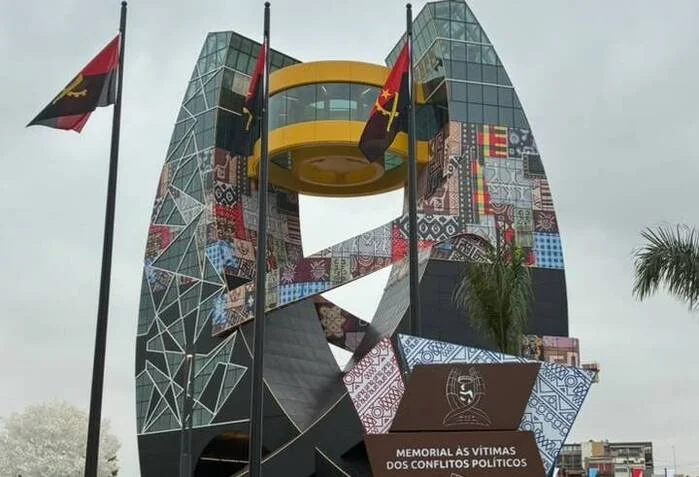

The inauguration of Angola’s Memorial to the Victims of Political Conflicts marks a significant moment in the country’s efforts to preserve its collective memory, honour victims and strengthen national reconciliation. Its lasting value will depend on whether the monument becomes a living institution of remembrance, historical inquiry and peace education.
LUANDA — The inauguration of the Memorial to the Victims of Political Conflicts by President João Lourenço represents a significant moment in Angola’s contemporary history, transforming the memory of one of the country’s most painful periods into a permanent space for remembrance, reflection and reconciliation.
Located in the Praia do Bispo area, near Luanda’s Nova Marginal waterfront, the memorial honours people who died during political conflicts between November 11, 1975, when Angola proclaimed independence, and April 4, 2002, when the signing of the peace agreements paved the way for the end of the civil war.
More than the unveiling of a monument, the ceremony brings a fundamental national question into focus: how can Angola preserve the memory of those who lost their lives, acknowledge the suffering of their families and ensure that future generations understand the human cost of political division?
The significance of the occasion lies in its human and institutional dimensions. By presiding over the inauguration, Lourenço placed the presidency at the centre of an initiative intended to preserve collective memory and reinforce the principle that national reconciliation is a continuing responsibility of both the state and society.
A presidential initiative rooted in 2019
The memorial forms part of a broader institutional process that dates back to 2019, when Lourenço established the Commission for the Implementation of the Plan for Reconciliation and Remembrance of Victims of Political Conflicts, known by its Portuguese acronym, CIVICOP.
The initiative created an institutional framework for addressing the legacy of political conflicts through efforts to locate and identify victims, honour their memory and provide support to affected families.
It also acknowledged a difficult reality: the end of armed conflict does not automatically end the suffering it leaves behind. For many Angolan families, the cessation of hostilities did not resolve the anguish of losing relatives, the uncertainty surrounding the fate of missing loved ones or the inability to hold a proper funeral.
CIVICOP was established to help address this dimension of the national past, linking institutional action with the need to provide answers to families affected by the conflicts.
In his 2023 State of the Nation address, Lourenço explained the decision to build the memorial, saying: “To honour all the victims of the political conflicts that took place in our country between November 11, 1975, and April 4, 2002, we took the decision to build a Memorial to the Victims of Political Conflicts.”
The statement, delivered in the context of his address to the nation, establishes a clear connection between the original political decision and the completion of the project.
The initiative can therefore be understood through three milestones: the establishment of the reconciliation mechanism in 2019; the subsequent development of the memorial and work to identify victims; and the inauguration of the monument on October 14, 2026.
Together, these stages place the memorial within a wider national effort to preserve historical memory and consolidate peace.
From independence to peace: a history Angola must not forget
The history commemorated by the memorial begins with one of the defining moments in Angola’s national journey: independence on November 11, 1975.
The achievement of sovereignty fulfilled a historic aspiration of the Angolan people. Yet the early years of the independent republic were marked by deep political divisions and armed confrontation, with devastating consequences for the population.
Over the following decades, families endured separation, bereavement, displacement and uncertainty. For many, the consequences of war did not disappear when the guns fell silent. Unanswered questions, missing relatives and interrupted family histories continued to shape their lives.
April 4, 2002, marked a decisive turning point. The peace agreements brought the armed conflict to an end and opened a new chapter of national reconstruction.
Angola subsequently embarked on the recovery of infrastructure, the rebuilding of institutions and the expansion of economic and social development. But material reconstruction alone could not resolve every human consequence of the war.
This is where the memorial acquires particular importance. By commemorating victims of political conflicts over the period from independence to peace, it acknowledges that the country’s history must be understood in its full complexity, including the suffering experienced by different communities and families.
Preserving that memory does not mean reopening divisions. It means recognising that lasting peace requires historical understanding, respect for victims and a sustained commitment to peaceful coexistence.
The human cost of identifying the victims
One of the most sensitive aspects of CIVICOP’s work has been the location and identification of victims’ remains and their subsequent return to families.
Reports by Angolan media have described progress in identifying victims through the examination of human remains recovered in different provinces. The commission has also indicated that the inauguration of the memorial does not mark the end of its work, which is expected to continue through identification procedures, death certification and engagement with affected families.
Behind every identification process lies a human story that statistics alone cannot capture.
There is the mother who waited for news of a son, the father who died without discovering what happened to a relative, the wife who held on to the hope of finding her husband, or the child who grew up without knowing the full story of a parent.
There are also families who spent decades unable to carry out the funeral and mourning rituals that are central to their cultural and community identities.
Identifying human remains cannot erase the pain of loss. It can, however, provide essential answers, allow families to say goodbye with dignity and help restore a missing part of their history.
This is where reconciliation moves beyond political language and acquires a tangible meaning in people’s lives.
CIVICOP’s work illustrates that national memory is built not only through monuments and official ceremonies, but also through rigorous procedures, respect for families and the ability of institutions to respond to the human needs left by conflict.
The continuation of this work will be essential if the public tribute to the victims is to be matched by meaningful answers for families still searching for information about their loved ones.
Architecture as a language of reconciliation
Located in Praia do Bispo, near Luanda’s Nova Marginal waterfront, the memorial comprises three principal elements: the Eternal Alliance, the Reconciliation Mulembeira and the Hall of Memory.
Standing approximately 35 metres tall and comprising nine floors, the Eternal Alliance consists of two interconnected structures designed to evoke an embrace. The architectural concept symbolises forgiveness, unity, fraternity and the reunion of Angolans.
The design deliberately avoids portraying the conflict as a victory by one side over another. Instead, it depicts two sides drawing closer after a historical rupture.
That choice carries particular significance in a country shaped by prolonged political conflict. Reconciliation does not require citizens to share the same beliefs or political convictions. It requires differences to be resolved peacefully, with respect for human life, dignity and national institutions.
The Reconciliation Mulembeira, a white petrified tree approximately 12 metres tall, represents the transmission of wisdom between generations and the role of African community traditions in resolving disputes.
The Hall of Memory, meanwhile, is intended to bring visitors closer to the human and historical dimensions of the conflicts, providing a space for reflection and remembrance.
Together, the three elements communicate a broader message: remember the victims, preserve the lessons of the past and strengthen the collective responsibility to protect peace.
Architecture thus becomes a form of public communication, capable of conveying shared values and bringing younger generations closer to a history that cannot be reduced to dates or military events.
João Lourenço and the institutional legacy of remembrance
The inauguration places renewed attention on Lourenço’s role in an especially sensitive area of national life: recognising the victims of political conflicts and preserving Angola’s historical memory.
The institutional significance of the initiative lies not only in the decision to construct the memorial, but also in the need to sustain the reconciliation process associated with it.
Countries emerging from internal conflict face a common challenge: transforming the end of violence into a durable culture of coexistence, recognition and respect for human dignity.
Angola is no exception. Consolidating peace requires institutions to preserve historical records, promote historical understanding and ensure that affected families are not forgotten.
In this context, the presidential initiative can be understood as a contribution to the institutionalisation of national remembrance. Its long-term significance will depend on whether the memorial becomes an accessible space for society, historical research, education and intergenerational dialogue.
The legacy of such an initiative should not be measured solely by the completion of the physical structure. Its broader impact will depend on the results achieved over time.
The continuation of CIVICOP’s work, the identification of victims who remain unaccounted for, the preservation of historical records and sustained support for families will all be important measures of the process’s effectiveness.
The memorial provides a public reference point for this work. The challenge for state institutions is to ensure that the message embodied in its architecture is reflected in practical reconciliation efforts and a lasting commitment to peace.
A national memory that belongs to everyone
National reconciliation can only be fully consolidated if the memory of the victims is recognised as part of Angola’s shared heritage.
Political conflicts affected people from different regions, communities and families, each with distinct experiences and histories. The memorial should therefore be understood as a national place of remembrance, without distinctions based on political affiliation or personal beliefs.
Its purpose is not to impose a single interpretation of history, but to create conditions in which the past can be studied, understood and passed on responsibly.
Different experiences do not diminish national unity. On the contrary, acknowledging the diversity of suffering can contribute to a more complete understanding of the country’s history.
Schools, universities, researchers and cultural institutions can play an important role in using the memorial as a resource for historical education and civic reflection.
Preserving testimonies, organising archives and disseminating reliable information will help ensure that historical memory is not replaced by incomplete accounts or instrumentalised in contemporary political disputes.
The deeper purpose of reconciliation lies in transforming painful experiences into knowledge, responsibility and a commitment to the future.
The challenge begins after the inauguration
The October 14 ceremony marks the completion of a major project, but the preservation of national memory requires sustained effort.
The memorial must remain a place of tribute to the victims, support for families and reflection for citizens. Its integration into educational programmes, research activities and dialogue initiatives could expand its contribution to Angolan society.
Maintaining the infrastructure, preserving its historical content and continuing the identification of victims will also be essential.
The historical value of the project will not be determined solely by its architectural scale. It will also depend on its ability to bring citizens closer to their national history, acknowledge the suffering of families and teach younger generations why peace must be protected.
For Angola, which travelled a long road from independence in 1975 to peace in 2002, preserving this memory is a responsibility that extends across generations.
The initiative associated with President João Lourenço forms part of that effort to transform a painful historical experience into a shared national legacy.
The Memorial to the Victims of Political Conflicts reminds Angolans that peace is not secured simply when a war ends. It is strengthened when a nation acknowledges its victims, respects the grief of families and chooses to pass on the lessons of its history so that future generations do not repeat its tragedies.
The monument inaugurated in Praia do Bispo now forms part of Angola’s symbolic national heritage. Its deepest significance will emerge if the embrace represented by its architecture becomes a lasting practice of dialogue, respect, recognition and unity among all Angolans.