DR Congo and Kenya seek to end three-year diplomatic rift sparked by AFC/M23 rebel alliance
- Democratic Republic of the Congo (DRC)KenyaPolitics
- November 23, 2026
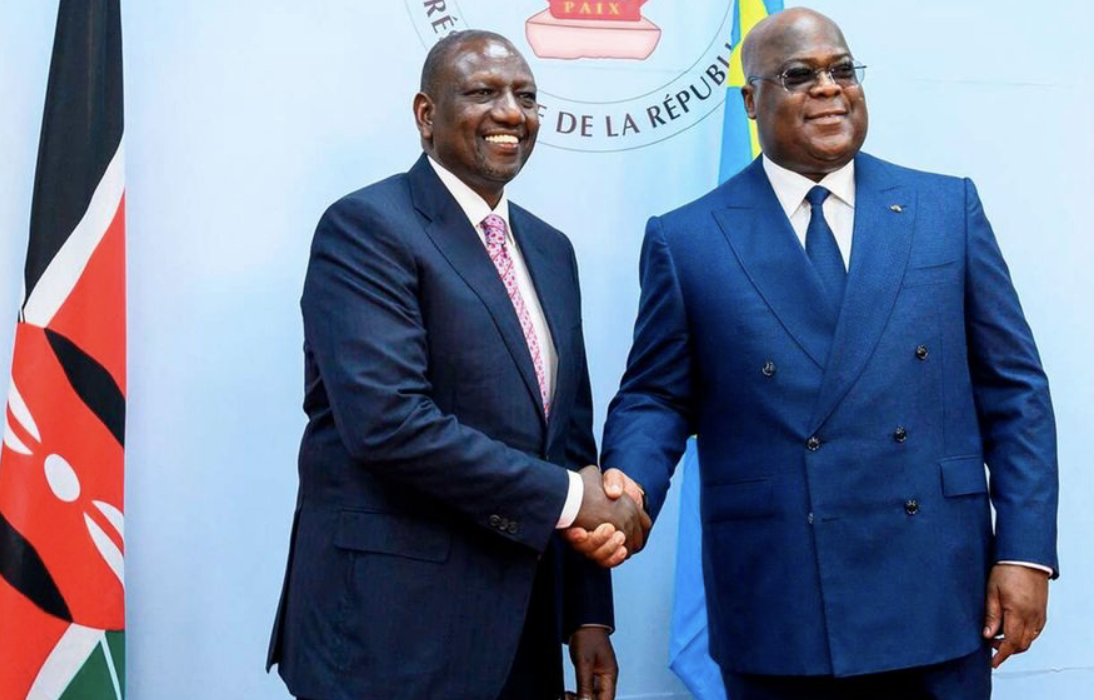

Presidents Félix Tshisekedi and William Ruto move to restore diplomatic ties after years of tensions over rebel activity, Rwanda’s regional influence and competing security interests in the Great Lakes region.
NAIROBI/KINSHASA — The Democratic Republic of Congo (DRC) and Kenya are seeking to restore diplomatic relations strained since December 2023, when a political-military alliance involving the M23 rebel movement was unveiled in Nairobi.
Presidents Félix Tshisekedi and William Ruto met on November 22, 2026, in Oyo, Republic of Congo, at talks hosted by President Denis Sassou Nguesso and attended by Faure Gnassingbé, the African Union’s mediator for the Congolese crisis.
The meeting sought to rebuild political trust and strengthen economic and security cooperation between the two countries.
The dispute began on December 15, 2023, when Corneille Nangaa, a former Congolese electoral commission chief, announced the formation of the Congo River Alliance (AFC) in Nairobi, bringing together political figures and armed groups, including M23.
Kinshasa condemned the move as a threat to its sovereignty and recalled its ambassadors from Kenya and Tanzania for consultations. Nairobi denied any official involvement in establishing the alliance.
Tensions deepened in 2024 when Tshisekedi accused Ruto of favouring Rwanda’s position in the eastern Congo conflict.
Kigali has repeatedly denied supporting M23, despite United Nations investigations documenting Rwandan military assistance to the rebel movement.
Relations deteriorated further in August 2025 after Kenya announced a consular appointment for Goma, the eastern Congolese city seized by M23 in January. Kinshasa challenged the move, citing concerns over sovereignty and diplomatic protocol.
The dispute carries significant economic implications. The DRC joined the East African Community in 2022, becoming an increasingly important market for Kenyan banks, investors and regional trade networks.
Angola, through the Luanda Process led by President João Lourenço, has also played a central role in diplomatic efforts to ease tensions between Kinshasa and Kigali.
The latest rapprochement could strengthen regional cooperation, but fundamental disagreements remain over M23, Rwanda’s involvement and security in eastern Congo.
The central question is whether renewed diplomatic engagement can translate into lasting cooperation in a region where economic ambitions, armed conflict and competing geopolitical interests remain deeply intertwined.