CIVICOP: How João Lourenço is making historical reconciliation a pillar of Angola’s national unity strategy
- OpinionsSAUTI
- November 19, 2026

National Reconciliation | Historical Memory | Governance | Public Policy
LUANDA — Angola’s President João Lourenço has placed historical reconciliation at the centre of his administration’s efforts to strengthen national unity, address the legacy of political violence and consolidate the peace achieved after nearly three decades of civil war.
The Commission for the Implementation of the Reconciliation Plan in Memory of Victims of Political Conflicts (CIVICOP), established in 2019, has emerged as a central institutional mechanism in that process, combining official acknowledgement of past abuses with efforts to identify victims, recover human remains and provide long-awaited answers to affected families.
The initiative reflects a broader shift in Angola’s approach to its political history. While the 2002 peace agreement brought an end to armed hostilities, questions surrounding political executions, enforced disappearances and unresolved grievances continued to affect relations between the state and sections of society.
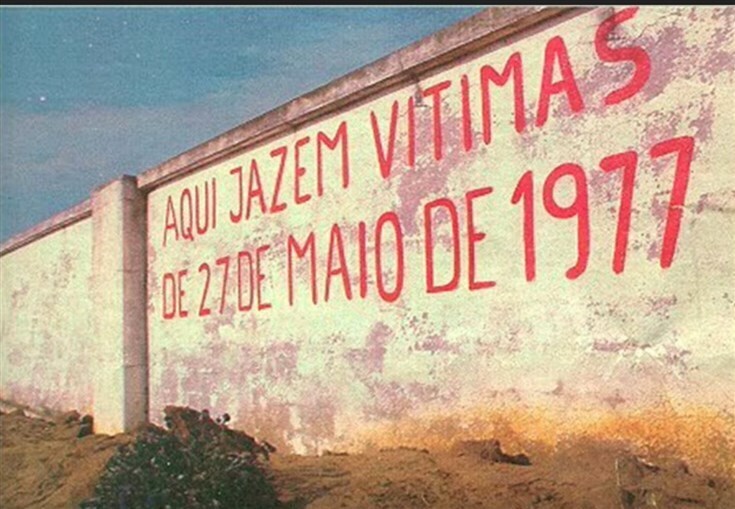
Lourenço’s decision to establish CIVICOP was followed by a public apology in May 2021 for summary executions carried out after the political upheaval of May 27, 1977, one of the most sensitive episodes in Angola’s post-independence history.
The process reached another milestone in October 2026 with the inauguration of the Memorial to the Victims of Political Conflicts in Luanda, creating a permanent national institution dedicated to remembrance and reconciliation.
Beyond its symbolic importance, CIVICOP has become part of the government’s wider institutional agenda, linking historical acknowledgement with social cohesion, political stability and the preservation of collective memory.
Its long-term significance, however, will depend on whether the commission can address outstanding questions concerning historical truth, forensic identification, accountability and the expectations of victims’ families.
From independence to reconciliation: Angola’s historical trajectory
The establishment of CIVICOP must be understood against the background of Angola’s turbulent political history, from independence from Portugal on November 11, 1975, to the end of the civil war on April 4, 2002.
During that period, successive political and military confrontations left deep divisions within society, displaced millions of people and contributed to the destruction of essential infrastructure.
The peace settlement of 2002 opened the way for national reconstruction, the reintegration of former combatants and the strengthening of state institutions.
Nevertheless, the restoration of peace did not resolve every historical grievance. Families continued to seek information about missing relatives, the circumstances surrounding political executions and the location of burial sites.
Following his inauguration in September 2017, Lourenço gradually introduced historical reconciliation as a more explicit component of his administration’s political agenda.
Timeline of major developments
1975
Angola’s Independence — November 11
Establishment of the independent Angolan state following Portuguese colonial rule, amid escalating political and military rivalries.
1977
Political Crisis — May 27
Internal political confrontation followed by widespread repression, executions and disappearances, leaving unresolved historical grievances.
1991
Bicesse Peace Accords — May 31
Agreement between the government and UNITA, paving the way for multiparty elections and a negotiated peace process.
1994
Lusaka Protocol — November 20
Renewed political and military commitments aimed at ending the civil war and advancing national reconciliation.
2002
End of the Civil War — April 4
Signing of the Luena Memorandum of Understanding, marking the end of armed hostilities and the beginning of post-war reconstruction.
2017
João Lourenço Assumes Presidency — September 26
A new political administration introduces reforms and subsequently expands the institutional agenda for historical reconciliation.
2019
Establishment of CIVICOP — April 30
Creation of the commission responsible for implementing the reconciliation plan in memory of victims of political conflicts between 1975 and 2002.
2021
Presidential Apology — May 26
President Lourenço publicly apologises on behalf of the Angolan state for summary executions associated with the repression following May 27, 1977.
2022–25
Forensic Investigations and Victim Recognition
Continued exhumations, identification procedures, death certificate issuance and commemorative ceremonies, alongside disputes over some forensic findings.
2026
National Memorial Inaugurated — October 14
President Lourenço inaugurates the Memorial to the Victims of Political Conflicts in Luanda, establishing a permanent institution dedicated to historical remembrance and national reconciliation.
The timeline traces Angola’s transition from independence and armed conflict to the institutionalisation of historical reconciliation under President João Lourenço.
João Lourenço’s reconciliation strategy
Lourenço’s approach to national reconciliation is based on the view that political stability, social cohesion and institutional confidence are essential conditions for sustainable development.
By establishing CIVICOP, his administration sought to provide a formal mechanism through which the state could address longstanding grievances while promoting dialogue among communities and political groups.
In his State of the Nation address to the National Assembly on October 15, 2026, the president reaffirmed the importance of reconciliation to Angola’s future.
He explained that the initiative was essential to strengthening national reconciliation and argued that Angolans could not work together for national development without addressing the wounds left by decades of political and military conflict.
The statement positioned reconciliation not merely as an exercise in historical remembrance but as a component of national governance.
Four policy dimensions underpin the initiative.
Historical recognition. CIVICOP seeks to document past political conflicts and acknowledge the suffering of citizens who lost their lives or disappeared during periods of violence.
Institutional responsibility. The state has publicly recognised aspects of its historical responsibility and introduced measures intended to address the concerns of victims’ families.
National unity. The reconciliation process aims to encourage dialogue across political, ideological, cultural and religious differences.
Civic education. Preserving historical memory is intended to help younger generations understand the consequences of political intolerance and the importance of peaceful coexistence.
The administration’s central argument is that a society capable of confronting its past is better positioned to strengthen confidence in public institutions.
3. CIVICOP in numbers: institutional progress and measurable outcomes
Since its establishment, CIVICOP has undertaken activities involving the recovery and identification of human remains, the issuance of death certificates, consultations with families and the organisation of public commemorations.
Its work requires coordination among government institutions, forensic specialists, historians and representatives of affected families.
Historical period covered
1975–2002
From independence to the end of the civil war
Commission established
2019
Formal institutional framework introduced
Presidential apology
2021
Public acknowledgement of historical abuses
National memorial inaugurated
2026
October 14, Luanda
The commission’s achievements extend beyond numerical indicators. For families who have waited decades for information about missing relatives, the identification and return of remains can carry profound personal significance.
Nevertheless, a comprehensive assessment requires consolidated and independently verifiable data on cases received, remains recovered, forensic identifications completed, death certificates issued and unresolved investigations.
Published figures covering different reporting periods should not be treated as cumulative totals without reconciliation against official records.
Regular disclosure of such information would strengthen transparency and provide a clearer measure of the programme’s institutional effectiveness.
May 27, 1977: confronting one of Angola’s most sensitive historical episodes
The events of May 27, 1977, remain among the most contentious chapters of Angola’s post-independence history.
A political confrontation within the ruling MPLA was followed by a widespread crackdown involving arrests, executions and disappearances.
The precise number of victims remains disputed, reflecting the absence of a universally accepted historical accounting.
For decades, families sought official recognition, information about missing relatives and access to burial sites.
On May 26, 2021, Lourenço publicly apologised on behalf of the Angolan state for summary executions associated with the repression.
The acknowledgement marked a significant change in the government’s public treatment of the events.
It also established an institutional basis for subsequent efforts to recover remains, identify victims and facilitate dignified burials.
Yet the process has not been free of controversy.
Some relatives and victims’ representatives have challenged forensic identifications, including DNA findings, and called for greater transparency and independent verification.
These disputes highlight a central challenge for CIVICOP: political recognition must be supported by scientifically credible procedures and sustained engagement with affected families.
For reconciliation to achieve lasting legitimacy, the authorities must demonstrate that historical acknowledgement is accompanied by verifiable evidence and meaningful opportunities for families to question findings.
The Memorial to the Victims of Political Conflicts: a permanent national institution
The inauguration of the Memorial to the Victims of Political Conflicts in Luanda on October 14, 2026, marked another stage in the government’s reconciliation programme.
Located near the Dr António Agostinho Neto Memorial, the complex occupies approximately six hectares and incorporates spaces dedicated to remembrance, reflection and historical preservation.
Its architectural features include the Eternal Alliance, the Hall of Memory and the Mulembeira of Reconciliation, elements intended to symbolise unity, remembrance and national healing.
The design draws on the image of an embrace, representing the aspiration to overcome historical divisions through recognition and reconciliation.
During the inauguration, Lourenço wrote in the memorial’s book of honour that the country was transforming pain into healing and the past into history.
The project gives physical expression to the administration’s commitment to preserving the memory of citizens who died during political conflicts.
It also creates opportunities for educational visits, historical exhibitions, academic research and public discussions about Angola’s contemporary history.
The memorial’s long-term value will depend on the quality of its historical documentation, the diversity of perspectives represented and the credibility of its educational programmes.
A national remembrance institution can contribute to reconciliation most effectively when its historical presentation is rigorous, inclusive and open to scholarly examination.
CIVICOP as an instrument of governance and institutional development
CIVICOP’s mandate extends into areas that are relevant to governance, human rights, civic education and public confidence.
Although the commission is primarily concerned with historical reconciliation, its work intersects with wider questions about the relationship between citizens and state institutions.
The initiative may therefore be examined through several policy dimensions.
| Policy area | CIVICOP’s contribution | Institutional implications |
|---|---|---|
| National reconciliation | Recognition and commemoration of victims | Strengthening social cohesion |
| Human rights | Acknowledgement of historical suffering | Promotion of human dignity |
| Governance | Dialogue between institutions and citizens | Building public confidence |
| Education | Preservation of historical memory | Civic awareness among younger generations |
| Culture | Development of remembrance institutions | Protection of national heritage |
| Political stability | Promotion of tolerance and dialogue | Support for peaceful coexistence |
From a governance perspective, the commission represents an attempt to transform historical reconciliation into a structured public policy rather than a series of isolated commemorative gestures.
However, independent researchers and victims’ representatives have raised concerns about institutional transparency, participation and the credibility of some identification procedures.
These concerns underline the importance of distinguishing symbolic recognition from broader questions of historical accountability.
The sustainability of the initiative will depend partly on the government’s ability to maintain constructive engagement with families, political organisations and civil society.
Outstanding challenges and the next phase of national reconciliation
Despite the measures introduced since 2019, several issues remain unresolved.
The most immediate concerns involve the identification of missing persons, access to historical documentation, the verification of forensic findings and the provision of information to affected families.
Five areas are particularly relevant to the next phase of CIVICOP’s work.
Historical clarification. Greater access to archives, official records and witness testimony could help establish a more comprehensive account of political violence.
Forensic credibility. Identification procedures require scientific rigour, transparent methodologies and mechanisms for independent review where findings are contested.
Family participation. Relatives should have reliable channels through which to obtain information, submit evidence and raise concerns.
Preservation of memory. The memorial could support educational and cultural programmes that encourage informed discussion of Angola’s history.
Institutional continuity. Regular reporting, public accountability and independent assessment would help ensure that reconciliation efforts continue beyond individual political mandates.
Progress in these areas would provide a stronger basis for measuring the commission’s achievements and addressing unresolved grievances.
Reconciliation and development: the long-term policy perspective
Lourenço has repeatedly linked national reconciliation to the broader objectives of political stability, institutional development and economic progress.
The administration’s position is that peaceful coexistence and social cohesion provide an important foundation for implementing public policies and sustaining national development.
In his October 2026 State of the Nation address, the president emphasised the responsibility of Angolans to preserve peace and promote coexistence regardless of political, ideological, ethnic or religious differences.
Three considerations are particularly relevant to this policy approach.
The first is political stability. Predictable institutions and peaceful political competition provide a more favourable environment for long-term planning and investment.
The second is social cohesion. Dialogue and mutual recognition can help reduce divisions that undermine confidence in public institutions.
The third is historical education. Preserving the memory of past conflicts may contribute to civic awareness and discourage the recurrence of political violence.
However, the relationship between reconciliation initiatives and economic performance should not be overstated.
There is no established quantitative basis for attributing changes in Angola’s growth, investment or employment indicators directly to CIVICOP.
Its potential economic relevance is indirect, through institutional confidence, social stability and the wider conditions that support sustainable development.
CIVICOP and Angola’s continuing reconciliation process
The establishment of CIVICOP in 2019, Lourenço’s public apology in 2021 and the inauguration of the national memorial in October 2026 have become defining milestones in the administration’s approach to historical reconciliation.
Together, these measures reflect an effort to address unresolved consequences of political conflicts spanning the period from independence in 1975 to the end of the civil war in 2002.
The initiative has brought historical grievances into the institutional sphere, created mechanisms for recognising victims and opened additional channels of engagement between the state and affected families.
At the same time, disputes over forensic findings, transparency and participation demonstrate that reconciliation remains an unfinished process.
The distinction is important. Official recognition can create the conditions for reconciliation, but its credibility ultimately depends on historical clarification, reliable evidence, institutional accountability and the confidence of those most directly affected.
More than two decades after the end of the civil war, Angola is continuing to confront the human and political consequences of its past.
For Lourenço’s administration, CIVICOP has become a significant component of that effort, connecting remembrance with the wider objectives of national unity and institutional consolidation.
The 2002 peace settlement ended Angola’s civil war. CIVICOP reflects the continuing challenge of translating that peace into historical recognition, public trust and lasting reconciliation.