Joseph Kabila: From patriotism to betrayal, how Kigali found a strategic ally at the heart of Congo
- Democratic Republic of the Congo (DRC)Politics
- November 18, 2026
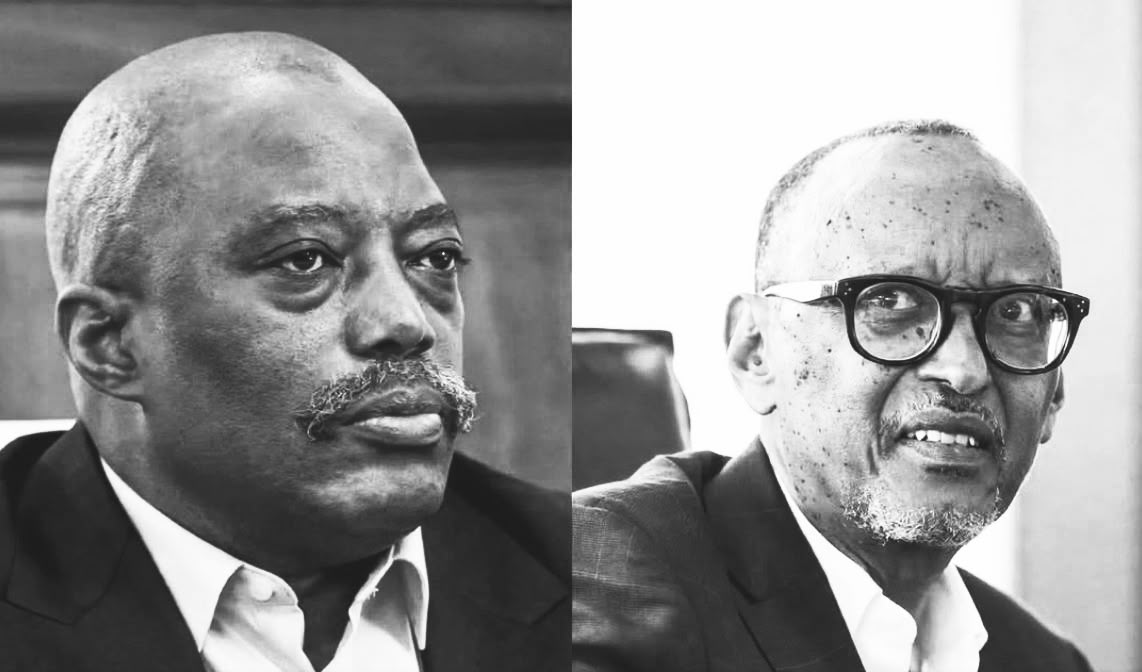

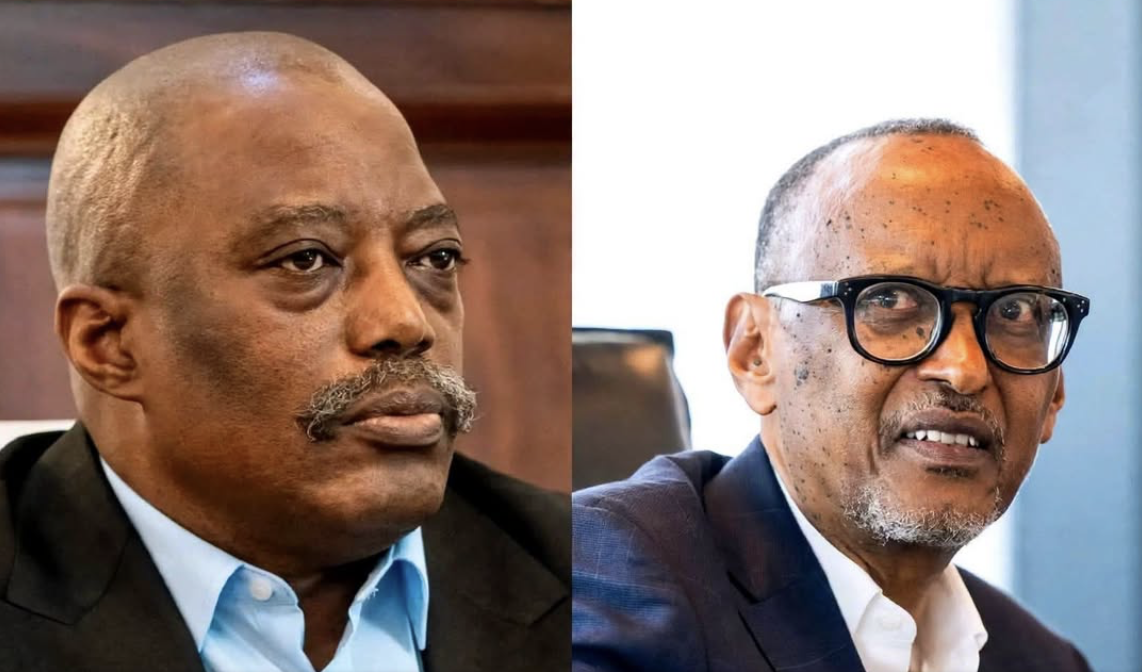
Convicted of treason, sanctioned by the United States and installed at the head of a political-military organisation emerging from the M23 rebellion, Congo’s former president has become a strategic asset for Kigali. The removal of his name from public spaces symbolises the rupture between the state and a man who, for 18 years, pledged to defend national sovereignty.
AfricaHeadline | Opinion — Political and Geopolitical Intelligence
MAPUTO — As Félix Tshisekedi sought to mobilise international support for the sovereignty of the Democratic Republic of Congo (DRC) at the 20th Francophonie Summit in Phnom Penh, Cambodia, Joseph Kabila found himself associated with a renewed political and military offensive in the east of the country he governed for 18 years.
In Kinshasa, the government has initiated administrative proceedings to remove the former president’s name from avenues, public squares, buildings and other infrastructure. In eastern Congo, the Front for the Refoundation of the Nation (FRN), led by Kabila, is once again challenging the authority of the Congolese state through armed confrontation.
These developments illustrate two dimensions of the same crisis: a battle for territorial sovereignty and another for the historical legitimacy of the republic.
Joseph Kabila, once regarded as an architect of Congo’s reunification, has become a politically valuable figure for Paul Kagame. His trajectory illustrates how the ambition to reclaim power can transform a former statesman into an instrument of a foreign power’s strategic interests.
The great historical contradiction of the Kabila family
To understand the significance of this rupture, it is necessary to return to May 17, 1997, when Laurent-Désiré Kabila entered Kinshasa, bringing Mobutu Sese Seko’s 32-year rule to an end.
The victory of the Alliance of Democratic Forces for the Liberation of Congo (AFDL) benefited from military support from Rwanda and Uganda, against a backdrop of converging political, military and strategic interests across the Great Lakes region.
Angola, under President José Eduardo dos Santos, also played a decisive military and geostrategic role in the collapse of the Mobutu regime. At the time, Luanda regarded Zaire as a threat to its national security, particularly because of Mobutu’s longstanding support for the National Union for the Total Independence of Angola (UNITA), led by Jonas Savimbi.
During the early months of 1997, Angolan military intervention, particularly along Zaire’s western corridors and in the Lower Congo region, helped accelerate the collapse of the Zairian armed forces. The advance towards Matadi and Kinshasa carried particular strategic significance, both for AFDL operations and for Angola’s security interests near the province of Cabinda.
While Rwanda and Uganda prioritised their security and strategic interests in the Great Lakes region, Angola sought to dismantle UNITA’s logistical networks and prevent Zairian territory from serving as a rear base for movements hostile to Luanda.
This temporary convergence of interests facilitated Laurent-Désiré Kabila’s victory in May 1997. It would not, however, survive the strategic disagreements that emerged after his accession to power.
The new Congolese president quickly recognised the risks that a prolonged foreign military presence posed to his country’s effective independence.
On July 27, 1998, he announced the termination of Rwanda’s military presence. The decision precipitated the Second Congo War, which involved nine African countries and numerous armed groups.
In August 1998, Angola intervened again, this time to defend Laurent-Désiré Kabila’s government against an offensive by rebel forces backed by Kigali and Kampala. Alongside Robert Mugabe’s Zimbabwe and Sam Nujoma’s Namibia, the Angolan Armed Forces (FAA) played a decisive role in repelling the offensive against Kinshasa, particularly along the Kitona and Lower Congo corridors.
Angola’s intervention proved critical to the survival of the Congolese government, the preservation of national sovereignty and the defence of the DRC’s territorial integrity.
On January 16, 2001, Laurent-Désiré Kabila was assassinated at the Marble Palace in Kinshasa. Ten days later, Joseph Kabila formally assumed the presidency at the age of just 29.
A quarter of a century later, history presents a profound political and moral contradiction: the son now leads an insurgent organisation associated with the military interests of the very country whose influence his father sought to resist, with Angola’s decisive support.
Laurent-Désiré Kabila remains recognised as a national hero. Joseph Kabila stands convicted of treason.
The loss of power and Kabila’s political transformation
During the early years of his presidency, Joseph Kabila played an important role in Congo’s institutional reconstruction.
The Global and Inclusive Agreement, signed in Pretoria on December 17, 2002, laid the foundations for the country’s political reunification. A transitional government was established in 2003. On February 18, 2006, a new constitution was promulgated, paving the way for the country’s first multiparty elections in decades.
On January 24, 2019, Kabila handed power to Félix Tshisekedi in Congo’s first peaceful presidential transition since independence in 1960.
His departure from office, however, did not signal the abandonment of his political ambitions.
The Common Front for Congo (FCC) retained a dominant position in parliament, alongside extensive networks of influence across public institutions, the armed forces and the business community.
The collapse of the alliance between Kabila and Tshisekedi in December 2020, followed by the creation of the Sacred Union of the Nation in 2021, fundamentally altered the balance of power in Kinshasa.
The former president progressively lost his ability to influence executive decisions.
It is against this backdrop that his rapprochement with rebel forces must be examined. While the loss of political influence is insufficient to establish his personal motivations, it provides important context for understanding the transformation of his political strategy.
How Kigali found a Congolese political instrument
Rwanda’s regional strategy should be examined through three dimensions: military, economic and political.
Militarily, support for the M23 has enabled Rwanda to extend its influence across Congolese border territories. Economically, rebel control of important mining areas provides access to strategically valuable commercial networks. Politically, the rapprochement with Joseph Kabila has provided the rebellion with a figure possessing presidential experience, international recognition and extensive networks of influence within the Congolese state.
On February 21, 2025, the United Nations Security Council unanimously adopted Resolution 2773, condemning the M23 offensive supported by the Rwanda Defence Force (RDF), demanding the withdrawal of Rwandan forces and calling for the restoration of Congolese state authority.
The resolution followed the capture of Goma in North Kivu in January and Bukavu in South Kivu in February 2025.
With Joseph Kabila, Kigali has acquired an additional strategic advantage: the ability to put a Congolese political face on a military confrontation characterised by foreign intervention.
The former president’s presence allows the rebellion to present itself as a movement for domestic political transformation rather than an armed insurgency benefiting from external military support.
The Rwandan government rejects accusations of interference and cites security concerns arising from the presence of the Democratic Forces for the Liberation of Rwanda (FDLR) on Congolese territory.
Such concerns, however, do not confer upon any state the right to undermine the territorial sovereignty of a neighbouring country.
Kigali does not need to direct every decision Kabila makes to benefit from his political choices. It is sufficient for the former president’s objectives to align with Rwanda’s strategic interests.
It is precisely this convergence that has made Joseph Kabila a political instrument of Rwanda’s regional ambitions.
Goma and the emergence of an alternative centre of power
Joseph Kabila’s return to Goma in May 2025 marked a decisive stage in his rupture with Kinshasa.
Located immediately adjacent to the Rwandan border, Goma represents a major administrative, economic and logistical centre. The presence of a former Congolese president in rebel-controlled territory carried political significance far beyond conventional opposition politics.
On October 12, 2026, the establishment of the Front for the Refoundation of the Nation formalised this transformation. Joseph Kabila assumed leadership of an organisation bringing together figures including Corneille Nangaa, Bertrand Bisimwa and Sultani Makenga.
Nangaa, a former chairman of the Independent National Electoral Commission (CENI), provides a connection to Congo’s former institutional structures. Bisimwa represents the political continuity of the M23, while Makenga brings its military experience.
This configuration reflects an attempt to combine military capability, administrative experience and political recognition.
The strategic objective now extends beyond territorial control in the Kivu provinces. The FRN presents itself as an alternative to the government in Kinshasa.
Therein lies the gravity of Kabila’s decision: a former head of state is now providing political legitimacy to an organisation challenging the authority of the republic through armed force.
From a treason conviction to financial isolation
On September 30, 2025, the High Military Court in Kinshasa sentenced Joseph Kabila to death in absentia for several offences, including treason and war crimes.
The former president rejected the accusations, denounced what he described as the political instrumentalisation of the judiciary and challenged the legitimacy of the proceedings.
The circumstances surrounding the trial warrant an independent assessment of its procedural safeguards. Subsequent developments, however, demonstrate that concerns over Kabila’s activities extend beyond Congo’s borders.
On April 30, 2026, the US Treasury Department announced sanctions against Joseph Kabila over his support for the M23 and the Alliance Fleuve Congo (AFC).
According to Washington, the former president allegedly sought to encourage Congolese military personnel to defect to rebel forces, support operations against the Armed Forces of the Democratic Republic of Congo (FARDC) and regain influence over the Congolese government.
The decision forms part of a broader sequence of international measures targeting actors associated with the destabilisation of the DRC.
| Date | International measure |
|---|---|
| August 12, 2025 | Sanctions against entities associated with illicit mining in Congo. |
| March 2, 2026 | Sanctions against the Rwanda Defence Force and four military officials. |
| April 30, 2026 | Financial sanctions against Joseph Kabila. |
| June 2, 2026 | Sanctions against M23 and FDLR commanders. |
| June 25, 2026 | Sanctions targeting an illicit mineral trading network. |
| October 28, 2026 | Sanctions against Rwanda’s Ministry of Defence and financial institution Zigama. |
On October 28, US Treasury Secretary Scott Bessent reiterated demands for Rwanda to cease its support for the M23 and withdraw its forces from eastern Congo.
This succession of measures underscores the increasingly international dimension of the allegations surrounding Kigali’s involvement in the conflict.
Kashamata: when the confrontation reaches Kabila’s property
On November 14, 2026, reports of alleged bombing near Joseph Kabila’s property in Kashamata, outside Lubumbashi in Haut-Katanga province, introduced a new source of tension.
Local sources cited by the Kivu Morning Post suggested that Congolese armed forces had conducted an aerial operation near the property.
Other security sources, quoted by Top Congo FM, indicated that the incident might have involved military exercises in uninhabited mountainous areas, with no reported casualties.
On November 16, Lawrence Kanyuka, spokesperson for the FRN, seized upon the alleged incident in statements directed against the government in Kinshasa.
No conclusive independent confirmation has established that Kabila’s property was deliberately targeted.
The episode nevertheless warrants particular attention because of Haut-Katanga’s strategic importance. The province concentrates substantial mining, industrial and commercial interests, maintains close economic ties with Zambia and constitutes one of the DRC’s principal economic hubs.
Any extension of the political and military confrontation into this region would have consequences far beyond the rivalry between Kabila and Tshisekedi.
The incident also illustrates how military developments can be exploited in the information war between Kinshasa and the FRN.
Erasing Kabila: the political judgement of national memory
“Kabila erased” was the expression used by the Congolese newspaper Ouragan to describe the authorities’ decision to remove the former president’s name from public spaces.
Deputy Prime Minister and Interior Minister Jacquemain Shabani instructed provincial governors to compile an inventory of streets, avenues, public squares, buildings and public and private facilities still bearing Joseph Kabila’s name.
According to Ouragan and Actualité.cd, the administrative operation rests on three fundamental parameters: an initial list of 16 locations, the involvement of governors across all 26 provinces and a 30-day deadline for submitting certified inventories and proposed replacement names.
Signage is expected to be replaced only after the relevant legal procedures have been completed.
According to TV5Monde, the government memorandum justifies the decision on grounds of the former president’s alleged betrayal and complicity with an enemy power.
The initiative does not, at this stage, extend to the memory of Laurent-Désiré Kabila.
In Kinshasa, Camp Kabila in the municipality of Lemba and the Kabila neighbourhood in Kisenso are associated with the former president assassinated in 2001.
The Congolese state must preserve this historical distinction. The political choices of the son should not undermine the national recognition accorded to the father.
Beyond removing street signs, Kinshasa seeks to establish a moral principle: the greatness of a leader is measured not solely by the office he once held, but also by his loyalty to the fundamental principles of the republic after leaving power.
The war economy: the financial interests behind the rebellion
It would be naïve to reduce the Congolese crisis to a rivalry between Joseph Kabila, Félix Tshisekedi and the Rwandan leadership.
The conflict involves financial interests linked to mineral extraction, control of commercial routes and the establishment of parallel systems of administration and taxation.
Rubaya, in Masisi territory, provides one of the most revealing examples of this war economy.
According to information presented to the UN Security Council, the extraction and taxation of coltan in the area reportedly generated estimated monthly revenues of $800,000 for the M23, equivalent to $9.6mn annually if that rate of collection were sustained.
Rubaya: financing the war economy
Estimated monthly revenue
$800,000
Annualised revenue estimate
$9.6mn
Reference source: UN Group of Experts. The annual figure is an extrapolation of estimated monthly revenue.
Rubaya occupies an important position in the global supply of tantalum, a strategic mineral used in the electronics industry, including the production of smartphones, computers and advanced technological equipment.
On June 25, 2026, Washington sanctioned a network associated with the illicit commercialisation of minerals originating in eastern Congo, including a Rwandan gold refinery.
For Kigali, influence over eastern Congo represents a source of regional leverage, strategic depth and access to valuable commercial networks.
For Kabila, political leadership of the FRN provides a platform through which he may seek to recover his lost influence in Kinshasa.
For the Congolese people, however, this convergence means the continuation of a war that undermines their country’s sovereign control over its natural resources.
A military offensive amid a humanitarian emergency
The most tragic dimension of this confrontation lies in its consequences for civilian populations.
On November 16, intense clashes were reported between FRN forces and the FARDC, supported by Wazalendo fighters, in Kambali, in the Kalehe territory of South Kivu.
According to the Kivu Morning Post, two motorcycle taxi drivers were reportedly killed during an alleged drone operation in Bunyakiri. The circumstances and responsibility for the incident remain subject to independent verification.
Separately, between November 9 and 12, attacks attributed to the Allied Democratic Forces (ADF) reportedly killed at least 44 people in Mambasa, Ituri province, according to local assessments reported by RFI.
These attacks must be distinguished from FRN operations because they involve different armed organisations.
The multiplicity of military threats confronting the Congolese state has created an exceptionally complex security environment, further aggravated by a major public health emergency.
Congo’s Ebola crisis
Confirmed cases
11,376
Recorded deaths
5,568
Reported case fatality ratio
48.9%
Affected provinces
8
Worst-affected provinces
Ituri 7,858 | North Kivu 2,860 | Haut-Uélé 523 | Tshopo 107
Reference source: European Centre for Disease Prevention and Control (ECDC), November 16, 2026 update. Figures remain subject to confirmation and revision.
The concentration of approximately 94 per cent of confirmed cases in Ituri and North Kivu highlights the geographical overlap between military insecurity and the public health emergency.
Armed operations obstruct the movement of medical teams, humanitarian assistance, contact tracing and civilian access to essential services.
The origins of the epidemic cannot be attributed to Kabila or the FRN. Continued hostilities, however, compound the difficulties facing public health authorities.
It is against this humanitarian reality that the moral legitimacy of a movement claiming to rebuild the nation must be assessed.
Kinshasa and Kigali: the diplomatic battle in Phnom Penh
The confrontation between Kinshasa and Kigali acquired a new dimension at the 20th Summit of the International Organisation of La Francophonie (OIF), held in Cambodia on November 15 and 16.
President Félix Tshisekedi used the forum to further internationalise the Congolese crisis and challenge the continued leadership of Louise Mushikiwabo, Rwanda’s former foreign minister, at the organisation.
The newspaper EcoNews criticised the positions taken by Emmanuel Macron and Louise Mushikiwabo during the opening proceedings, arguing that insufficient attention had been devoted to Congo’s humanitarian tragedy.
Congolese Communications and Media Minister Patrick Muyaya condemned what he described as the organisation’s “blatant hypocrisy” and “deafening silence”.
Faced with an absence of consensus, Kinshasa pursued an alternative diplomatic strategy, withdrawing the candidacy of Juliana Amato Lumumba, daughter of Patrice Émery Lumumba, in favour of Romania’s Dacian Cioloș.
Former Congolese foreign minister Christophe Lutundula summarised Kinshasa’s position in particularly significant terms:
“Appeasement, yes; weakness, absolutely not.”
On November 16, heads of state and government reached a compromise providing for Mushikiwabo to remain in office for a transitional period of 12 months, without a third mandate, according to the Congolese presidency.
The summit’s final resolution also condemned violence by armed groups in eastern Congo, called for an end to external support for such organisations, demanded the dismantling of parallel administrations and urged the restoration of state authority.
Although it stopped short of explicitly identifying Rwanda as responsible, the resolution provides an additional instrument of diplomatic pressure.
The outcome represents a partial setback for Kigali, without amounting to an outright diplomatic victory for Kinshasa.
Angola, the Lobito Corridor and the risks of Congo’s fragmentation
The Congolese crisis has direct implications for Angola and for southern Africa’s broader economic and security architecture.
Since its military interventions in 1997 and 1998, Luanda has regarded the stability and territorial integrity of the DRC as essential components of its own national security.
Under President João Lourenço, this strategic doctrine has increasingly translated into an active diplomatic approach, prioritising mediation, military de-escalation and African-led political solutions to regional conflicts.
The Angolan president played a pivotal role in mediation efforts through the Luanda Process, whose importance was recognised by the United Nations Security Council in Resolution 2773.
Congolese stability is also strategically important to the development of the Lobito Corridor, which is designed to connect the mining regions of the DRC and Zambia to the Atlantic Ocean through Angola’s railway network.
The project, supported by the United States, the European Union and several international financial institutions, offers regional economies new opportunities for trade diversification, industrial investment and logistical integration.
Progress in contractual negotiations over the proposed railway connection between Zambia and the Benguela Railway, with financial close targeted for 2027, illustrates the emergence of an economic alternative to the patterns of predatory resource extraction and conflict that characterise parts of Congo.
Two competing models of regional integration are therefore emerging.
The first is built on investment, connectivity, industrial production, respect for national sovereignty and formal trade. The second remains shaped by military occupation, parallel administrations and the economic exploitation of contested territories.
By assuming leadership of the FRN, Joseph Kabila has politically aligned himself with the latter dynamic.
For Angola, under João Lourenço’s leadership, the construction of a regional architecture founded on peace and economic integration represents not merely a diplomatic priority, but a strategic development imperative.
Timeline: from patriotism to a treason conviction
May 17, 1997 The fall of MobutuLaurent-Désiré Kabila captures Kinshasa with military support from Angola, Rwanda and Uganda.
July 27, 1998 The rupture with KigaliLaurent-Désiré Kabila announces the termination of Rwanda’s military presence.
August 1998 Angola’s military interventionAngola, Zimbabwe and Namibia intervene in defence of the Congolese government.
January 16, 2001 The assassination of Laurent-Désiré KabilaThe president is assassinated at the Marble Palace in Kinshasa.
January 26, 2001 Joseph Kabila assumes powerHe becomes president of the republic at the age of 29.
December 17, 2002 The Pretoria AgreementThe foundations for Congo’s political reunification are established.
February 18, 2006 A new constitutionThe country’s institutional reconstruction gains momentum.
January 24, 2019 The transfer of powerFélix Tshisekedi assumes the presidency.
December 2020 The political ruptureThe governing alliance between Kabila and Tshisekedi collapses.
February 21, 2025 International condemnationThe UN Security Council adopts Resolution 2773.
May 2025 The return to GomaJoseph Kabila returns to a city under rebel control.
September 30, 2025 The treason convictionKinshasa’s High Military Court sentences Kabila to death in absentia.
December 4, 2025 The Washington AccordsThe Congolese and Rwandan presidents formalise peace commitments.
April 30, 2026 US financial sanctionsWashington sanctions Joseph Kabila over his support for the AFC/M23.
October 12, 2026 Leadership of the rebellionJoseph Kabila assumes leadership of the FRN.
October 28, 2026 International pressure on KigaliWashington sanctions Rwanda’s Ministry of Defence.
November 12, 2026 The rupture with national memoryKinshasa initiates proceedings to remove Kabila’s name from public spaces.
November 14, 2026 The Kashamata incidentConflicting reports emerge over alleged military operations near Kabila’s property.
November 15–16, 2026 The Francophonie diplomatic battleKinshasa and Kigali confront each other diplomatically in Phnom Penh.
November 16, 2026 Escalating hostilitiesRenewed military clashes are reported in South Kivu.
Kabila’s betrayal is not of Tshisekedi, but of Congo
The fundamental problem with Joseph Kabila does not lie in his political opposition to Félix Tshisekedi. Democracy presupposes the existence of opposition, the alternation of power, institutional accountability and the freedom to challenge those in government.
The real problem lies in the nature of the alternative he has chosen to represent.
A former president who possesses an intimate understanding of his country’s military, economic and institutional vulnerabilities bears a particular responsibility towards its national sovereignty.
By aligning himself with a political-military organisation backed by Rwanda, Kabila has placed his political capital, presidential experience and part of his historical legacy at the service of a dynamic favourable to Kigali’s strategic interests.
This does not necessarily mean that Rwanda’s president personally dictates his every decision. It means that the former Congolese president has become a useful actor in a foreign strategy of influence over Congolese territory.
It is precisely within this contradiction that the political dimension of his betrayal resides.
Joseph Kabila could have remained in history as the young president who inherited a country devastated by war and helped reunify it.
Instead, he has chosen to return to the centre of political confrontation through a course of action that threatens to compromise that legacy.
The removal of his name from Congolese avenues is merely the physical manifestation of a far deeper rupture between the former president and the principles that once justified his accession to power.
History will ultimately judge Joseph Kabila not only by the 18 years he spent governing Congo, but above all by what he chose to do after leaving office.
In 1998, Angola committed military and human resources to preventing the disintegration of the Congolese state. Decades later, Angolan diplomacy remains committed to preserving Congo’s territorial sovereignty and building an economically integrated region.
That strategic continuity stands in stark contrast to Joseph Kabila’s political trajectory.
Laurent-Désiré Kabila entered history as the man who sought to free Congo from Kigali’s influence, with Angola’s decisive support. Joseph Kabila risks remaining in it as the son who restored to Rwanda the very influence his father fought to dismantle.