DR Congo: Tshisekedi’s economic reforms underpin growth above 5% as diversification gathers momentum
- Democratic Republic of the Congo (DRC)EconomicEconomic Outlook
- November 14, 2026

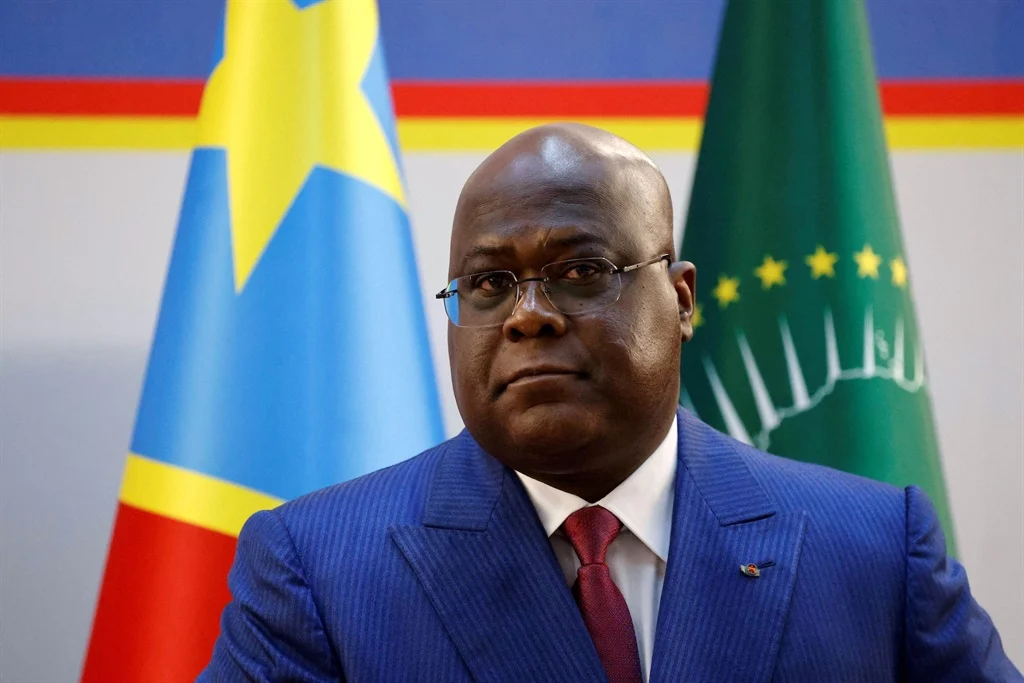
KINSHASA — The Democratic Republic of Congo (DRC) is on course to maintain economic growth above 5% in 2026, supported by mining production, monetary stabilisation and structural reforms pursued under President Félix Antoine Tshisekedi Tshilombo, as Africa’s resource-rich economy seeks to strengthen public finances, attract investment and accelerate diversification.
The World Bank projects real gross domestic product (GDP) growth of 5.4% in 2026, following an estimated 5.7% expansion in 2025, highlighting the economy’s resilience despite international commodity-price volatility, inflationary pressures and persistent security challenges in the country’s eastern provinces.
The outlook reflects a combination of strong mineral exports, improvements in macroeconomic management and reforms designed to strengthen domestic revenue mobilisation, enhance fiscal transparency and expand productive activity beyond the extractive industries.
Since taking office in January 2019, Tshisekedi has placed economic modernisation, infrastructure development and improved public services at the centre of his administration’s policy agenda. His second presidential term, which began in January 2024, has brought renewed emphasis on fiscal reform, natural-resource governance, investment promotion and economic transformation.
The reform programme is supported by the International Monetary Fund (IMF) and the World Bank, whose assessments have acknowledged progress in macroeconomic stabilisation while underscoring the need to accelerate job creation, improve productivity and ensure that economic expansion delivers broader social benefits.
Economic growth and macroeconomic stability
DRC ECONOMIC INDICATORS
Projected GDP growth, 2026
5.4%
World Bank forecast
GDP growth, 2025
5.7%
World Bank estimate
Extractive industries’ GDP share
36.6%
Economic structure
Agricultural employment, 2024
57%
Share of employment
The Congolese economy expanded by 9.3% in 2022, driven largely by mining activity, before growth moderated to 6.1% in 2024 and 5.7% in 2025.
The projected 5.4% expansion in 2026 suggests that the country is maintaining a relatively strong growth trajectory, even as the pace of expansion eases from the exceptional levels recorded earlier in the decade.
Monetary policy has also contributed to improved macroeconomic conditions. The Central Bank of Congo has pursued measures aimed at containing inflation, stabilising the Congolese franc and strengthening confidence in the financial system.
These developments have helped create a more predictable environment for businesses and investors, although the IMF warned in November that annual inflation could approach 9% by the end of 2026, reflecting higher fuel and food prices.
The outlook illustrates both the progress achieved in restoring macroeconomic stability and the continuing importance of prudent monetary and fiscal management.
Fiscal reforms strengthen government revenue mobilisation
A central component of Tshisekedi’s economic programme is the modernisation of the tax administration, intended to increase domestic revenue and reduce dependence on external financing.
The reforms include the introduction of standardised value-added tax invoicing, expansion of the tax base, rationalisation of exemptions and stronger oversight of mining and customs transactions.
Mandatory implementation of the standardised VAT invoicing system began on December 1, 2025, while the 2026 budget incorporated additional measures to strengthen tax collection.
According to the IMF, the revenue measures were expected to generate additional receipts equivalent to approximately 0.7% of GDP in 2026.
They include adjustments to fuel taxation, customs duties, excise taxes and the recovery of outstanding tax liabilities.
The government has also moved to rationalise fuel subsidies, including the removal of certain benefits previously available to mining companies and their subcontractors.
Congolese authorities estimated that the measure could recover approximately 500 billion Congolese francs annually in previously forgone revenue.
The broader objective is to ensure that a greater share of the country’s economic output is channelled into public investment, education, healthcare and infrastructure development.
For a country with substantial mineral wealth but significant development needs, stronger domestic revenue mobilisation represents an important step towards more sustainable public finances.
Public finance management and institutional modernisation
The government has also prioritised reforms to public expenditure management, including the development of a Treasury Single Account, improvements in budget execution and stronger financial oversight.
The programme aims to increase transparency in the management of public resources, reduce exceptional spending procedures and improve the efficiency of government expenditure.
Other initiatives include administrative expenditure controls, stronger supervision of public institutions and improvements in public investment management.
In its September 2026 assessment, the IMF acknowledged broadly satisfactory programme implementation, with most quantitative targets met, while calling for faster progress on structural reforms.
Greater efficiency in public finance management could strengthen the government’s ability to finance priority infrastructure projects and improve investor confidence in the country’s economic institutions.
Mining reforms seek to turn mineral wealth into industrial development
Mining remains the principal engine of the Congolese economy, with copper and cobalt playing an increasingly strategic role in global supply chains for electric vehicles, batteries, electronics and renewable-energy infrastructure.
According to the World Bank, extractive industries account for approximately 36.6% of GDP but provide only 2.5% of national employment.
The disparity highlights one of the country’s central economic challenges: translating mineral wealth into broader industrial activity and employment opportunities.
The government’s mining-sector reforms seek to strengthen production oversight, improve revenue collection, increase transparency and encourage domestic mineral processing.
The amended 2026 Finance Law, promulgated in August, introduced changes to the taxation of certain commercially valuable mineral by-products, with provisions taking effect from October 1.
The legislation also established more precise rules governing the declaration and payment of dividends owed to the state by mining companies in which it holds equity interests.
These measures form part of a wider effort to increase the economic returns from the country’s natural resources while maintaining an investment environment capable of attracting international capital.
The expansion of local mineral processing could enable the DRC to capture a larger share of value added from copper and cobalt production, develop technical expertise and create industrial employment.
Achieving these objectives will require sustained investment in electricity generation, transport infrastructure, vocational training and industrial capacity.
Agriculture and manufacturing offer new opportunities for diversification
Economic diversification remains a central pillar of the government’s development agenda, particularly through agriculture, agro-processing, manufacturing, energy and services.
Agriculture accounted for approximately 57% of national employment in 2024, according to the World Bank, underscoring its importance for job creation, food security and poverty reduction.
Improving agricultural productivity could generate substantial economic benefits by increasing domestic food production, reducing dependence on imports and supporting the development of rural enterprises.
Investment in agricultural roads, storage facilities, irrigation and access to credit could also strengthen connections between rural producers and urban markets.
The government is seeking to encourage small and medium-sized enterprises, particularly in food processing, construction, logistics and services linked to the mining industry.
The World Bank has identified the transformation of business growth into productive employment as a central challenge for the Congolese economy.
Expanding access to finance, improving the regulatory environment and reducing infrastructure constraints will therefore be essential to ensuring that economic diversification delivers measurable benefits.
The 145 Territories Programme extends investment beyond major cities
The Local Development Programme for the 145 Territories, known as PDL-145T, is among the government’s flagship initiatives to improve infrastructure and public services across the country.
The programme covers social, administrative and economic infrastructure, including schools, healthcare facilities and public administration buildings.
Its objective is to reduce territorial inequalities, improve access to essential services and create conditions for stronger local economic activity.
According to information provided by Congolese authorities to the IMF, average programme implementation had reached approximately 69% by the end of October 2025, although progress varied among implementing institutions.
The initiative is particularly significant in a country where infrastructure deficits and geographical disparities have historically constrained economic development.
By expanding public investment beyond Kinshasa and major mining centres, the programme could support local enterprise development, improve public service delivery and strengthen regional economic integration.
Lobito Corridor creates new opportunities for regional trade
Regional infrastructure development offers another opportunity for the DRC, particularly through the Lobito Corridor, which connects Angola’s Atlantic port of Lobito with the mineral-producing regions of Central and Southern Africa.
The railway and associated infrastructure investments could improve access to international markets, reduce logistics costs and strengthen regional supply chains.
The corridor is strategically important for copper and cobalt exports, but its potential extends beyond mining.
Improved transport connections could facilitate trade in agricultural products, industrial equipment and consumer goods, while supporting logistics companies and other service providers.
Cooperation between the DRC, Angola and Zambia could strengthen cross-border investment and create new opportunities for regional industrial development.
International partners, including the United States and development finance institutions, have supported initiatives associated with the corridor, reflecting growing global interest in secure and diversified supply chains for critical minerals.
For the DRC, the longer-term economic benefits will depend on the extent to which improved transport infrastructure encourages domestic processing, local enterprise participation and industrial investment.
International financing supports structural reforms
Cooperation with the IMF remains a central element of the government’s macroeconomic stabilisation and institutional reform programme.
In January 2025, the Fund approved two financing arrangements under the Extended Credit Facility and the Resilience and Sustainability Facility, with combined initial financing of approximately $2.7 billion.
The programmes support fiscal consolidation, domestic revenue mobilisation, public finance management, improvements in the business environment and measures to strengthen climate resilience.
In its September 2026 assessment, the IMF highlighted the resilience of the Congolese economy, supported by mining production and macroeconomic developments, despite the pressures arising from insecurity in the east and external economic risks.
November agreement reinforces reform momentum
A further development came on November 4, 2026, when an IMF mission led by Calixte Ahokpossi reached a staff-level agreement with Congolese authorities on the fourth review of the Extended Credit Facility and the third review of the Resilience and Sustainability Facility.
The negotiations, held between October 22 and November 4, resulted in a preliminary agreement that remained subject to approval by the IMF Executive Board, tentatively expected in December 2026.
The Fund maintained its expectation that economic growth would remain above 5% in 2026 and over the medium term, despite pressures linked to the eastern conflict, international commodity prices and operational difficulties at two major mining projects.
Congolese authorities also requested greater flexibility in fiscal targets and additional access to IMF financing to accommodate exceptional security expenditure and public-health needs.
The agreement represents a further stage in the country’s engagement with international financial institutions, although additional disbursements remain conditional on formal approval.
Timeline: Major economic developments, 2019–2026
January 2019 — Tshisekedi assumes the presidency
Economic modernisation, infrastructure development and international cooperation become central elements of the administration’s policy agenda.
2022 — GDP growth reaches 9.3%
The economy records strong expansion, supported largely by mining production.
January 2024 — Second presidential term begins
The government continues its reform agenda, with renewed emphasis on fiscal management, investment and productive-sector development.
January 2025 — IMF approves new financing arrangements
Two programmes provide a framework for macroeconomic stabilisation and structural reform.
December 2025 — VAT administration modernised
Mandatory standardised invoicing takes effect for covered taxpayers.
August 2026 — Mining taxation revised
The amended Finance Law introduces changes affecting certain mineral products and state revenue collection.
October 2026 — World Bank updates economic outlook
Growth is projected at 5.4%, with particular emphasis on employment, productivity and private-sector development.
November 4, 2026 — IMF staff-level agreement reached
Negotiations conclude on further programme reviews, pending Executive Board approval.
Economic growth and social development
The DRC’s economic transformation also has an important social dimension, particularly the need to convert GDP growth into employment opportunities, higher household incomes and improved access to essential services.
According to the World Bank, the national poverty rate declined from 72.6% in 2012 to 69.1% in 2024, a reduction of 3.5 percentage points.
However, rapid population growth meant that the absolute number of people living in poverty increased by approximately 15 million over the same period.
Informal employment accounts for around 90% of total employment, illustrating the scale of the challenge facing policymakers.
These indicators reinforce the importance of economic diversification, vocational training, enterprise financing and infrastructure investment.
The country’s long-term development prospects will depend not only on expanding mineral exports but also on improving agricultural productivity, strengthening domestic businesses and increasing formal employment opportunities for young people.
More effective management of public revenue could also expand fiscal space for education, healthcare, water supply and other essential services, provided that stronger revenue collection is accompanied by transparent and efficient public expenditure.
Economic outlook for 2027
Medium-term projections point to continued economic expansion, supported by mining activity, public investment and the gradual development of non-extractive industries.
In its September 2026 projections, the IMF expected real GDP growth of approximately 5.5% in 2027, although the outlook remains dependent on domestic security conditions, international commodity prices and the implementation of structural reforms.
The consolidation of monetary stability, improvements in tax administration and a more predictable business environment could encourage additional investment and strengthen the country’s productive capacity.
The DRC also stands to benefit from rising international demand for critical minerals, electricity infrastructure investment, agricultural development and regional trade integration.
Against this backdrop, the reforms pursued under President Tshisekedi are intended to establish the foundations for longer-term economic transformation, supported by stronger public institutions, greater private-sector participation and more productive use of natural resources.
The economy’s ability to sustain growth above 5%, despite domestic and external pressures, demonstrates its substantial productive potential while highlighting the importance of accelerating diversification.
The defining economic challenge for the coming years will be to translate the country’s mineral wealth and macroeconomic progress into higher domestic production, formal employment, modern infrastructure and improved living standards.
Progress in these areas could strengthen the Democratic Republic of Congo’s position as a major centre of mineral production, industrial development and regional economic integration, with an increasingly important role in African and global value chains.