South Sudan’s election could redraw the balance of military power, and put its fragile peace at risk
- ElectionSouth Sudan
- November 11, 2026
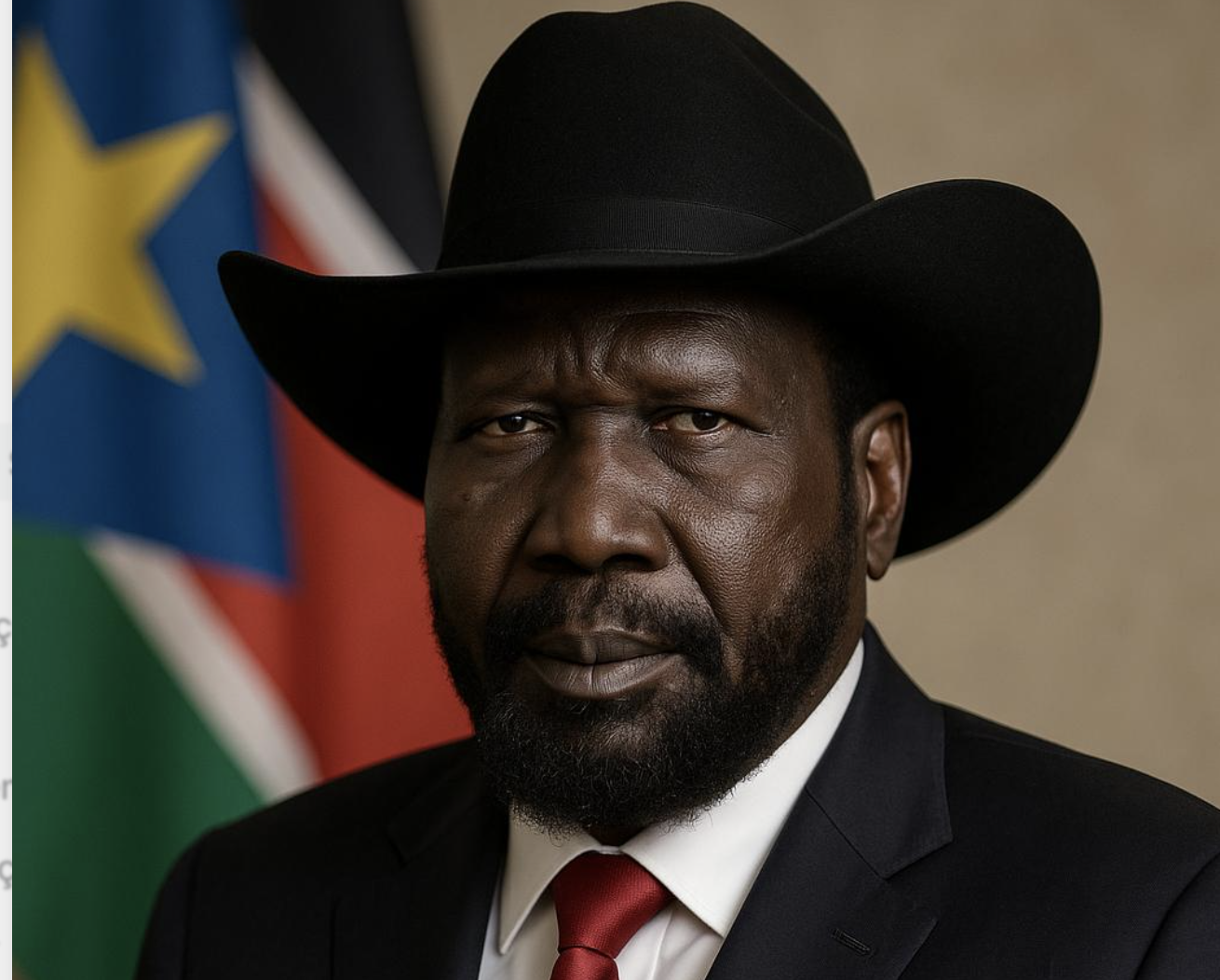

As President Salva Kiir moves towards December’s historic vote, the fragmentation of rival armed forces, the weakening of the 2018 peace framework and the strategic interests of neighbouring countries are raising fears of renewed conflict. The central question is no longer simply who wins the election, but who controls the security apparatus when the results are announced.
JUBA — South Sudan’s first national elections since independence are shaping up as a test of military cohesion as much as democratic legitimacy, with deepening divisions between President Salva Kiir and rival political factions threatening to destabilise the security arrangements that have prevented a return to full-scale civil war.
Scheduled for December 22, 2026, the vote comes amid growing uncertainty over the chain of command within the country’s armed forces, the integration of former rebel units and the future of the power-sharing agreement signed in 2018.
The country’s security dilemma is particularly acute: the institutions expected to protect the electoral process remain closely connected to the political factions competing for control of the state.
For Kiir, the election offers a route towards replacing transitional power-sharing arrangements with an administration claiming a direct electoral mandate. For his opponents, it risks institutionalising an unequal balance of power before the military and constitutional reforms promised under the peace agreement have been completed.
The implications extend far beyond electoral politics. In South Sudan, control over the presidency also carries substantial influence over military appointments, security institutions, oil revenues and the distribution of state resources.
A contested result could therefore become a struggle over the command of the state itself.
The unfinished military settlement behind the political crisis
South Sudan’s security architecture remains shaped by the civil war that erupted in December 2013, when a political dispute between Kiir and his former deputy, Riek Machar, escalated into fighting between rival military formations.
The conflict exposed the extent to which political loyalty, factional allegiance and ethnic mobilisation had become embedded within the country’s armed forces.
The 2018 Revitalised Peace Agreement was intended to reverse that fragmentation.
Its security provisions envisaged the unification of government and opposition forces into a professional national army, the restructuring of security institutions, the demobilisation of surplus combatants and the establishment of unified command arrangements.
Progress has been uneven.
Although batches of unified forces have graduated, the integration process has been constrained by inadequate funding, disputes over command positions, limited logistical support and persistent mistrust between former adversaries.
The result is a security system in which formal military structures coexist with political loyalties and armed networks that have not been fully absorbed into a unified national command.
This distinction is central to understanding the risks surrounding the election.
A government may retain formal authority over the armed forces without exercising equally effective operational control over every formation, commander or armed group operating across the country.
South Sudan’s vulnerability lies precisely in that gap between constitutional authority and military cohesion.
Kiir, Machar and the struggle for control of the security state
The political rivalry between Kiir and Machar has always had a military dimension.
Kiir’s position is strengthened by the government’s control of national institutions, military appointments and the administrative machinery through which state resources are distributed.
Machar’s influence, by contrast, has historically rested on the SPLM-IO’s political organisation, its military networks and its position within the peace agreement’s power-sharing framework.
His detention and removal from executive authority have consequently raised questions about the future of those arrangements.
The danger is not simply that opposition leaders might reject an election result. It is that political exclusion could undermine the incentives that have encouraged armed factions to remain within the peace process.
For commanders whose positions depend on negotiated security arrangements, the erosion of political guarantees may create uncertainty about their future status, authority and protection.
That does not mean renewed rebellion is inevitable. Nor does it establish that opposition commanders are preparing a coordinated military campaign.
It does, however, increase the importance of monitoring defections, competing command claims, armed mobilisation and the implementation of unified-force arrangements.
The central intelligence question is whether political disagreements remain confined to institutions or begin to produce measurable changes in the behaviour of armed formations.
Military balance: institutional strength versus fragmented armed networks
A conventional comparison of troop numbers would offer only a partial picture of South Sudan’s military balance.
The South Sudan People’s Defence Forces (SSPDF) possess the institutional advantages of a recognised national army, including access to state command structures, military facilities and government resources.
The SPLM-IO’s military wing has historically operated through a more fragmented network of commanders and regional formations.
Other armed groups, local militias and community defence networks complicate the security environment further.
Political-military balance: qualitative assessment
| Dimension | Government-aligned forces | Opposition and other armed groups |
| Command | Formal national command | Fragmented and faction-dependent |
| Resources | Access to state institutions and budgets | Uneven access to funding and supplies |
| Territorial influence | Government administrative centres and military installations | Variable local and regional influence |
| Political legitimacy | Incumbent state authority | Claims rooted in peace-agreement participation and political representation |
| Principal vulnerability | Fiscal weakness and internal cohesion | Fragmentation and uncertain command unity |
Analytical comparison of structural characteristics, not a verified assessment of current troop strength, deployment, combat readiness or territorial control.
The government’s institutional advantages should not be confused with an assured ability to maintain security across the country.
In a geographically extensive state with limited infrastructure, effective control depends on communications, logistics, command discipline, local relationships and the ability to sustain deployments.
Likewise, the presence of armed opposition networks does not necessarily translate into the capacity to mount coordinated, sustained military operations.
The balance is therefore better understood through organisational cohesion, political incentives and access to resources than through unverified estimates of personnel or equipment.
The geography of insecurity
Upper Nile, Jonglei and Unity have repeatedly experienced armed confrontations, political-military fragmentation and displacement. Their importance reflects a combination of historical conflict patterns, community rivalries, difficult terrain and, in some areas, proximity to economically significant infrastructure.
Juba remains the political centre of the state, where national leadership decisions, security appointments and the management of the transition are concentrated.
However, political control in the capital cannot be treated as a reliable measure of stability in every state.
Localised fighting can persist independently of negotiations among national leaders. Conversely, agreements reached in Juba may have limited effect if local commanders and communities do not accept or implement them.
This creates two interconnected but distinct security challenges.
The first is the risk of a national political rupture affecting military cohesion. The second is the persistence of local conflicts that may intensify even without a coordinated national rebellion.
An effective assessment must examine both rather than assume that every violent incident is part of a single military campaign.
Oil revenues and the political economy of military power
South Sudan’s dependence on petroleum adds a financial dimension to its security crisis.
Oil accounts for the overwhelming majority of export earnings and a substantial share of government revenue, making disruptions to production or transportation a direct threat to fiscal stability.
The country’s dependence on pipelines crossing war-affected Sudan has exposed this vulnerability.
Reduced oil receipts constrain the government’s ability to pay public employees, fund basic services and sustain the institutions responsible for national security.
These pressures can have political consequences.
Irregular salaries and limited logistical resources may weaken discipline, encourage informal economic activity and intensify competition over scarce state funding.
Yet it would be misleading to suggest that every episode of military disobedience or local violence is driven by financial considerations. Historical grievances, leadership disputes, community tensions and insecurity remain important independent factors.
The broader issue is that a state dependent on one volatile revenue stream has limited capacity to absorb simultaneous political, humanitarian and security shocks.
Even a strong recovery in oil production would not automatically resolve the problem.
Without transparent public expenditure, effective civilian oversight and predictable financing of national institutions, additional revenue could reinforce existing patronage networks rather than strengthen the state.
Uganda and the regional security equation
Uganda is among the most consequential external actors in South Sudan’s security environment.
Its history of military intervention in support of Kiir’s government, combined with commercial interests and concerns about regional instability, gives Kampala a significant stake in the country’s political future.
Uganda has previously demonstrated a willingness to intervene militarily during periods of severe instability. That history matters when assessing regional security calculations, but it does not establish that a new intervention is planned.
Any current deployment, operational role or security commitment requires separate verification.
Sudan’s influence is different but equally important. Its internal war threatens cross-border security, drives population movements and affects infrastructure essential to South Sudan’s oil exports.
Kenya and Ethiopia have interests in preventing further regional destabilisation, while the African Union and IGAD remain important diplomatic frameworks.
The regional risk is that an internal political crisis could produce wider economic and security consequences, including refugee flows, disrupted trade and additional pressure on neighbouring governments.
However, the interests of regional states are not identical. Their diplomatic and security responses will depend on domestic priorities, existing relationships and the evolution of the crisis.
What the UN mission can, and cannot, prevent
UNMISS plays a central role in civilian protection, monitoring security developments and supporting the implementation of the peace agreement.
Its presence provides an important international mechanism for documenting violence, facilitating humanitarian access and engaging with political and military authorities.
But peacekeeping has structural limits.
The mission cannot substitute for a functioning national chain of command, compel political leaders to reach an agreement or guarantee that armed factions will comply with commitments they no longer consider legitimate.
Restrictions on patrol movements, administrative delays and threats to peacekeepers further complicate its work.
The United States has accused South Sudanese authorities of obstructing UNMISS patrols and harassing mission personnel, allegations that highlight the deterioration in relations between the government and international security actors.
For the mission, the challenge is to preserve operational access and civilian protection while avoiding the perception that it is taking sides in the political contest.
Its effectiveness will depend partly on the cooperation of national authorities and the willingness of armed groups to respect humanitarian and peacekeeping operations.
Five indicators that could signal a worsening security crisis
A credible military-intelligence assessment should distinguish observable warning signs from speculative predictions.
Political-military early-warning framework
| Indicator | Why it matters |
| Command defections | Could signal a breakdown in loyalty and unified command arrangements |
| Spread of armed clashes | Would indicate whether violence remains localised or becomes more widespread |
| Restrictions on UN access | Could weaken civilian protection and independent monitoring |
| Electoral exclusion | May increase incentives for political actors to reject the process |
| Fiscal and salary pressures | Could undermine institutional performance and security-sector cohesion |
Analytical warning indicators. Their inclusion does not imply that a specific event has occurred or that renewed civil war is inevitable.
The indicators are most useful when assessed together.
A rise in local violence, for example, would not necessarily establish the onset of a new civil war. But sustained clashes accompanied by senior command defections, failed negotiations and widespread rejection of electoral institutions would provide stronger evidence of systemic deterioration.
Equally, progress towards political dialogue, improved humanitarian access and greater security-sector cooperation would point towards a more resilient transition.
Three strategic scenarios after December 22
The first scenario is a contested election followed by limited political instability. Kiir’s administration could retain institutional control while opposition groups challenge the legitimacy of the results. Localised violence might persist without escalating into a coordinated national conflict.
The second is a negotiated political and security settlement. Regional mediation could produce arrangements for opposition participation, renewed implementation of the peace agreement and credible guarantees for security-sector integration. This would offer the strongest prospect of reducing the political incentives for armed confrontation.
The third is a broader breakdown in political and military cohesion. If the electoral dispute coincides with significant command fragmentation, expanding violence and a collapse in negotiations, South Sudan could face a renewed conflict involving multiple armed factions.
The third scenario would carry the greatest humanitarian and regional consequences, but it should be treated as a risk rather than a predetermined outcome.
Available public information does not support assigning reliable numerical probabilities to these scenarios.
The decisive question: who controls the armed forces after the vote?
South Sudan’s December election will test more than the popularity of its political leaders.
It will test whether the country’s security institutions can function independently of factional competition and whether rival political actors remain committed to resolving disputes without resorting to armed force.
The 2018 peace agreement helped reduce the scale of national conflict, but it did not fully dismantle the military structures and political incentives that contributed to the civil war.
That unfinished transformation is now colliding with the pressure to conclude the transition.
For Kiir, electoral legitimacy may strengthen his claim to govern. For the opposition, meaningful participation and enforceable political guarantees remain essential. For military commanders, the central question is whether the post-election order will preserve a credible and unified national chain of command.
The risk is not simply that South Sudan could hold a disputed election. It is that the political contest could weaken the fragile arrangements that have kept rival armed networks from returning to sustained confrontation.
Ultimately, the most consequential outcome may not be the identity of the election winner, but whether the country’s political and military leadership accepts a common constitutional authority afterwards.
Fifteen years after independence, South Sudan has yet to complete the transition from a state shaped by competing liberation-era military networks to one governed by durable civilian institutions.
The December vote may reveal how far that transformation has progressed, and how much remains at risk.