South Africa remains Africa’s largest economy
- Economic OutlookSouth Africa
- November 9, 2026

Government points to reforms as basis for recovery, but growth stays short of what is needed
Macroeconomic analysis | LAGOS
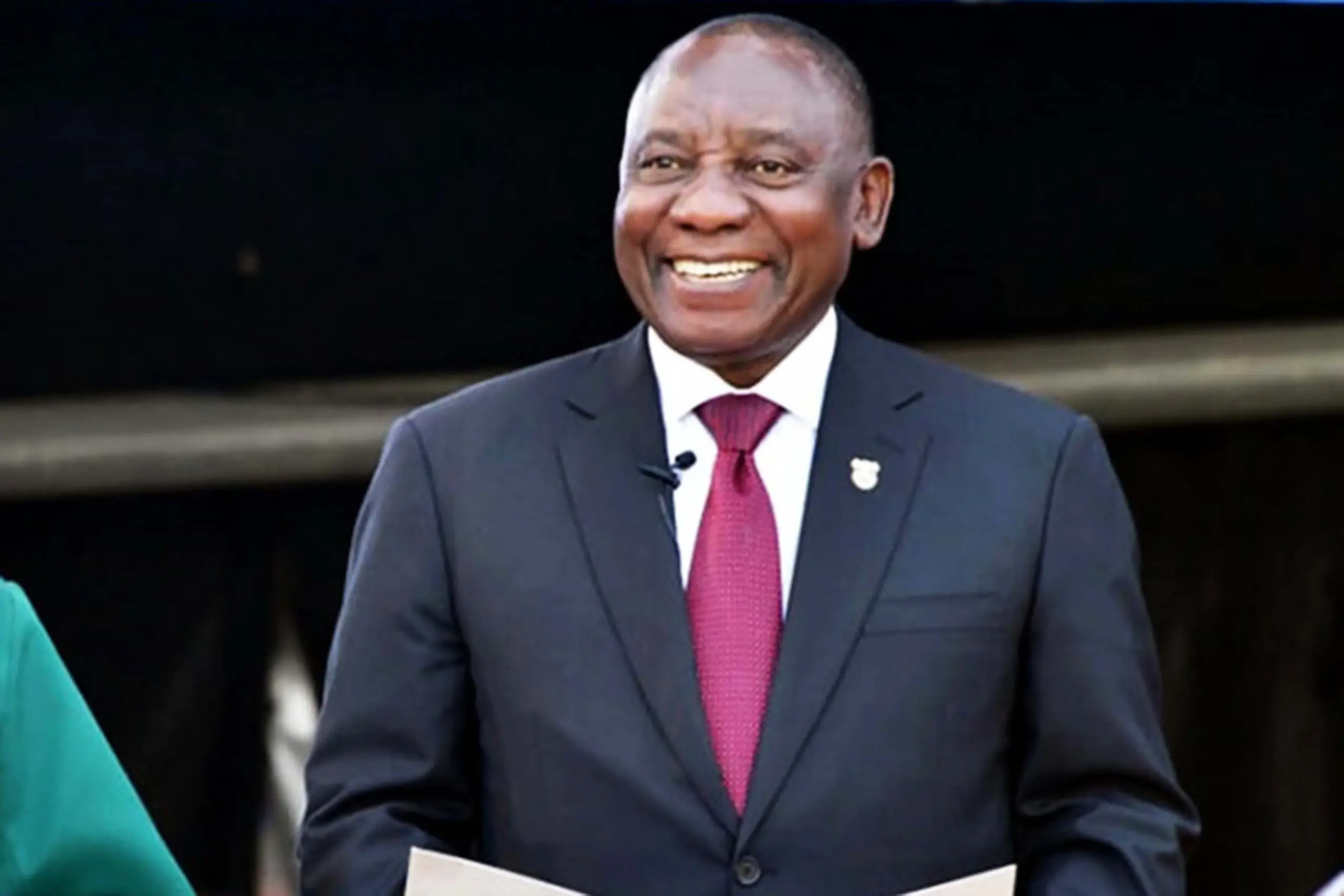
South Africa remains the continent’s largest economy in 2026, with a projected nominal Gross Domestic Product (GDP) of US$489.1 billion, according to the International Monetary Fund (IMF). It is ahead of Egypt (US$442.9 billion) and Nigeria (US$386.7 billion). The lead is long-standing, but the Government of President Cyril Ramaphosa, in office since 2018, presents structural reforms as the basis of a recovery that, for now, rests more on confidence than on momentum.
Size and growth are different things
South Africa’s advantage over Egypt is about US$46 billion, or 10%. That is significant, but not decisive. Nominal GDP in dollars depends on exchange rates, and the continental ranking has shifted with them: Nigeria fell to fourth place in 2024 after successive naira devaluations and has since recovered third place.
In terms of real growth, South Africa lags behind. The IMF projects 1% for 2026 and the National Treasury 1.2%, after about 1.1% in 2025. The African Development Bank and the World Bank put continental growth between 4.2% and 4.3%. In 2026, the economy that leads in size is growing at less than a third of the average African pace.
What has changed: energy, public finances and confidence
In October, the Treasury revised its 2026 forecast down from 1.6% to 1.2%, partly because of the impact of the conflict in the Middle East. It nevertheless maintains an upward path, to 1.6% in 2027 and 2% in 2029, and argues that the economy has shown resilience.
The Government credits this resilience to Operation Vulindlela, a joint programme of the Presidency and the Treasury to remove obstacles to growth. The most visible result is in energy. According to the programme’s latest report, the country passed 500 consecutive days without scheduled power cuts (load shedding) in September, compared with only 13 days without cuts in 2023. Availability at Eskom’s power plants rose to 75% in July, about 15 percentage points above the 2022 level.
The Treasury also cites greater private-sector participation in areas such as freight rail, lower borrowing costs and the country’s removal from the Financial Action Task Force (FATF) grey list. The United States points to the stability of the Government of National Unity as a factor in investor confidence.
The energy data come from the Executive’s own reports and should be read with that caveat. There are, however, external indicators pointing in the same direction, such as falling borrowing costs.
Limits of the recovery
The main shortfall remains employment. The unemployment rate rose to 32.7% in the first quarter of 2026, from 31.4% in the previous quarter, despite four consecutive quarters of GDP growth. The President himself acknowledged in May that the recovery has yet to translate into a significant rise in employment.
Fixed investment, a decisive factor for higher growth, is expected to rise only 0.7% in 2026 before accelerating to 3.8% in 2029, according to the Treasury. On the risk side, the United States’ investment climate report warns that the power system remains fragile and that cuts could return between 2028 and 2030 owing to transmission grid constraints.
The leading pack and Angola’s position
After South Africa, Egypt and Nigeria, Algeria follows with US$331.9 billion, supported by gas and oil exports, and Morocco with US$195.6 billion, notable for its automotive industry and phosphates.
Angola ranks sixth, with US$157.3 billion, ahead of Kenya (US$151.2 billion) and Ethiopia (US$127.1 billion). Projected real growth is 4.4%, above South Africa’s, and GDP per capita is around US$3,900. The country’s rise in the ranking is due, to a large extent, to oil prices.
The IMF estimates that the sector accounts for about 25% of GDP, 60% of fiscal revenue and 94% of exports. The Angolan authorities stress that the non-oil sector already makes up about 80% of GDP, and diversification remains the test of how sustainable this performance is.
Ethiopia records the fastest growth among the large economies, at 9.2%. Figures above US$200 billion that circulated after the statistical rebasing of its GDP do not appear in the IMF’s standard tables.
South Africa retains the size that places it at the top of the continent, and the reforms explain part of the improvement in confidence. To convert that stability into prosperity, it will have to lift growth above 2% and, above all, reduce unemployment. Until then, its leadership is one of economic weight rather than dynamism.