Banco Sol’s Osvaldo Macaia delivers $18mn profit turnaround as Angolan lender faces capital test
- AngolaBusiness and Networking
- November 9, 2026


Two years into a sweeping restructuring, Banco Sol has returned to preliminary profitability, recovered millions of dollars in troubled loans and cut operating costs. But legacy credit exposures, deferred impairments and unresolved capital requirements continue to test the recovery strategy of chief executive Osvaldo Macaia.
LUANDA — When Osvaldo de Lemos Macaia took charge of Banco Sol in 2024, the Angolan lender faced a financial challenge extending far beyond restoring profitability. Years of deteriorating loan quality, mounting impairments and pressure on regulatory capital had exposed structural weaknesses in its balance sheet and operating model.
Two years later, the financial picture is beginning to change. Banco Sol reported a preliminary net profit of approximately $17.9mn for the nine months to September 2026, compared with a loss of about $231,000 in the corresponding period a year earlier. The $18.2mn earnings swing provides the clearest indication yet that the restructuring programme is gaining traction.
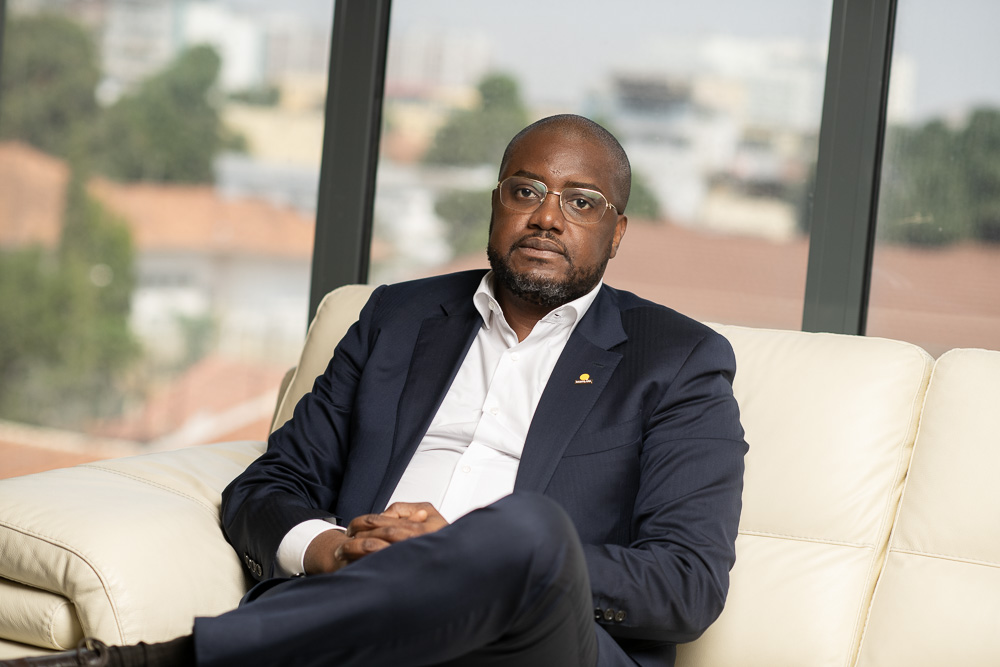
Macaia, an Angolan lawyer and banking executive born in Cabinda, brings more than two decades of experience across public finance, taxation, energy and banking.
A former executive director of state-owned oil company Sonangol and deputy chairman of Banco de Fomento Angola (BFA), he previously held senior positions at Angola’s finance ministry and tax authority.
He holds a law degree from Agostinho Neto University, postgraduate qualifications from the University of Coimbra and an executive MBA jointly awarded by INSEAD and Tsinghua University, formally conferred in June 2026. He was elected to lead Banco Sol’s executive committee in April 2024. Banco Sol +2
The turnaround has been built around loan recoveries, cost reductions, operational restructuring and tighter risk management. In 2025, the bank recovered approximately $28.3mn in troubled loans, reduced its branch network by more than a quarter and returned to a modest operating surplus.
A shareholder-approved capital increase announced in September 2026 added another dimension to the restructuring. Yet the bank has not publicly established how much of the planned capital injection has been paid in.
For investors, depositors and regulators, the distinction is critical. A return to profitability does not necessarily amount to a restoration of financial strength, particularly for a lender still carrying substantial legacy credit exposures.
A restructuring built around balance-sheet repair
Banco Sol’s restructuring programme was approved by shareholders on January 24, 2025, and authorised by the Banco Nacional de Angola (BNA), the central bank, in April that year.
The plan, extending to 2027, established a framework for loan recoveries, operational efficiency, stronger internal controls and additional shareholder capital.
It marked a departure from the expansion-driven model that had characterised much of Angola’s banking sector during earlier periods of rapid credit growth.
Rather than prioritising branch openings and loan-book expansion, Macaia’s management team concentrated on extracting value from existing assets, reducing operating expenditure and improving credit-risk oversight.
In 2025, the bank reduced its branch network from 157 to 116 outlets, a contraction of 26.1 per cent. Headcount fell from 1,701 to 1,503 employees.
Operating expenses declined 1.4 per cent to approximately $70.5mn, despite restructuring-related severance and compensation costs of $1.7mn.
The cost-to-income ratio improved from 103 per cent to 99.6 per cent, while the operating result moved from a deficit of $2.1mn to a modest surplus of about $316,000.
The improvement suggests that management has begun to align the bank’s cost base more closely with its revenue-generating capacity.
However, a cost-to-income ratio close to 100 per cent leaves little operating headroom to absorb further credit losses or unexpected expenses.
The numbers behind Banco Sol’s recovery
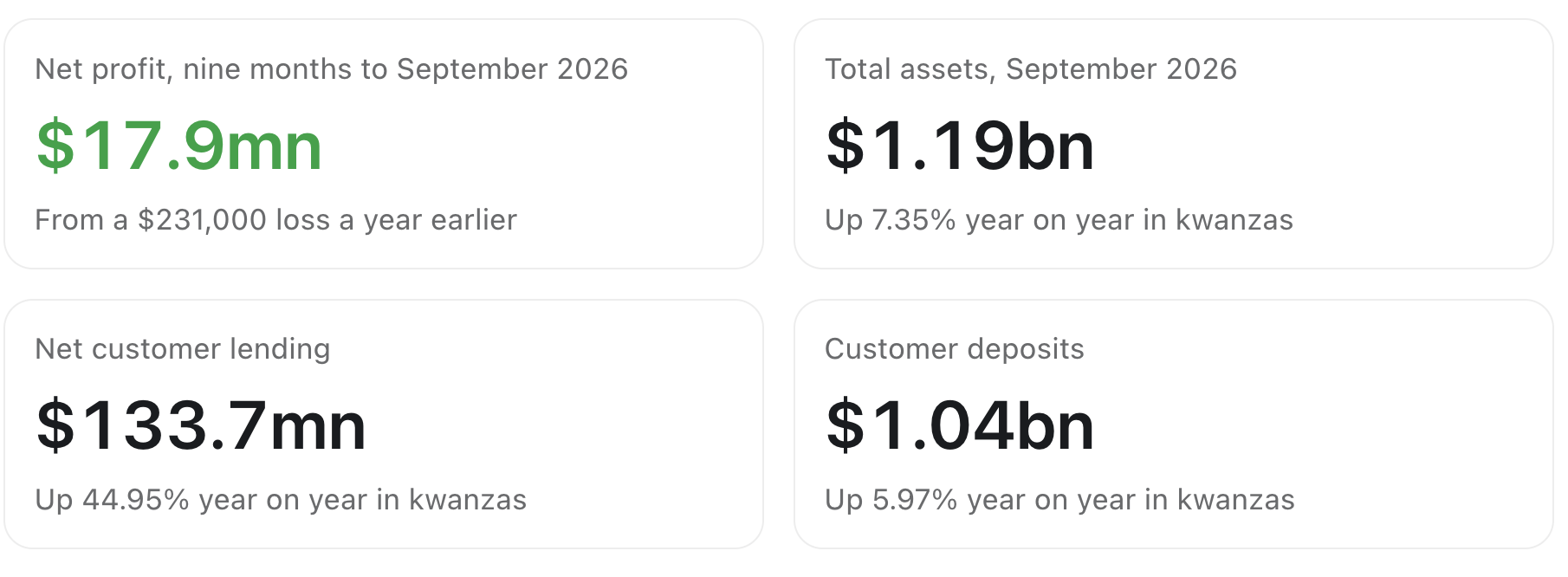
Source: Banco Sol’s September 2026 quarterly balance sheet. US dollar amounts converted at approximately Kz918.72 per dollar, the November 9, 2026 reference rate. Reported growth rates are in local currency. pt.exchangerate.guru
The lender’s preliminary nine-month profit contrasts sharply with full-year losses of approximately $7.5mn in 2024 and $5.9mn in 2025, both translated at the same reference exchange rate for comparison.
Banco Sol’s earnings reversal
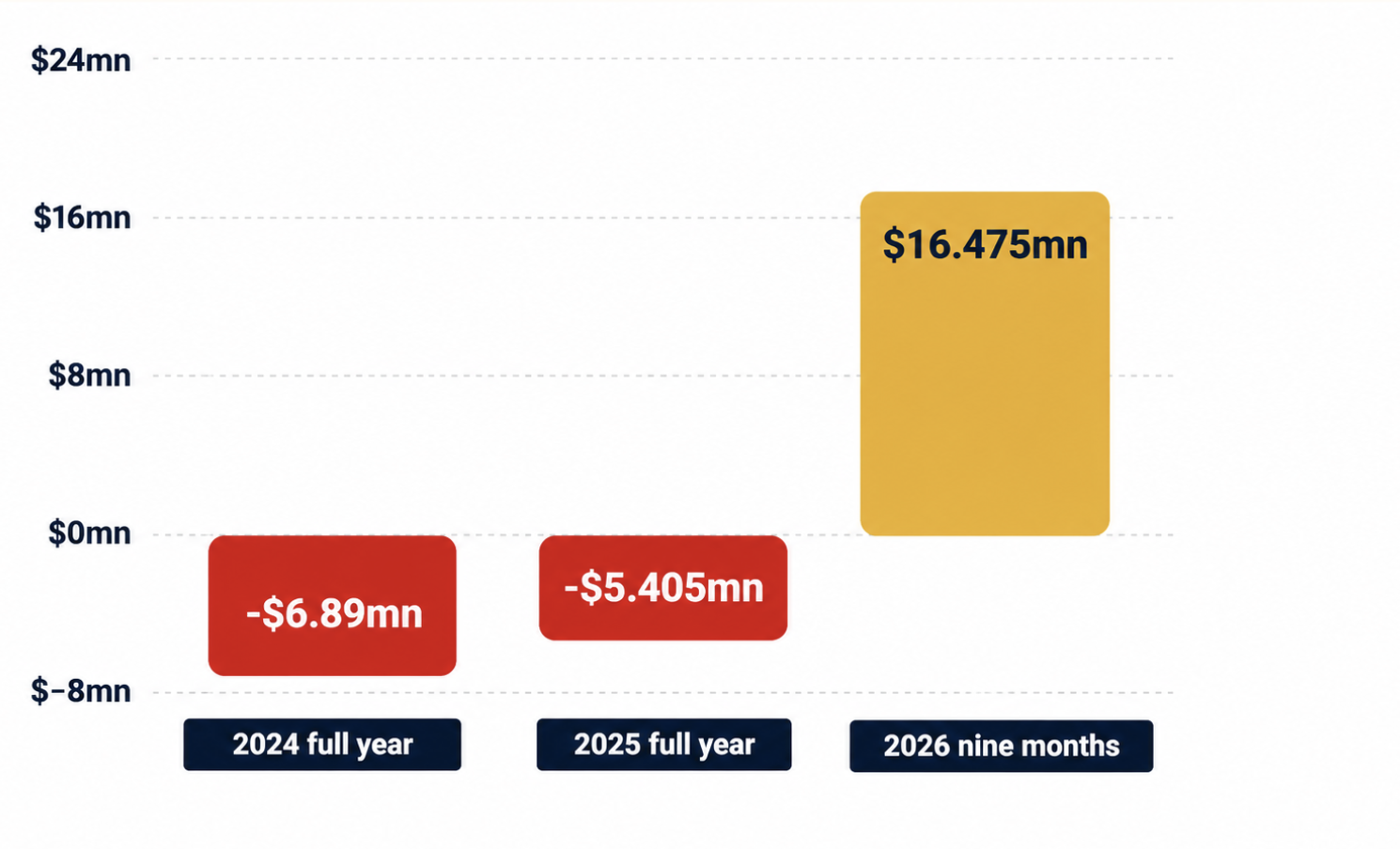
Illustrative USD equivalents of reported kwanza earnings. The 2026 figure covers nine months, not a full financial year.
At the end of September, Banco Sol held approximately $537.9mn in securities and other financial instruments, equivalent to 45.2 per cent of total assets.
Net customer lending, at $133.7mn, represented just 11.2 per cent.
The figures reveal a bank whose balance sheet remains heavily weighted towards securities and financial investments rather than traditional lending.
This asset mix may support liquidity and investment income, but it also creates exposure to interest-rate movements, sovereign credit risk and fluctuations in securities valuations.
The 44.95 per cent increase in net customer lending suggests a recovery in financing activity. However, changes in impairment allowances, loan recoveries and portfolio restructuring may also influence the reported figure.
Legacy credit exposures remain the biggest vulnerability
Despite progress in loan recoveries, Banco Sol’s credit quality remains exceptionally weak by conventional banking standards.
The ratio of overdue loans to gross lending declined from 77.4 per cent in 2024 to 72.7 per cent in 2025.
Over the same period, impairment coverage increased from 75.6 per cent to 95 per cent.
The 4.7 percentage-point improvement in the overdue-loan ratio is significant, but it also illustrates the scale of the clean-up still required.
Interim financial disclosures for June 2025 showed approximately $206.2mn in overdue exposures to large corporate borrowers, out of a total overdue loan stock equivalent to $262mn.
Large corporate exposures therefore represented roughly 79 per cent of overdue lending at that point.
That concentration has important implications for the restructuring.
Recovering a relatively small number of sizeable corporate loans could materially improve asset quality. Conversely, unsuccessful restructurings or difficulties enforcing collateral could delay balance-sheet repair for years.
The available public disclosures do not establish misconduct by individual borrowers or former executives. Determining the origins of the impaired exposures would require detailed examination of historical lending decisions, collateral valuations and credit governance.
For Macaia’s management team, the challenge is not simply to recover outstanding debts, but to demonstrate that the controls governing future lending decisions have materially improved.
Earnings quality comes under scrutiny
Banco Sol’s 2025 financial statements reveal the uneven nature of its operating recovery.
Banking income increased 2 per cent to approximately $70.8mn, while net interest income fell 8 per cent to $50.2mn.
Non-interest income rose 39.1 per cent to $20.6mn, supported by a 76 per cent increase in foreign-exchange-related earnings to $11.5mn.
Fee and commission income, however, declined 3.3 per cent.
| Financial indicator | 2024 | 2025 |
| Banking income | $69.4mn | $70.8mn |
| Net interest income | $54.6mn | $50.2mn |
| Non-interest income | $14.8mn | $20.6mn |
| Return on average assets | −0.7% | −0.5% |
| Return on average equity | −8.6% | −7.2% |
| Cost-to-income ratio | 103% | 99.6% |
The figures point to an institution that has improved cost discipline but has yet to establish a consistently profitable core banking franchise.
The decline in net interest income partly reflected changes in the accounting treatment of interest accrued on non-performing exposures.
Nevertheless, the increasing contribution from foreign-exchange operations and financial investments raises questions about the durability of earnings.
The central issue is whether the September 2026 profit reflects a sustainable improvement in recurring banking income or a combination of securities returns, foreign-exchange gains, recoveries and accounting adjustments.
The published quarterly balance sheet does not provide sufficient detail to quantify the contribution of each factor.
Macaia shifts the bank towards execution and risk discipline
The restructuring has involved changes in organisational priorities, management processes and operational controls.
Banco Sol introduced revised performance targets, commercial incentive mechanisms and training programmes designed to improve productivity and strengthen institutional governance.
In 2026, the lender reportedly reinforced its senior management team with the appointments of Alcides Santos to the finance function and José Francisco Kinito to risk management.
These appointments are consistent with the requirements of a bank seeking to improve capital planning, financial reporting and credit-risk oversight.
They also reflect a broader shift in the skills required to manage Angola’s banking institutions.
Expansion of branch networks and loan portfolios is increasingly being supplemented by stronger demands for risk-adjusted profitability, regulatory compliance and capital efficiency.
In a September 2026 interview with BRENT, Macaia outlined a strategy centred on completing the balance-sheet clean-up, improving operational efficiency, expanding digital banking and developing corporate and premium banking services.
He also identified energy, infrastructure and agribusiness as strategic sectors for future financing, while emphasising a selective approach to capital-intensive projects.
The approach suggests a move towards more disciplined lending, with greater attention to borrowers’ cash flows, collateral and the sustainability of financed projects. BRENT
Digital transformation becomes part of the recovery strategy
Technology is another pillar of Banco Sol’s restructuring.
The bank has introduced updated internet and mobile banking platforms while strengthening information-security policies and transaction-monitoring systems.
Its modernisation programme also includes tools designed to improve foreign-exchange operations and anti-money-laundering controls.
The commercial rationale is straightforward.
A smaller physical network can reduce fixed operating costs, while digital channels allow banks to process larger transaction volumes at lower marginal cost.
However, technology investment, cybersecurity and systems integration can impose substantial upfront expenditure.
For Banco Sol, the financial benefits will depend on measurable improvements in active digital users, transaction volumes, fee generation and cost per customer.
The bank has not disclosed sufficient comparable operating indicators to establish the precise contribution of digital channels to its earnings recovery.
The $93mn capital challenge
The strongest evidence that Banco Sol’s recovery remains unfinished lies in its capital position.
The restructuring plan initially envisaged approximately $93.1mn in additional shareholder capital.
In September 2026, the bank announced shareholder approval for a capital increase but did not specify the amount actually paid in or a complete implementation timetable.
Its September balance sheet continued to show approximately $32.7mn in share capital, although that figure alone cannot establish whether funds had been received under other accounting classifications or were awaiting formal registration.
More significantly, reported accounting equity declined from approximately $83.9mn at the end of 2024 to $79.4mn in December 2025 and $74.7mn in September 2026.
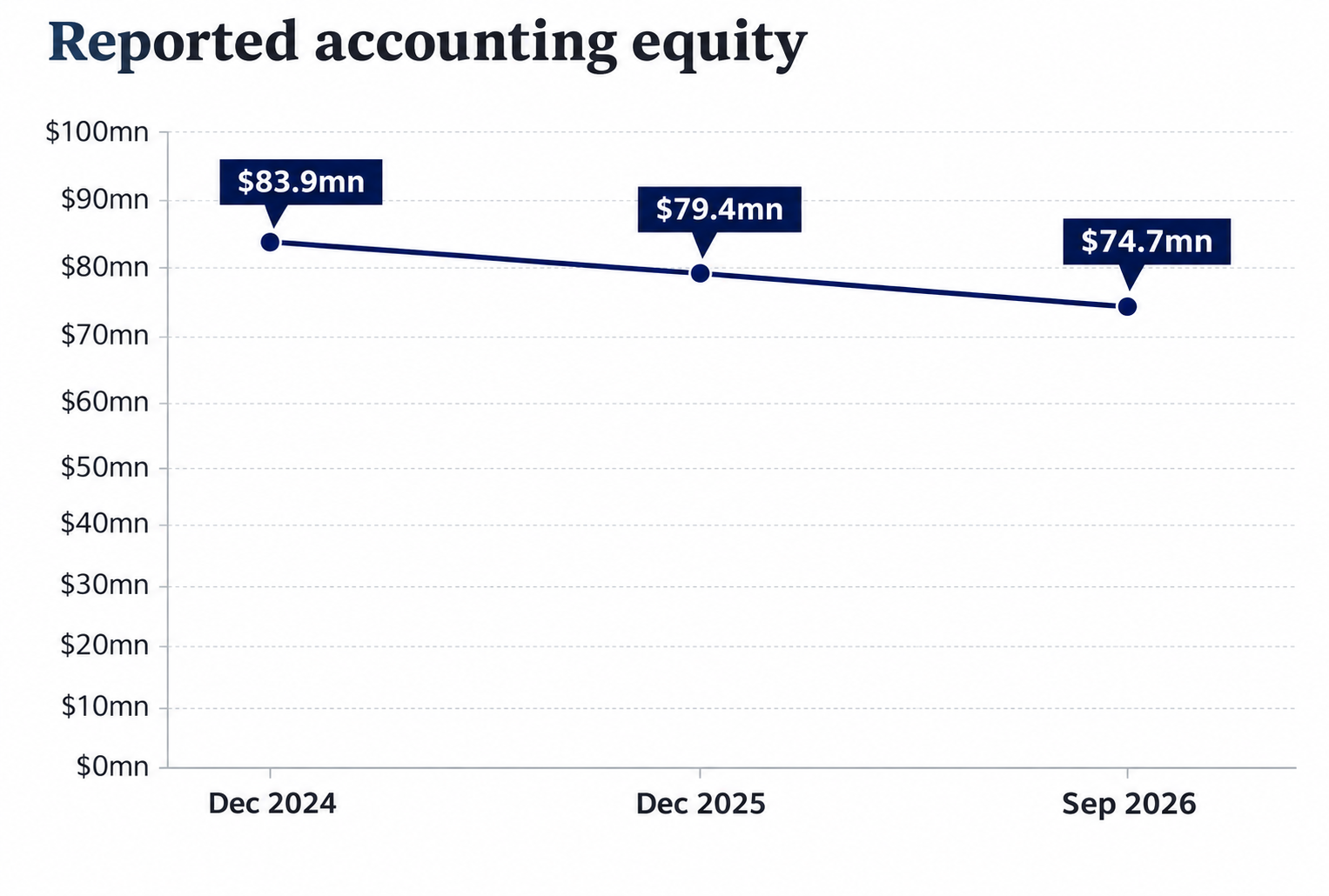
Source: Banco Sol annual and interim financial statements. USD equivalents use a constant November 2026 exchange rate. Accounting equity differs from regulatory capital.
The decline, despite the preliminary profit reported for the first nine months of 2026, requires closer examination of retained losses, reserves and other equity adjustments.
Regulatory capital presents a separate challenge.
Banco Sol’s reported solvency ratio fell from 18.8 per cent in 2023 to 11.7 per cent in 2024 and approximately 9 per cent in 2025.
The bank has also operated under an exceptional prudential framework involving the deferred recognition of certain credit impairments.
Interim disclosures for June 2025 indicated deferred impairment amounts equivalent to approximately $274.6mn, including additional adjustments recognised during that period.
The current outstanding amount, regulatory treatment and timetable for absorption require confirmation.
These issues matter because operating profits cannot substitute for adequate loss-absorbing capital.
The ultimate measure of the turnaround will be whether Banco Sol can absorb legacy credit losses, meet prudential requirements and finance renewed growth without prolonged reliance on exceptional regulatory relief.
What Banco Sol’s recovery reveals about Angolan banking
Banco Sol’s restructuring is unfolding as Angola’s banking industry adjusts to a more demanding financial environment.
Major institutions, including Banco Angolano de Investimentos, Banco de Fomento Angola, Banco BIC, Millennium Atlântico and Banco Keve, provide useful benchmarks for assessing profitability, asset quality, operating efficiency and capital strength.
However, comparisons require caution.
Absolute profits are not a reliable measure of relative banking performance when institutions differ substantially in asset size, capitalisation and risk exposure.
Banco Sol’s $17.9mn preliminary nine-month profit is significant in the context of its recent losses. It does not, on its own, establish that the bank has become more profitable or financially resilient than larger competitors.
A meaningful sector-wide comparison would require harmonised figures for return on assets, return on equity, regulatory capital, non-performing loans and cost efficiency over the same reporting period.
What Banco Sol does illustrate is a change in the priorities facing banking executives in Angola.
Growth in customer numbers, deposits and branch networks is no longer sufficient to demonstrate financial strength.
Asset quality, recurring earnings, capital buffers and the ability to withstand adverse economic conditions increasingly determine whether expansion is sustainable.
The central bank’s supervisory role remains essential to the outcome.
Approval of a restructuring programme provides a framework for oversight, but does not guarantee that the programme will succeed.
Three scenarios for 2027
| Scenario | Main assumptions | Potential outcome |
| Sustained recovery | Capital injections completed, impairments absorbed and recurring earnings strengthened | Improved solvency and sustainable profitability |
| Gradual stabilisation | Continued operating profits but slower recapitalisation | Restricted balance-sheet expansion and prolonged regulatory pressure |
| Renewed financial strain | Additional credit losses, insufficient capital or weaker earnings | Further corrective measures and possible revisions to the recovery plan |
Illustrative scenarios developed by AfricaHeadline. They are not official forecasts from Banco Sol.
The strongest scenario would require the lender to combine sustained profitability with measurable improvements in regulatory capital and credit quality.
The weakest would emerge if additional impairments absorbed the gains from operational restructuring before sufficient shareholder capital became available.
Neither outcome can be established from the September financial statements alone.
The unanswered questions
Several issues remain unresolved in the publicly available documentation.
The first concerns recapitalisation: how much of the planned $93.1mn has actually been paid in, and when will the remaining commitments be fulfilled?
The second is the treatment of deferred impairments and their eventual impact on regulatory capital.
The third concerns the composition of the nine-month profit, particularly the relative contributions of recurring lending income, securities, foreign-exchange operations and recoveries.
The fourth relates to governance: whether revised credit approval and risk-management processes have materially reduced the likelihood of repeating past lending problems.
Finally, the bank’s performance needs to be assessed against comparable institutions using consistent and independently verified financial indicators.
These questions require further disclosure and responses from Banco Sol and, where appropriate, the Banco Nacional de Angola.
A turnaround with unfinished business
Banco Sol’s financial trajectory has changed markedly since Osvaldo Macaia became chief executive.
Loan recoveries, a smaller operating footprint, tighter expenditure controls and stronger risk-management priorities have coincided with a substantial improvement in reported earnings.
The preliminary $17.9mn profit for the nine months to September 2026 provides the clearest evidence that the restructuring is beginning to deliver measurable financial results.
Yet the bank remains burdened by legacy credit exposures, unresolved capital requirements and questions about the sustainability of its earnings.
For Macaia, the next phase will be more demanding than the first.
Reducing losses and restoring profitability are important milestones. Rebuilding regulatory capital, absorbing historical impairments and establishing a resilient lending franchise will determine whether the turnaround can endure.
Banco Sol has begun to repair its income statement. The harder task is proving that its balance sheet can support the recovery.