Tanzania’s $96bn economy eyes $154bn by 2031 as growth holds at 6%
- Economic OutlookTanzania
- November 11, 2026
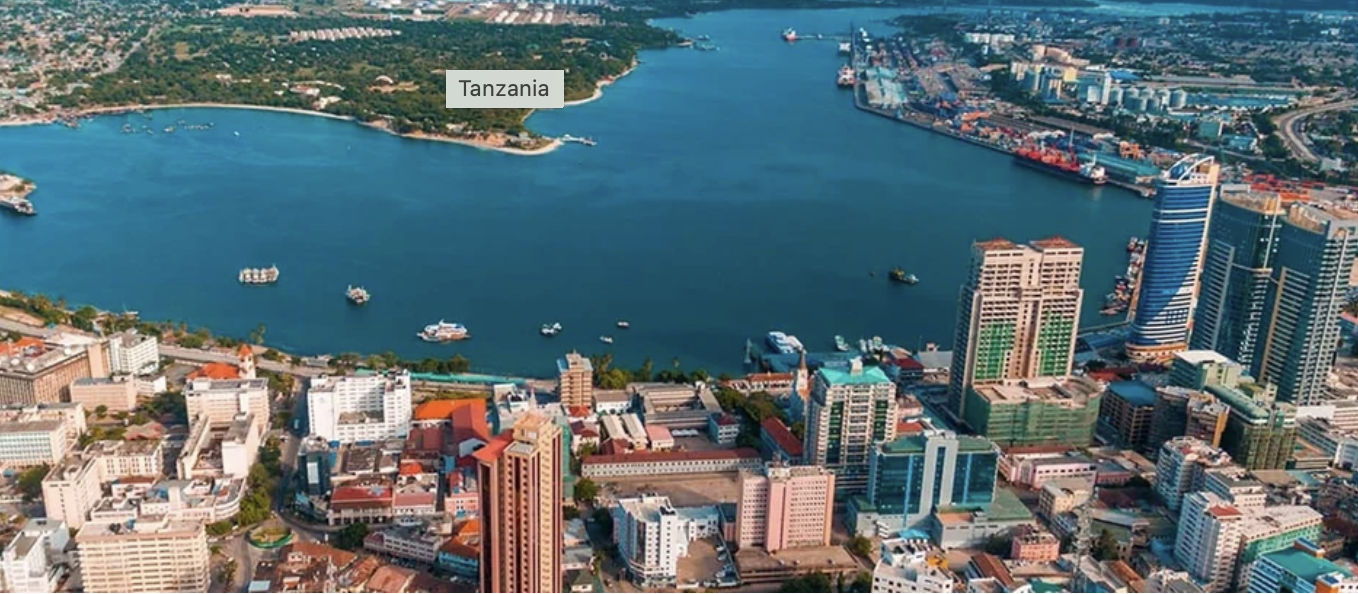

East Africa’s infrastructure ambitions, mineral wealth and expanding regional trade are supporting one of the continent’s more resilient growth stories. But Tanzania’s projected 60 per cent nominal economic expansion over five years will test its ability to attract private capital, manage fiscal risks and turn GDP gains into higher living standards.
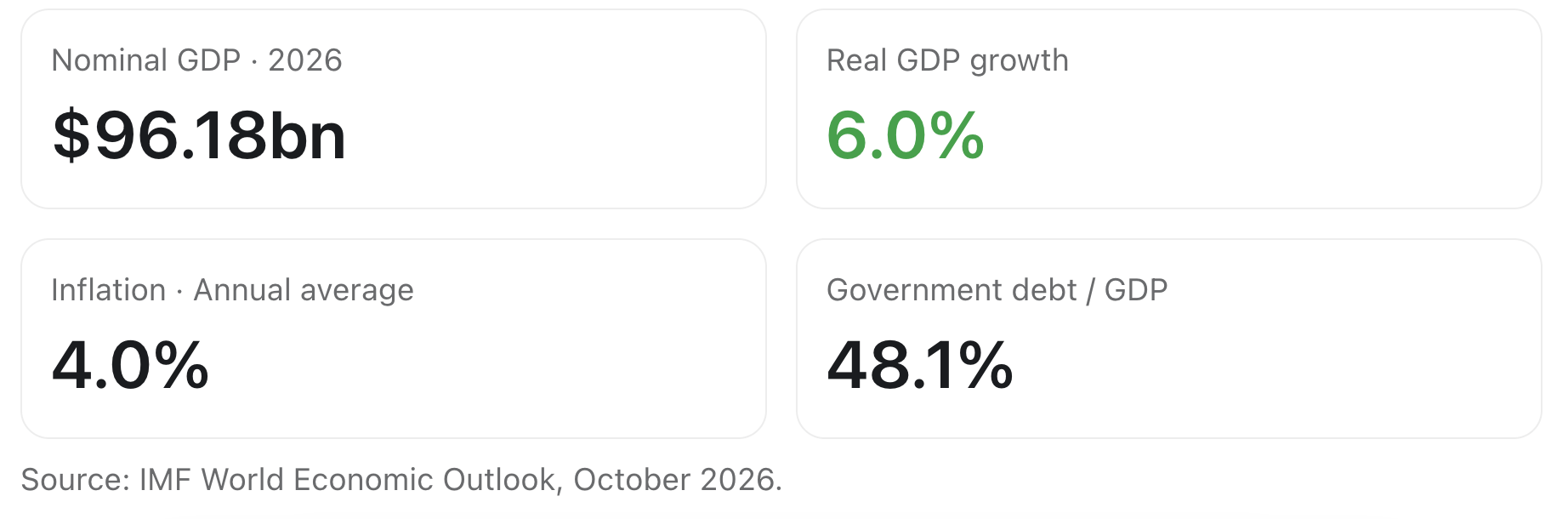
DAR ES SALAAM — Tanzania’s economy is projected to reach $96.18bn in 2026, with real gross domestic product expanding by 6 per cent, as investment in transport infrastructure, mining, agriculture and tourism supports the country’s emergence as an increasingly important economic and logistics hub in eastern Africa.
IMF-based projections indicate that nominal GDP could climb to $153.97bn by 2031, adding almost $58bn to the economy’s dollar value within five years. The increase, equivalent to 60.1 per cent, would mark a significant expansion in Tanzania’s economic scale, although the forecast includes the effects of inflation and exchange-rate movements rather than real output growth alone.
For President Samia Suluhu Hassan’s administration, the economic outlook presents both an opportunity and a structural challenge: sustaining annual growth of around 6 per cent while converting public investment, expanding regional trade and natural-resource revenues into higher productivity, competitive industries and better-paid employment.
Tanzania’s economic importance extends beyond its domestic market. Its Indian Ocean ports and transport corridors connect mineral-producing and landlocked economies, including Zambia, Rwanda, Burundi, Uganda and the Democratic Republic of Congo, making the country an increasingly strategic gateway for regional commerce.
A $154bn economy in the making
The IMF’s October 2026 World Economic Outlook places Tanzania’s GDP at $96.18bn, with annual real growth of 6 per cent, inflation averaging 4 per cent and GDP per capita reaching approximately $1,325. The economy expanded by 5.9 per cent in 2025, according to the World Bank.
US$ billions; 2026 estimate and 2027–2031 projections 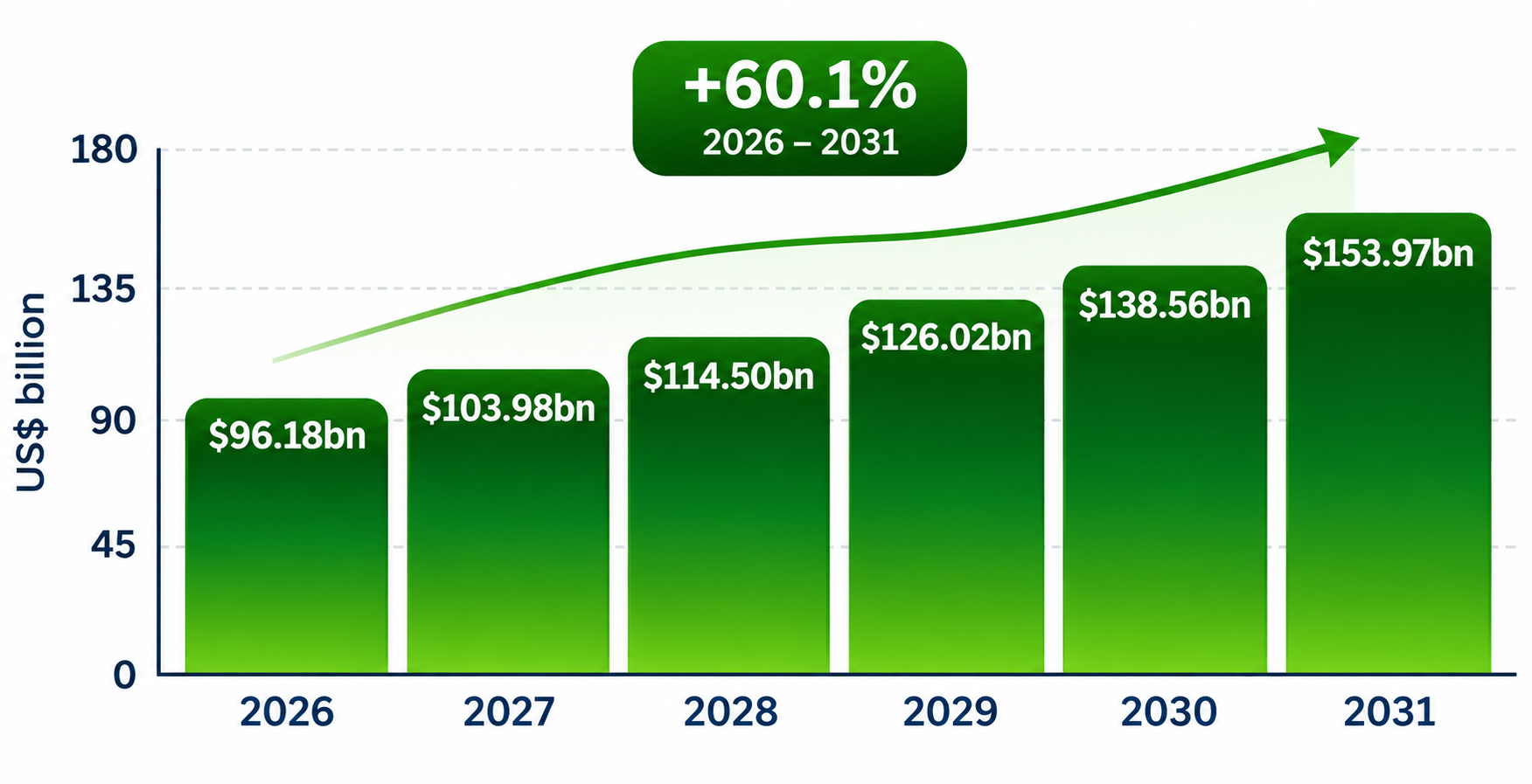
Source: IMF-based figures supplied for this analysis. Forecasts remain subject to revisions.
The projected increase implies average annual nominal GDP growth of approximately 9.9 per cent in US dollars between 2026 and 2031, substantially above the forecast rate of real economic expansion.
That distinction matters for investors. Growth measured in current dollars reflects domestic output, price changes and currency movements. A depreciation of the Tanzanian shilling could reduce the dollar value of GDP even if domestic production continues to increase.
The IMF also estimates Tanzania’s economy at $322.69bn in purchasing-power-parity terms in 2026, illustrating the difference between the country’s domestic purchasing capacity and the international dollar value of its output.
Infrastructure investment and the regional trade opportunity
Tanzania’s infrastructure programme is one of the central elements of its economic transformation strategy.
The standard-gauge railway network, modernisation of the Port of Dar es Salaam and investments in energy infrastructure are intended to reduce transport costs, strengthen supply chains and improve access to regional markets.
These investments have implications beyond Tanzania’s borders. Zambia and the Democratic Republic of Congo are major mineral-producing economies, while Rwanda, Burundi and Uganda depend on reliable regional trade connections.
More efficient transport infrastructure could help Tanzania capture a greater share of regional freight, warehousing, logistics and industrial activity.
However, infrastructure expenditure creates economic value only when projects achieve sufficient commercial utilisation. Railway capacity, port throughput, operating costs and private investment in complementary facilities will ultimately determine the financial returns.
The challenge is particularly relevant because public expenditure accounted for more than two-thirds of Tanzania’s real GDP growth in 2025, according to the World Bank’s September 2026 Economic Update. Financial services, trade and transport contributed nearly half of sectoral growth.
That dependence on government spending raises an important question about the next phase of expansion: whether private investment can increasingly replace fiscal stimulus as the principal engine of economic growth.
Mining, agriculture and tourism: Three pillars of growth
Tanzania’s economic prospects are supported by a diversified production base, although productivity and investment constraints remain significant.
Gold is an important source of foreign-exchange earnings and provides some protection against external financing pressures. Higher international gold prices have supported the country’s external position, but reliance on commodity prices also exposes export revenues to market volatility.
Agriculture remains the largest source of employment, accounting for more than half of all jobs. Improving irrigation, storage, transport, mechanisation and access to finance could therefore have a substantial effect on rural incomes and domestic demand.
Tourism represents another important channel for foreign-exchange earnings, supported by Tanzania’s wildlife reserves, Mount Kilimanjaro and Zanzibar.
The IMF expects mining, agriculture and tourism to help sustain medium-term economic growth of approximately 6.2–6.3 per cent, provided investment and structural reforms progress.
The strategic priority is to increase the domestic value captured from these activities through mineral processing, agro-industrial production, hospitality services and local supply chains.
Fiscal discipline and the cost of growth
Tanzania’s macroeconomic indicators suggest relative stability, but the fiscal position remains central to the investment outlook.
The IMF projects government debt at 48.1 per cent of GDP in 2026, a fiscal deficit of 2.6 per cent and a current-account deficit of 2.7 per cent.
At the projected GDP level, these ratios imply a government debt stock equivalent to approximately $46.3bn and an annual fiscal deficit equivalent to $2.5bn. These are indicative dollar conversions, rather than separately reported fiscal cash-flow figures.
The country must balance infrastructure financing with expenditure on education, healthcare and social protection.
In July, the IMF completed reviews of Tanzania’s Extended Credit Facility and Resilience and Sustainability Facility arrangements, while highlighting the importance of revenue mobilisation, fiscal consolidation and improvements in public financial management.
The Fund also identified delays in reforms affecting VAT administration, central bank governance and public investment management.
Such constraints matter for investors because fiscal credibility, predictable taxation and the timely settlement of government obligations influence private-sector financing costs.
East Africa’s competitive investment landscape
Tanzania’s prospects must also be assessed against a region competing for manufacturing investment, logistics activity, energy development and export markets.
Kenya remains a major financial and technology centre, Ethiopia offers a large domestic market and manufacturing potential, Uganda is pursuing energy-led industrial development, and Rwanda has placed considerable emphasis on services and investment facilitation.
Tanzania’s comparative advantage lies in the combination of its Indian Ocean access, natural resources, agricultural potential and connections to neighbouring economies.
Its success will depend on converting these geographical advantages into lower logistics costs, reliable energy supplies, competitive industrial production and export-oriented investment.
Regional economic leadership cannot be measured by GDP alone. Export diversification, productivity, investment efficiency and income per capita provide a more meaningful assessment of long-term competitiveness.
The employment paradox: Growth without sufficient productivity
One of Tanzania’s most important structural challenges is the gap between economic growth and the quality of employment.
The World Bank’s October 2026 assessment, Making Jobs Work, found that the country’s main problem is not simply the availability of jobs, but their concentration in low-productivity activities offering limited earnings and economic security.
Despite relatively high labour-force participation, agriculture and informal businesses continue to absorb a substantial share of employment.
Tanzania’s population is projected to reach 72.56mn in 2026, while nominal GDP per capita is expected to increase from approximately $1,325 to $1,853 by 2031, based on the supplied projections.
That would represent a nominal increase of almost 40 per cent over five years. Yet rapid population growth means that improvements in productivity and real household incomes will be essential to achieving meaningful poverty reduction.
The World Bank has emphasised two priorities: strengthening workforce skills and enabling productive companies to invest, expand and create better-paid jobs.
Firas Raad, the World Bank’s division director for Tanzania, said the country must continue investing in education, skills and health to make growth more inclusive and sustainable.
External risks could test the outlook
Despite the favourable growth projections, Tanzania remains exposed to several external and domestic risks.
Higher international oil prices could increase import costs and put pressure on inflation, transport and the current account. Rising fertiliser prices would affect agricultural production costs, while disruptions to global aviation and trade routes could weaken tourism and export earnings.
The IMF has also warned that reduced international development assistance, exchange-rate pressures and slower implementation of structural reforms could undermine economic performance.
International reserves stood at approximately $6.1bn in March 2026, equivalent to about 3.7 months of prospective imports. The Fund projected reserve coverage of around 3.5 months by the end of the 2025/26 fiscal year.
Domestic political and institutional conditions are another consideration. In its July assessment, the IMF identified social unrest following the 2025 elections as a potential risk to investor confidence and tourism.
The outlook therefore depends not only on commodity prices and infrastructure delivery, but also on policy predictability, institutional credibility and continued macroeconomic stability.
Economic outlook 2027–2031: Three possible paths
Tanzania’s baseline outlook remains positive, with real growth projected to remain close to 6 per cent annually and the World Bank anticipating average medium-term expansion of 6.5 per cent.
The medium-term trajectory can be assessed through three potential scenarios:
| Scenario | Economic implications |
|---|---|
| Upside | Faster infrastructure delivery, stronger private investment, export diversification and productivity gains could support growth above the baseline. |
| Baseline | Growth remains near 6%, inflation stays broadly contained and nominal GDP approaches $154bn by 2031 under the supplied projections. |
| Downside | Higher import costs, weaker external demand, exchange-rate pressures and reform delays could reduce growth and constrain fiscal investment. |
Source: AfricaHeadline scenario analysis based on IMF and World Bank risk assessments. These are qualitative scenarios, not separately modelled institutional forecasts.
For the Government, achieving the baseline will require a sustained transition towards private-sector-led investment.
Tanzania’s Vision 2050 identifies private investment as a central source of future economic development. The World Bank considers a more predictable business environment essential to achieving that objective.
The challenge will be to ensure that infrastructure, mineral resources and regional trade generate stronger domestic industries rather than simply expanding the volume of economic activity.
The bigger picture: From economic expansion to economic transformation
Tanzania enters the final years of the decade with a combination of relatively strong growth, manageable inflation, strategic geographical advantages and substantial investment requirements.
The IMF’s projected 6 per cent expansion in 2026 places the economy on a favourable trajectory, while the possibility of reaching almost $154bn by 2031 illustrates the scale of its medium-term ambitions.
But the figures also reveal a more complex economic reality.
A larger GDP does not necessarily mean a more competitive economy. Nor does higher public investment automatically deliver stronger private-sector productivity, greater export sophistication or better employment opportunities.
For President Samia Suluhu Hassan’s administration, the defining economic test will be whether Tanzania can move beyond infrastructure-led expansion towards an increasingly productive, diversified and internationally competitive economy.
The opportunity is substantial. Its transport corridors could reinforce regional integration, its natural resources could support industrial development, and its growing population could provide an expanding domestic market and workforce.
Realising that potential will require fiscal discipline, effective institutions, greater private capital mobilisation and sustained investment in human capital.
Tanzania may be on course to become a $154bn economy by 2031. The more consequential question is whether that expansion will create the productive capacity and higher living standards needed to establish the country as one of eastern Africa’s leading engines of long-term economic transformation.