APEC 2026: What does Africa stand to gain from the reshaping of the global economy?
- Business and NetworkingChinaChina & AmericaEconomicWorld
- November 19, 2026
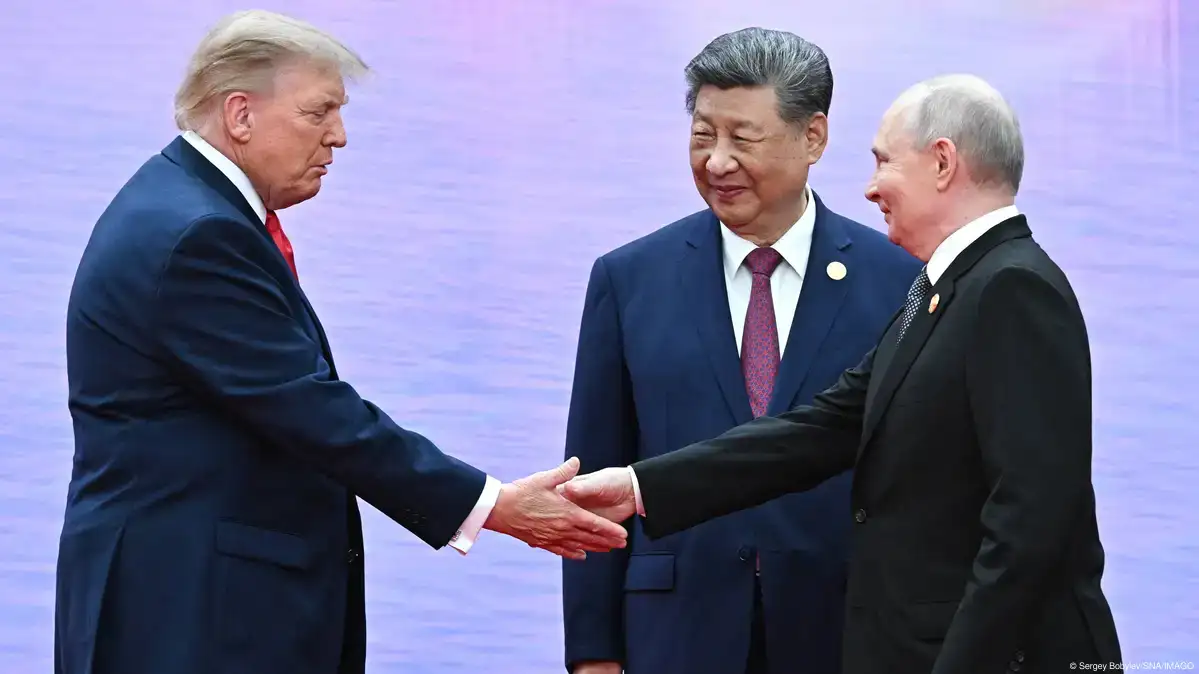

The Shenzhen summit highlights the opportunities and risks facing a continent seeking to turn competition between the world’s major powers into investment, industrialisation and economic influence.
LAGOS, November, 2026 — AfricaHeadline
As Xi Jinping, Donald Trump and Vladimir Putin dominate international attention at the Asia-Pacific Economic Cooperation (APEC) summit in Shenzhen, a strategic question confronts African governments: how can the continent turn the restructuring of the global economy into an opportunity for industrial, financial and technological development?
The 33rd summit, taking place on November 18-19, brings together 21 economies accounting for more than 60 per cent of global gross domestic product, approximately 40 per cent of the world’s population and about half of international trade.
Although no African country belongs to the organisation, decisions on trade, investment, artificial intelligence and energy security could shape the continent’s economic trajectory over the next decade.
The APEC business gathering, held on November 17-18, attracted more than 2,000 representatives from 34 economies, including 115 Fortune Global 500 companies, underscoring the growing convergence of political power, financial capital and technological capabilities.
China’s trade dividend
Trade between China and Africa reached $348bn in 2025, up 17.7 per cent from the previous year. However, Chinese exports totalled $225bn, against African exports of $123bn, leaving the continent with a trade deficit of $102bn.
On May 1, 2026, Beijing extended duty-free treatment to 53 African countries. In the first two months following the measure’s introduction, Chinese imports from Africa rose 23.5 per cent year on year.
The policy could stimulate agricultural exports, particularly from Angola, Kenya, Ethiopia, Ghana and Côte d’Ivoire, while encouraging the establishment of manufacturing facilities geared towards Asian markets.
Competition for Africa’s strategic resources
Economic rivalry between Washington and Beijing is increasing the strategic importance of Africa’s mineral and energy resources.
Angola, the Democratic Republic of Congo and Zambia stand to benefit from international demand for oil, copper, cobalt and other critical minerals essential to the energy transition.
The Lobito Corridor, backed by the United States and the European Union, offers an alternative strategic trade route that could strengthen the negotiating position of all three countries.
The presence in Shenzhen of companies such as BYD, CATL, Boeing, Google and ICBC illustrates the scale of potential business opportunities across the automotive, technology, financial and industrial sectors.
Africa’s objective, however, must extend beyond commodity exports to encompass manufacturing plants, refineries and research centres.
Financing, debt and monetary stability
Greater co-operation between the world’s leading powers could help ease uncertainty in international markets, with implications for commodity prices, borrowing costs and African foreign exchange reserves.
Increased competition among Chinese, Japanese, American and multilateral financial institutions could broaden Africa’s development financing options.
African governments must nevertheless prioritise productive investment, public-private partnerships and financing mechanisms that do not exacerbate sovereign debt vulnerabilities.
The technology opportunity
The APEC secretariat forecasts economic growth of 3.4 per cent across its member economies in 2026, compared with 3.2 per cent in 2025, against a backdrop of expanding technology investment.
Research by the organisation also suggests that digitising trade documentation could reduce transaction costs by 5.8 per cent.
For Africa, modernising customs procedures, financial systems and public administration, alongside investment in data centres, fibre-optic networks and artificial intelligence, could boost productivity and business competitiveness.
Knowledge transfer and digital sovereignty should feature prominently in the continent’s negotiating priorities.
From commodity supplier to industrial power
The African Continental Free Trade Area, with a potential market of 1.4bn consumers, provides the continent with a platform for collective engagement with the world’s largest economies.
APEC, however, operates through consensus and voluntary commitments. Its decisions confer no automatic benefits on African countries.
The real dividend from Shenzhen will depend largely on African governments’ ability to attract foreign direct investment, implement structural reforms, develop human capital and negotiate favourable terms for industrialisation.
Africa has already demonstrated its importance as a supplier of strategic resources. Its next challenge is to establish itself as a technology producer, an exporter of manufactured goods and an active participant in global value chains.
The Shenzhen summit may open new economic opportunities. Whether those opportunities translate into wealth, employment and prosperity will ultimately depend on decisions made in African capitals.